
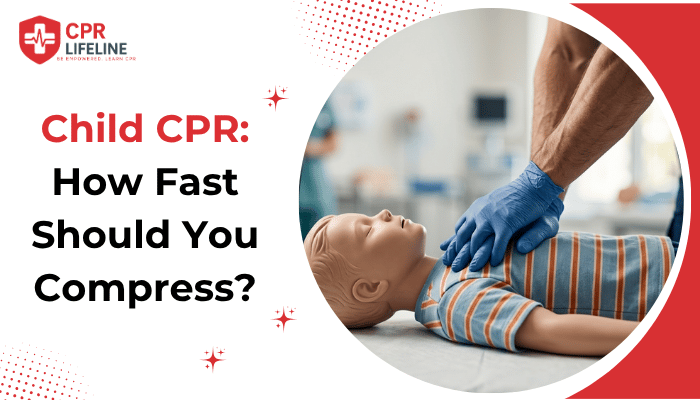



When a child experiences cardiac arrest, starting CPR quickly is critical. One of the most important parts of high-quality CPR is maintaining the correct chest compression rate. Compressing too slowly may not provide enough blood flow, while compressing too quickly can make it difficult to achieve proper depth and allow full chest recoil.
According to the American Heart Association (AHA), the recommended chest compression rate for infants and children during CPR is 100 to 120 compressions per minute. This rate should be combined with appropriate compression depth, complete chest recoil, and as few interruptions as possible.
This blog explains the target rate for chest compressions for children, how to maintain a steady rhythm during CPR, when to combine compressions with rescue breaths, and the common mistakes that can affect CPR quality.
Why Does the Pediatric Compression Rate Matter?
During cardiac arrest, the heart is no longer pumping blood effectively. Chest compressions help keep blood moving to the brain and other vital organs until normal circulation can be restored. Using the right compression rate helps ensure CPR is performed effectively and consistently during this critical time.
An appropriate compression rate helps you:
- Maintain blood circulation during cardiac arrest
- Support blood flow to the brain and heart
- Keep compressions consistent
- Avoid an excessively slow rhythm
- Coordinate compressions with rescue breaths
- Reduce unnecessary pauses during CPR
The AHA identifies compression rate, compression depth, complete chest recoil, and minimizing interruptions as key components of high-quality CPR.
What Is the Correct Chest Compression Rate for Children?
The AHA recommends a chest compression rate of 100 to 120 compressions per minute for children during cardiac arrest. This is also the recommended rate for infant CPR under current pediatric Basic Life Support (BLS) guidelines. Rescuers should maintain a steady rhythm instead of just compressing the chest as quickly as possible.
A useful way to remember the compression target is:
- Rate: 100 to 120 compressions per minute
- Depth for infants: At least one-third of the chest depth, about 1.5 inches (4 cm)
- Depth for children: At least one-third of the chest depth, about 2 inches (5 cm)
- Chest recoil: Allow the chest to return fully after each compression
- Interruptions: Keep pauses in compressions as short as possible, with interruptions ideally lasting less than 10 seconds
The compression rate for infant and child is the same as an adult. Only the compression technique, depth, and hand placement change based on the child’s size.
How Can You Maintain a Consistent Compression Rate?
Maintaining a rate of 100 to 120 compressions per minute can be difficult, especially when you are under stress. Practicing the rhythm beforehand can make it easier to maintain a consistent pace during an emergency.
You can use a few simple techniques to stay on pace during CPR:
Use a Steady Beat
Compressions are a continuous rhythm rather than separate movements. A CPR training metronome or feedback device can help you practice the correct pace. You can also use familiar songs with a rhythm of 100 to 120 beats per minute to maintain the recommended CPR pace.
Count the Compressions
Counting out loud can help you maintain your rhythm and keep track of where you are in the compression cycle. For example, when performing single-rescuer CPR, count through 30 compressions before providing 2 rescue breaths.
Practice With CPR Feedback Devices
CPR training manikins and feedback devices can show whether your compression rate, depth, and recoil are within the recommended range. Hands-on practice can help you develop muscle memory and become more comfortable maintaining the correct rhythm.
How Should Chest Compressions Be Combined With Rescue Breaths?
Pediatric cardiac arrest often involves a breathing problem, so rescuers should generally combine chest compressions with rescue breaths. If a rescuer cannot or chooses not to provide breaths, hands-only CPR is still a reasonable option.
When you perform CPR without an advanced airway, the compression-to-ventilation ratio depends on the number of rescuers.
CPR With One Rescuer
If only one rescuer is present, use a 30:2 compression-to-ventilation ratio. Perform 30 chest compressions followed by 2 rescue breaths, then repeat the cycle. Maintain a compression rate of 100 to 120 compressions per minute and keep interruptions as short as possible.
CPR With Two Rescuers
When two trained rescuers perform CPR on an infant or prepubertal child, use a 15:2 compression-to-ventilation ratio. Perform 15 chest compressions followed by 2 rescue breaths, then repeat the cycle. One rescuer can perform the compressions while the other gives the breaths. Switching rescuers helps each person focus on their task, maintain good compression quality, and avoid fatigue.
Note: When an advanced airway is in place, rescuers do not need to pause chest compressions to provide breaths. One rescuer can continue chest compressions while another provides ventilation separately. The 2025 AHA and AAP guidelines recommend 20 to 30 breaths per minute, or about 1 breath every 2 to 3 seconds, for infants and children receiving CPR with an advanced airway. Avoid giving breaths too quickly, as excessive ventilation can interfere with blood flow during CPR.
Special Considerations When Performing CPR on Children
Pediatric CPR requires more than maintaining the correct compression rate. A child’s size, age, condition, and the circumstances surrounding the cardiac arrest can affect how you perform CPR. Rescuers should adjust their technique when needed while continuing to prioritize high-quality CPR, effective ventilation, early AED use, and minimal interruptions.
Knowing these special considerations can help you respond more safely and effectively during a pediatric emergency.
Infants Require Different Compression Techniques
Infants require a different compression technique because of their smaller chest. The 2025 AHA guidelines recommend either the one-hand technique or the two-thumb encircling-hands technique for infant CPR. The AHA no longer recommends the two-finger technique for infant chest compressions because it may make it difficult to achieve adequate depth.
Consider the Cause of the Emergency
The cause of cardiac arrest can affect how you approach the emergency. Breathing problems remain a major cause of cardiac arrest in infants and children, so rescuers should provide breaths along with chest compressions when possible. Cardiac arrest can also follow choking, drowning, trauma, or other serious conditions, so follow the appropriate emergency response steps for the situation while continuing high-quality CPR.
Use an AED as Soon as It Is Available
Use an automated external defibrillator (AED) as soon as it becomes available during pediatric cardiac arrest. For infants and children, use an AED with a pediatric attenuator and pediatric pads. Continue CPR while preparing the AED, then follow its prompts and resume compressions immediately after a shock or rhythm check.
Change Rescuers to Maintain Compression Quality
When two trained rescuers are available, switch the person performing chest compressions about every 2 minutes or during a planned rhythm check. Rotating rescuers can reduce fatigue and help maintain proper compression depth and rate. Keeping interruptions short helps maintain a higher chest compression fraction and supports continuous blood flow during CPR.
Perform CPR on a Firm Surface
Whenever possible, perform pediatric CPR on a firm, flat surface. A soft mattress can absorb some of the force from chest compressions and make it harder to reach the recommended depth. Moving the child to a firm surface can help the rescuer deliver more effective compressions.
Common Mistakes to Avoid During Pediatric CPR
Even when rescuers know the recommended compression rate, stress and fatigue can affect how they perform CPR. Small changes in technique can make each compression less effective, so it helps to recognize the problems that can occur during an emergency. Here are some of the most common problems to watch for:
- Compressing Too Slowly: A rate below 100 compressions per minute is slower than the recommended range and reduces the amount of blood circulated with each cycle. This often happens when a rescuer becomes fatigued but does not realize their pace has dropped.
- Compressing Too Quickly: Going faster than 120 compressions per minute may make it harder to reach the proper depth and allow complete chest recoil. Rushed compressions often become shallow compressions, which reduces how much blood actually reaches the brain and other vital organs.
- Compressing Too Shallowly: Compressions that do not reach the recommended depth may not provide effective circulation, regardless of how fast or consistent the rate is. This is a common issue when rescuers are afraid of pushing too hard on a child’s smaller chest.
- Not Allowing Full Recoil: Keeping pressure on the chest between compressions can interfere with complete recoil and prevent the heart from refilling with blood before the next compression.
- Taking Long Pauses: Stopping for too long between compression cycles can reduce the effectiveness of CPR by allowing coronary perfusion pressure to drop rapidly.
- Focusing Only on Compression Rate: Knowing the target rate for chest compressions for children is important, but rate alone does not determine CPR quality. Depth, recoil, and minimizing interruptions all matter just as much as pace, and neglecting any one of them can undermine an otherwise well-timed effort.
Recognizing these mistakes can help rescuers stay focused and provide more effective chest compressions during a pediatric emergency.
A Steady Compression Rate Can Help Save a Life
Knowing the correct compression rate is an important part of being prepared for a pediatric emergency, but CPR involves more than keeping the right pace. Rescuers also need to use proper compression technique, provide rescue breaths when appropriate, allow full chest recoil, limit interruptions, and use an AED as soon as one becomes available. These steps work together to help you provide more effective CPR when every second matters.
Learning the correct compression rate is only the first step. CPR training doesn’t take long, but regular hands-on training can help parents, caregivers, teachers, healthcare workers, and other rescuers develop the skills needed to respond quickly and save lives. CPR Lifeline makes CPR certification simple with flexible AHA courses that combine online learning with a short, hands-on skills check. Whether you need CPR, BLS, ACLS, or PALS certification, you can choose a training option that fits your schedule.
Faqs

Chris Peters
Chris Peters is a certified American Heart Association instructor and firefighter since 1996 with over 30 years of emergency response experience. After answering thousands of 911 calls, he founded CPR Lifeline to provide AHA-certified training that transforms bystanders into confident lifesavers who act decisively when seconds count