
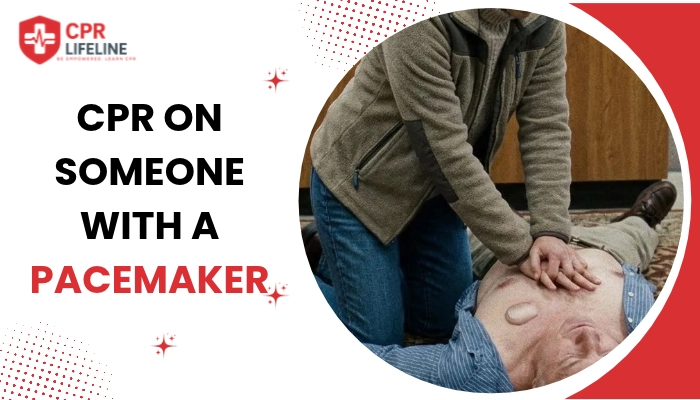

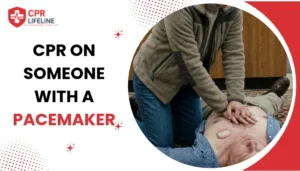
Yes, you can and should perform CPR on someone with a pacemaker. A pacemaker helps regulate the heartbeat, but it cannot prevent every cause of cardiac arrest or replace the need for CPR. When the heart stops pumping blood effectively, immediate chest compressions help maintain blood circulation to the brain and other vital organs. Although chest compressions may occasionally damage the implanted device, this possibility should never prevent or delay lifesaving CPR.
If someone with a pacemaker becomes unresponsive and is not breathing normally or is only gasping, check the scene, call emergency services, begin CPR, and use an automated external defibrillator (AED) as soon as possible. For adults, place your hands on the lower half of the sternum and perform chest compressions at a rate of 100–120 per minute, reaching a depth of approximately 5–6 cm (2–2.4 inches). Follow standard CPR techniques, avoid applying direct pressure over the implanted device, and follow the AED’s instructions when it becomes available.
In this blog, you’ll learn how to perform CPR on someone with a pacemaker, including proper hand placement, chest compression techniques, potential risks, and how to use an AED safely during resuscitation.
What Is a Pacemaker?
A pacemaker is a small, battery-powered medical device implanted beneath the skin, usually near the collarbone, to help regulate the heartbeat. It monitors the heart’s electrical activity and sends electrical impulses when needed to maintain an appropriate heart rate. Pacemakers are commonly used to treat heart rhythm disorders such as bradycardia, a condition in which the heart beats too slowly. Traditional pacemakers use thin wires called leads to connect the device to the heart, while leadless pacemakers are implanted directly inside it.
Although a pacemaker helps manage certain heart rhythm problems, it does not prevent every cardiac emergency. Unlike a standard pacemaker, an implantable cardioverter-defibrillator (ICD) can deliver an electrical shock to treat certain life-threatening heart rhythms. Some implanted devices combine both pacing and defibrillation functions, but even these devices cannot eliminate the risk of cardiac arrest.
Is CPR Safe to Do on Someone With a Pacemaker?
Yes, CPR is generally safe and necessary when someone with a pacemaker experiences suspected cardiac arrest. The basic CPR technique is the same as for someone without an implanted cardiac device. During cardiac arrest, the heart stops pumping blood effectively, depriving the brain and other vital organs of oxygen. Brain damage can begin within about 4-6 minutes without circulation, and the chances of survival fall with every minute that passes, which is why starting chest compressions immediately matters.
A pacemaker cannot correct every cause of cardiac arrest, including a severe heart attack or certain dangerous heart rhythms. Therefore, if someone with a pacemaker becomes unresponsive and is not breathing normally or is only gasping, call emergency services and begin CPR according to the dispatcher’s instructions. If you are a lay rescuer, do not waste valuable time checking for a pulse or worrying about the implanted device. Prompt resuscitation is far more important than the potential risk of device damage.
How to Perform CPR on Someone With a Pacemaker
You should follow standard CPR procedures while performing CPR on someone with a pacemaker. The American Heart Association recommends high-quality chest compressions for adults experiencing cardiac arrest, including correct hand placement, adequate compression depth, and minimal interruptions. The presence of a pacemaker does not change these fundamental CPR principles.
Below is a step-by-step process for performing CPR on someone with a pacemaker:
Step 1: Check Responsiveness and Breathing
You should make sure the area is safe before approaching the victim. Then tap the person’s shoulders and shout, “Are you okay?” Check whether they respond and whether they are breathing normally.
Occasional gasping, irregular snorting, or slow, labored breaths are not normal breathing and may indicate cardiac arrest. If the person is unresponsive and not breathing normally, activate emergency services immediately.
Step 2: Call Emergency Services
You should call 911 immediately or ask someone nearby to call and bring an AED. If you have a mobile phone, use speaker mode so you can follow the emergency dispatcher’s instructions while preparing to perform CPR.
Do not waste time searching for the person’s medical records, identifying the pacemaker model, or locating an implant identification card.
Step 3: Position the Person and Locate the Pacemaker
Place the person on their back on a firm, flat surface without delaying CPR. Kneel beside their chest so you can apply compressions effectively.
Most traditional pacemakers are implanted beneath the skin in the upper chest, commonly near the collarbone. Some devices may be positioned elsewhere, so avoid pressing directly over a visible or known implant. However, do not hesitate to use the correct CPR hand position because of the presence of a device.
Step 4: Perform Chest Compressions Correctly
Place the heel of one hand in the center of the chest, on the lower half of the breastbone (sternum). Place your other hand on top and interlock your fingers. Keep your arms straight and your shoulders directly above your hands.
For adults, you should perform chest compressions at a rate of 100–120 compressions per minute, reaching a depth of approximately 5–6 cm (2–2.4 inches). Compressing too shallowly may result in inadequate blood circulation, while excessive depth or improper technique can increase the risk of injury. Allow the chest to fully recoil to its normal position after each compression, and minimize interruptions.
Step 5: Give Rescue Breaths if Trained
If you are trained and able to provide rescue breaths, open the airway first by tilting the person’s head back and lifting the chin. Then give 30 chest compressions followed by two breaths for an adult without an advanced airway. Pinch the nose closed, seal your mouth over theirs, and give each breath over about one second, enough to produce visible chest rise.
If you are not trained or cannot provide rescue breaths, perform hands-only CPR for an adult who has suddenly collapsed and follow the emergency dispatcher’s instructions. Do not interrupt effective chest compressions unnecessarily.
Step 6: Use an AED as Soon as Possible
Ask another person to retrieve an AED while you continue CPR. When it arrives, turn it on, expose the person’s chest, attach the pads according to the diagrams, and follow the voice prompts.
Continue CPR until the person shows clear signs of life and is breathing normally, trained emergency personnel take over, the scene becomes unsafe, or you are physically unable to continue.
Can Chest Compressions Damage a Pacemaker?
Yes, chest compressions can potentially damage the pulse generator or leads of a pacemaker or injure the tissue surrounding a pacemaker, although serious device-related complications are uncommon. Correct hand placement can help avoid direct pressure on the device because a pacemaker is typically implanted in the upper chest, while standard CPR compressions are delivered over the lower half of the sternum.
Potential complications include bruising around the implant, chest injuries such as rib fractures, and, rarely, damage to the device or displacement of its leads. The risk of lead displacement may be higher when a pacemaker has been implanted recently. However, these potential risks should never delay or prevent CPR when cardiac arrest is suspected, as restoring blood circulation and maintaining oxygen delivery to vital organs are the immediate priorities.
How to Use an AED Safely on Someone With a Pacemaker
An automated external defibrillator (AED) is a portable device that analyzes a person’s heart rhythm and determines whether an electrical shock is needed to treat certain life-threatening arrhythmias. AEDs can be used on people with pacemakers and ICDs.
Step-by-Step AED Use
- Turn on the AED: Press the power button and follow the device’s spoken and visual prompts.
- Expose the chest: Remove or cut away clothing covering the chest, and dry the skin if it is wet.
- Attach the pads: Place the pads as shown in the diagrams on them, keeping them away from any visible or known pacemaker or ICD.
- Let the AED analyze: Make sure nobody touches the person while the AED analyzes the heart rhythm.
- Deliver a shock if advised: Make sure everyone is clear of the person, then press the shock button if the AED prompts you to. Some AEDs deliver the shock automatically.
- Resume CPR: Restart chest compressions right away when the AED tells you to, whether or not a shock was delivered.
For standard adult pad placement, one pad usually goes on the upper-right side of the chest below the collarbone, while the other goes on the left side below the armpit. If an implanted device lies directly beneath a pad location, position the pad away from the device while following the AED manufacturer’s instructions. A front-and-back pad arrangement may be appropriate when necessary.
Special Considerations for Performing CPR on Someone With a Pacemaker
Although the basic CPR procedure remains the same for someone with a pacemaker, a few additional considerations can help minimize device-related complications while ensuring effective resuscitation.
Here are the key points you should keep in mind while performing CPR with a pacemaker:
Recently Implanted Pacemakers
Recently implanted pacemakers may be more vulnerable to lead displacement because the leads may not yet be fully secured. Although chest compressions can potentially affect the device or surrounding tissue, this should never delay or prevent CPR when cardiac arrest is suspected.
Pacemaker vs. ICD
Unlike a standard pacemaker, an implantable cardioverter-defibrillator (ICD) can deliver an internal electrical shock to treat certain life-threatening heart rhythms. Rescuers who are touching the person when the ICD delivers a shock may occasionally feel a mild tingling sensation, but the risk of harm is extremely low. Regardless of the device type, the same essential CPR principles apply, and rescuers should continue necessary resuscitation without interruption.
Protecting the Implanted Device During Resuscitation
You should maintain correct hand placement on the lower half of the sternum to avoid applying direct pressure over the implanted device. When using an AED, position the electrode pads away from the pacemaker or ICD, avoiding direct placement over the device while maintaining effective pad positioning.
Post-Resuscitation Device Assessment
After successful resuscitation, the patient’s pacemaker or ICD should be evaluated by healthcare professionals. This helps identify potential damage to the device or its leads and confirms that the implanted system is functioning properly.
Start CPR Right Away, Even With a Pacemaker
You can and should perform CPR on someone with a pacemaker if they are unresponsive and not breathing normally. Although chest compressions can occasionally cause injury or affect implanted device components, this risk should never prevent lifesaving treatment. Call emergency services, begin effective chest compressions on the lower half of the sternum, and use an AED as soon as possible. Avoid direct pressure over the implant and do not place AED pads directly over the device, but never allow concerns about the pacemaker to delay your response.
Having the right CPR knowledge and practical training is essential to further strengthen your ability to respond effectively in cardiac emergencies. At CPR Lifeline, we provide AHA-certified classes in CPR, BLS, ACLS, and PALS. Our flexible learning options combine online coursework with hands-on skills assessments to help healthcare professionals and other learners develop essential lifesaving skills.
Faqs

Chris Peters
Chris Peters is a certified American Heart Association instructor and firefighter since 1996 with over 30 years of emergency response experience. After answering thousands of 911 calls, he founded CPR Lifeline to provide AHA-certified training that transforms bystanders into confident lifesavers who act decisively when seconds count