



Most people learning CPR focus on compression depth and rate. Complete chest recoil, the full release of pressure between each compression, receives far less attention in training yet plays an equally critical role in CPR effectiveness. Overlooking it does not just reduce technique quality. It directly reduces blood flow to the brain and vital organs during cardiac arrest.
Complete chest recoil allows the heart to refill with blood between compressions. Without it, the heart has less blood to pump with each compression cycle, coronary perfusion pressure drops, and the effectiveness of every subsequent compression is compromised. Understanding why allowing complete chest recoil is important when performing CPR is not an advanced concept reserved for healthcare providers. It is a fundamental principle that applies to every rescuer in every cardiac arrest situation.
This blog breaks down what complete chest recoil is, how it affects circulation and survival outcomes, what happens when it is incomplete, and the practical techniques that help rescuers maintain proper recoil throughout a resuscitation effort.
What Is Complete Chest Recoil During CPR?
Complete chest recoil occurs when the rescuer fully releases pressure after each compression, allowing the chest wall to return to its natural resting position before the next compression begins. It is the second half of every compression cycle and is just as important as the compression itself. The compression phase pushes blood out of the heart and into circulation. The recoil phase creates the negative pressure inside the chest that draws blood back into the heart, refilling it in preparation for the next compression.
Without complete recoil, the chest remains partially compressed between cycles, preventing the heart from filling adequately. This reduces the volume of blood available for the next compression and lowers the overall effectiveness of the entire CPR effort. The American Heart Association explicitly identifies complete chest recoil as a core component of high-quality CPR alongside compression depth, compression rate, and minimizing interruptions. Rescuers who understand what high-quality CPR requires recognize that recoil is not a passive outcome of good compressions. It is an active technique that must be practiced and maintained deliberately throughout the resuscitation effort.
Why Is Allowing Complete Chest Recoil Important for Effective CPR?
Complete chest recoil is important because it allows the heart to refill with blood between compressions. Each time the chest fully expands after a compression, negative intrathoracic pressure is created inside the chest cavity. This negative pressure acts as a suction force that draws venous blood back into the right side of the heart from the body’s circulation. The more completely the chest recoils, the greater the negative pressure generated, and the more blood returns to the heart before the next compression cycle begins. A heart that refills adequately between compressions delivers more oxygenated blood to the brain and vital organs with each subsequent push.
Incomplete recoil disrupts this mechanism at every stage. Reduced venous return means less blood enters the heart, which directly lowers cardiac output during CPR. Lower cardiac output reduces coronary perfusion pressure, the force that drives oxygenated blood into the heart muscle itself, making it harder for the heart to respond to defibrillation or return to spontaneous circulation. According to research published in resuscitation literature, even mild residual leaning on the chest between compressions can measurably reduce coronary and cerebral perfusion pressure. The cumulative effect across hundreds of compression cycles during a prolonged resuscitation effort is significant. Every compression cycle where recoil is incomplete is a cycle where the brain and heart receive less oxygen than they need to survive.
What Happens If You Lean on the Chest Between Compressions?
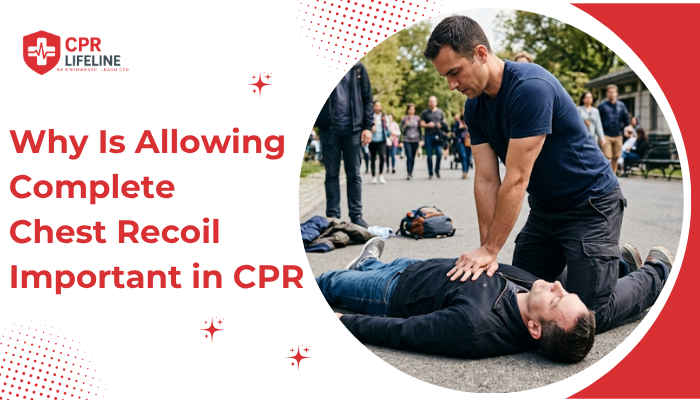
Leaning on the chest between compressions means the rescuer fails to fully lift their body weight off the sternum during the recoil phase, leaving residual downward pressure on the chest wall. This prevents the chest from returning to its natural resting position and directly reduces the negative intrathoracic pressure needed to draw blood back into the heart. Even a slight lean that the rescuer does not feel can measurably reduce venous return and coronary perfusion pressure throughout resuscitation.
Rescuer fatigue is the most common cause of leaning. As compressions continue, the physical effort required causes rescuers to unconsciously shift their weight forward and rest against the chest between cycles without realizing it. Studies examining compression quality degradation have found that leaning increases progressively with time on task, which is why rotating compressors every two minutes is a recommended practice in both BLS and ACLS protocols. The consequences of sustained leaning accumulate quickly. Reduced cardiac filling, lower cardiac output, decreased cerebral and coronary perfusion pressure, and diminished likelihood of return of spontaneous circulation are all directly linked to incomplete recoil caused by rescuer leaning. Recognizing the most common CPR performance errors, including knowing when and why rescuers pause compressions, and actively correcting them during training is what prevents leaning from becoming an unconscious habit in a real emergency.
Step-by-Step Guide to Achieving Complete Chest Recoil
Achieving complete chest recoil requires deliberate attention to body mechanics at every stage of the compression cycle. Each step below directly supports full chest expansion and prevents the residual leaning that reduces CPR effectiveness.
- Position your hands correctly by placing the heel of your dominant hand on the lower half of the sternum, directly in the center of the chest. Interlace your other hand on top and keep your fingers raised off the chest wall to avoid applying pressure outside the compression zone.
- Align your shoulders directly above your hands with your arms straight. This position allows you to drive compression force straight down and lift cleanly during the recoil phase without shifting body weight onto the chest.
- Compress to the recommended depth of at least 2 inches for adults, following current AHA guidelines. Consistent compression depth ensures the recoil phase starts from the correct position every cycle.
- Release all pressure completely at the top of each recoil phase without lifting your hands off the chest. The goal is zero residual weight on the sternum between compressions, allowing the chest wall to return fully to its resting position.
- Maintain a steady compression rate of 100 to 120 compressions per minute. Rushing compressions shortens the recoil phase and prevents full chest expansion before the next compression begins.
- Monitor your body position throughout and consciously check for leaning, particularly after the first two minutes when fatigue begins to affect technique without the rescuer noticing.
- Rotate compressors every two minutes to maintain consistent recoil quality. A fresh compressor is far less likely to lean unconsciously than one who has been compressing for several minutes without a break.
- Minimize all interruptions and return to compressions immediately after any necessary pause. Each interruption resets the perfusion pressure that proper recoil has been building, making every second of hands-off time costly to the overall resuscitation effort.
Common CPR Mistakes That Prevent Full Chest Recoil
Most recoil errors are not intentional. They develop gradually as rescuers fatigue, lose focus, or fall into habits formed during inadequate training. These are the most common mistakes that prevent full chest recoil and reduce the overall resuscitation effort.
- Rescuer Leaning: Resting body weight on the chest between compressions is the single most common recoil error. It develops progressively with fatigue and is often undetected by the rescuer in the moment. Rotating compressors every two minutes is the most reliable way to prevent leaning from accumulating across a prolonged resuscitation effort.
- Incorrect Body Mechanics: Positioning the body too far forward, bending the elbows during compressions, or misaligning the shoulders over the hands makes it physically difficult to lift cleanly off the chest during the recoil phase. Correct posture with straight arms and shoulders directly above the hands is the foundation of consistent recoil technique.
- Rushing the Compression Rate: Compressing faster than 120 compressions per minute shortens the recoil phase and prevents the chest from fully expanding before the next compression begins. Maintaining a steady rate of 100 to 120 compressions per minute preserves enough time in each cycle for complete recoil.
- Finger Placement on the Chest Wall: Allowing the fingers to rest on the chest rather than keeping them raised applies unintended pressure outside the compression zone and restricts chest wall expansion during recoil. Only the heel of the hand should make contact with the sternum during compressions.
- Excessive Focus on Compression Depth Alone: Rescuers who concentrate entirely on pushing hard enough often neglect the release phase, treating recoil as an afterthought rather than an active and deliberate part of each compression cycle. High-quality CPR requires equal attention to both the compression and the recoil phases.
- Poor Training Retention: Recoil technique deteriorates faster than other CPR skills when not practiced regularly. Rescuers who trained years ago and have not recertified since are far more likely to develop leaning habits and improper mechanics under the stress of a real emergency. Regular CPR recertification reinforces correct recoil technique, and for anyone wondering whether CPR training is hard to get through, the process is far more accessible than most people expect.
Chest Recoil Is Where Good CPR Becomes High-Quality CPR
Complete chest recoil is not a minor detail in CPR technique. It is a fundamental mechanism that determines how much blood the heart can deliver to the brain and vital organs with every compression cycle. Compression depth and rate get most of the attention in CPR training, and understanding how effective CPR is overall helps explain why undermining either metric through poor recoil has such a measurable impact on survival. A rescuer who compresses correctly but leans on the chest is delivering a fraction of the circulatory support the victim needs. Treating the release phase with the same deliberate attention as the compression phase is what separates adequate CPR from high-quality CPR.
Building that level of technique requires more than reading about it. It requires hands-on practice in a structured training environment where body mechanics, compression rate, and recoil quality can all be observed and corrected in real time. CPR Lifeline offers AHA-certified BLS, ACLS, and PALS courses that train rescuers on every component of high-quality CPR, including complete chest recoil. Visit CPR Lifeline to find a course near you and develop the technique that holds up when a real emergency demands it.
Faqs
Complete chest recoil allows the heart to refill with blood between compressions by creating negative intrathoracic pressure inside the chest cavity. Without full recoil, venous return is reduced, cardiac output drops, and coronary perfusion pressure decreases, directly lowering the effectiveness of every compression delivered.
Complete chest recoil occurs when the rescuer fully releases pressure after each compression, allowing the chest wall to return to its natural resting position before the next compression begins. It is the second half of every compression cycle and is as critical to CPR quality as the compression itself.
Incomplete chest recoil reduces venous return to the heart, lowers cardiac output, and decreases coronary and cerebral perfusion pressure. Over the course of a prolonged resuscitation effort, the cumulative effect of incomplete recoil significantly reduces the likelihood of return of spontaneous circulation and neurologically intact survival.
The most common cause is rescuer leaning, where residual body weight remains on the chest between compressions due to fatigue. Incorrect body mechanics, rushing the compression rate, improper finger placement, and poor training retention are also significant contributing factors.
Maintain straight arms with shoulders directly above the hands, consciously lift all body weight off the sternum during the recoil phase, and rotate compressors every two minutes to prevent fatigue-related leaning from developing. Real-time CPR feedback devices can also detect residual leaning and alert rescuers during a resuscitation effort.
Yes. Compressing faster than 120 compressions per minute shortens the recoil phase and prevents the chest from fully expanding before the next compression begins. Maintaining a steady rate of 100 to 120 compressions per minute preserves enough time in each cycle for complete chest recoil.
Yes. The American Heart Association explicitly identifies complete chest recoil as a core component of high-quality CPR alongside compression depth, compression rate, and minimizing interruptions. It is a required element of both BLS and ACLS training protocols.
Improving chest recoil technique requires deliberate practice with correct hand placement, proper body alignment, and conscious attention to the release phase of each compression cycle. Regular CPR recertification through a recognized provider ensures recoil technique is reinforced before poor habits develop and persist into a real emergency situation.

Chris Peters
Chris Peters is a certified American Heart Association instructor and firefighter since 1996 with over 30 years of emergency response experience. After answering thousands of 911 calls, he founded CPR Lifeline to provide AHA-certified training that transforms bystanders into confident lifesavers who act decisively when seconds count