
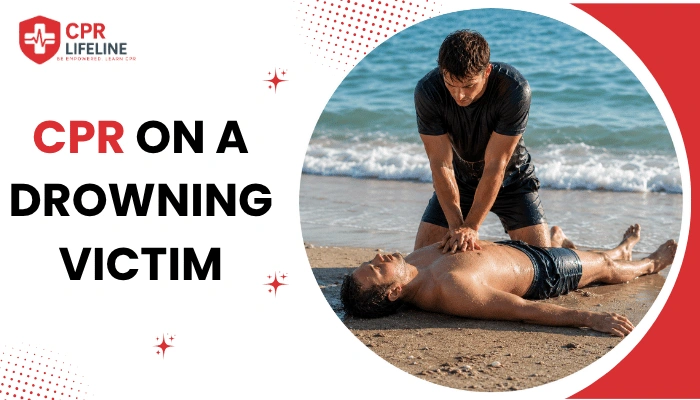

Drowning remains a serious global concern, causing around 300,000 deaths worldwide each year. Children are particularly vulnerable, with those under 5 accounting for nearly one quarter of all drowning deaths. In the United States, drowning is the leading cause of death for children ages 1 to 4. In these moments, knowing how to perform CPR can be the difference between life and death.
When drowning occurs, CPR can be a critical lifesaving intervention because the person may experience severe oxygen deprivation before cardiac arrest. Unlike many other cardiac emergencies, drowning-related cardiac arrest is primarily caused by a lack of oxygen, making rescue breaths especially important alongside chest compressions. Starting CPR as soon as possible after a drowning incident can help restore oxygen circulation and improve the chances of survival.
In this blog, you’ll learn why drowning CPR is different from standard CPR, how to perform CPR for drowning victims of every age group, and how to avoid the mistakes that most commonly reduce survival chances.
Why CPR for a Drowning Victim Is Different From Standard CPR
Drowning CPR follows the same core principles as standard CPR, but rescue breaths matter more here. That’s because drowning-related cardiac arrest is almost always caused by oxygen deprivation rather than a primary heart problem. As respiratory impairment progresses during drowning, oxygen levels fall rapidly. If the problem isn’t corrected, the brain and heart become increasingly starved of oxygen until the heart stops beating. This is why the 2024 AHA and AAP focused update recommends CPR with rescue breaths and chest compressions for anyone in cardiac arrest after drowning, typically opening the airway and giving two rescue breaths before beginning cycles of compressions and breaths.
Rescue breaths are the priority when a rescuer is trained, willing, and able to give them. If someone is untrained, unwilling, or unable to provide breaths, hands-only CPR is still far better than doing nothing, and the AHA supports it in that situation. But if you’re able to give conventional CPR safely, drowning is one case where breaths shouldn’t be skipped just because hands-only CPR is more familiar.
Safety and Preparation Before You Begin Drowning CPR
Before you can help a drowning victim, a few critical steps come first. Skipping the scene check, rushing an unsafe removal, or jumping straight into CPR without calling for help can put both of you at risk and delay the care they actually need.
Here’s what to do in those first crucial moments when somebody drowns.
Ensure Scene Safety
Before approaching the person, quickly consider whether the environment is safe. Potential hazards include:
- Fast-moving or deep water
- Strong currents
- Waves or surf
- Thin ice
- Electrical hazards
- Unstable docks, boats or pool structures
- Traffic or boating activity
- Toxic or contaminated water
- Slippery surfaces
- Other people entering the water without a plan
Do not create another emergency by entering unsafe water without the necessary training and equipment.
Safely Remove the Person From the Water
Remove the person from the water as quickly and safely as possible. Use a reaching or throwing aid when appropriate. If the person is unconscious, trained rescuers should use appropriate rescue techniques. If spinal injury is suspected, take reasonable precautions to minimize unnecessary movement, but do not delay life-saving ventilation and CPR when the person is not breathing normally.
Call Emergency Services
Call 911 as soon as possible. If another person is present, assign them to call while you begin care, and have them bring an AED if one is available. If you’re alone, put your phone on speaker and start CPR while the dispatcher guides you through the rest. Tell the dispatcher your location, what happened, and the person’s condition, since this helps responders arrive prepared.
How to Do CPR on a Drowning Victim: Step-By-Step
Unlike standard CPR, which follows a compressions-first C-A-B sequence, drowning resuscitation follows an A-B-C sequence: airway, breathing, then compressions. Acting quickly and staying calm through each step gives the person the best possible chance of survival.
The following steps describe the steps of CPR for a drowning victim who is not breathing normally.
Step 1: Check Responsiveness
Once the person is safely out of the water, check whether they respond. Speak loudly and ask if they’re okay while tapping their shoulders firmly. Look for any movement, sound, or response to your voice. If there’s no response at all, treat this as an emergency and move straight to the next step.
Step 2: Position the Person Correctly
Place the person on their back on a firm, flat surface with their chest accessible for compressions. A solid surface lets your compressions actually reach the heart instead of being absorbed. If they’re on something soft, like a bed, move them to a firmer surface first, but only if it can be done quickly and safely.
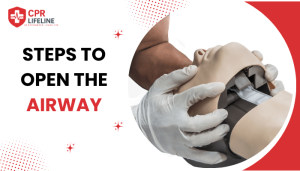
Step 3: Open the Airway
Open the airway with a head tilt and chin lift. Place one hand on the forehead and use the other to lift the chin, tilting the head back slightly to move the tongue away from the throat. If spinal injury is suspected, use a jaw-thrust technique instead to avoid moving the neck.
Step 4: Check for Breathing
Do not mistake occasional gasping for effective breathing. If the person is unresponsive and not breathing normally, begin CPR. If the person is breathing normally but remains unconscious, place them in an appropriate recovery position and continue monitoring until emergency help arrives.
Step 5: Give Rescue Breaths
Open the airway and provide two rescue breaths. Each breath should be delivered so that the chest visibly rises. Avoid excessive ventilation, since forceful and rapid breaths can cause complications. If you have appropriate barrier equipment such as a pocket mask or a bag-mask device and are trained to use it, you may use it. If you cannot provide rescue breaths, begin chest compressions rather than delaying CPR.
Step 6: Perform Chest Compressions
Begin high-quality chest compressions on a firm surface. Position yourself so you can compress straight down using your body weight, pushing at a rate of 100 to 120 compressions per minute, and allow full chest recoil between compressions.
For adults, place the heel of one hand in the center of the chest with your other hand on top, and compress at least 2 inches (5 cm) deep, without exceeding 2.4 inches (6 cm).
For children who haven’t reached puberty, use one or two hands depending on their size, and compress to about one-third of the chest’s front-to-back depth, roughly 2 inches (5 cm) for most children. The compression target rate for children is the same as for adults.
For infants, use either the heel of one hand or the two-thumb encircling-hands technique, compressing to the same one-third depth. The two-finger technique is no longer recommended for infant CPR, since it may not reliably achieve adequate compression depth.
For drowning-related cardiac arrest, a single rescuer generally uses a 30:2 compression-to-breath ratio across all ages. When two trained rescuers are performing pediatric CPR, a 15:2 ratio may be used instead. Since compressions are performed at full force on a drowning victim, it is worth noting that rib fractures during CPR are a known and acceptable risk of correctly performed compressions.
Step 7: Continue CPR Cycles Until Help Arrives
CPR can take several minutes of continuous effort before the person responds or professional help arrives. Keep going without unnecessary interruptions until:
- The person begins breathing normally or shows clear signs of life
- An AED instructs you to pause
- Emergency professionals take over
- The scene becomes unsafe
- You are physically unable to continue
If another trained rescuer is available, switch rescuers approximately every two minutes when possible to reduce fatigue and maintain compression quality.
Special Situations in Drowning Resuscitation
Not every drowning case is the same. Cold water, suspected injuries, and some other situations can all change how care should be given. Knowing what to do differently in these moments can make the difference between helping effectively and causing further harm.
Here’s how to handle three situations that often come up during drowning.
Hypothermic Drowning Victims
Cold water exposure can cause hypothermia, which may complicate both resuscitation and recovery. Remove the victim from further cold exposure when it’s safe to do so. Don’t assume a low body temperature means CPR is futile. Hypothermic cardiac arrest may require prolonged professional high quality resuscitation and specialized rewarming, so emergency evaluation is essential.
Suspected Spinal Injury
A spinal injury may be possible after a diving accident, collision, fall or other high-impact event. If you suspect one, minimize unnecessary movement. Use stabilization techniques if you’re trained to do so. However, suspected spinal injury should not prevent you from providing lifesaving CPR when the person is unresponsive and not breathing normally.
In-Water Rescue Breathing
Trained rescuers, such as lifeguards or swim instructors, may provide rescue breaths while the person is still in the water. This can buy critical time before removal, but it’s an advanced skill that requires specific training to perform safely and effectively. It should only be attempted when doing so is safe for the rescuer and doesn’t delay getting the person out of the water. If you’re untrained, don’t attempt an in-water rescue that puts you at significant risk yourself.
Common Mistakes to Avoid When Performing CPR on a Drowning Victim
Even trained rescuers can make errors under pressure during CPR. Stress, fear, and the urgency of the moment can lead people to skip steps or make choices that reduce the chances of a good outcome.
Here are the mistakes seen most in drowning emergencies, along with why each one matters:
- Waiting for splashing or shouting: Drowning is usually quiet, not dramatic like it’s often shown in movies. A person in real distress may be silent, vertical in the water, and unable to wave for help. Don’t wait for obvious signs before acting.
- Delaying CPR to drain water: Getting water out of the lungs or stomach isn’t the priority, and trying to do so wastes valuable time the person doesn’t have. Start compressions and rescue breaths right away instead, and let any water that comes up on its own be cleared as it happens.
- Skipping rescue breaths: Drowning-related cardiac arrest is caused by low oxygen, not a heart problem. That makes rescue breaths more important here than in many other cardiac emergencies, since compressions alone can’t restore oxygen the body has already lost.
- Waiting for AED: CPR should never be delayed to search for a device. Begin compressions and breaths first, and use the AED the moment it’s safely available, since most drowning-related cardiac arrests aren’t shockable rhythms anyway.
- Forcing water out with abdominal thrusts: This technique isn’t recommended for drowning and can raise the risk of vomiting and aspiration. Let compressions and rescue breaths do the work instead, and reposition the person only if their airway becomes visibly blocked.
- Misunderstanding foam at the mouth: Foam is a common and expected part of drowning, not a sign that something has gone wrong or a reason to stop. Don’t let it distract you and be focused on compressions and rescue breaths rather than trying to clear it.
- Assuming cold water means no survival: Some people have been resuscitated after extended time in cold water, even without a pulse for a while. Continue CPR and let medical professionals make that determination, not the water temperature.
CPR for Drowning Follows the ABC Approach
Drowning is a medical emergency in which every minute matters. If a person is unresponsive and not breathing normally after drowning, safely remove them from the water, activate emergency medical services and begin CPR as quickly as possible. CPR for drowning starts differently than most people are trained for. Instead of jumping straight to compressions, the priority is opening the airway and delivering rescue breaths first. This single shift in sequence, ABC instead of CAB, is what makes drowning resuscitation effective.
Do not wait for an emergency to learn these skills. CPR Lifeline offers AHA-certified CPR courses with a fast, flexible format: complete the online course at your own pace, then finish with a quick 30-minute hands-on skills check to get certified the same day. Book a class today and learn how to respond when every second counts.
Faqs

Chris Peters
Chris Peters is a certified American Heart Association instructor and firefighter since 1996 with over 30 years of emergency response experience. After answering thousands of 911 calls, he founded CPR Lifeline to provide AHA-certified training that transforms bystanders into confident lifesavers who act decisively when seconds count