


Most people know CPR can save lives, but far fewer understand what it actually does inside the body. Chest compressions and rescue breaths are more than emergency first aid. They work together to temporarily support the body’s most important functions until professional treatment becomes available.
CPR works by creating enough pressure with chest compressions to move a small amount of blood through the body. This keeps oxygen flowing to the brain, heart, and other organs until an AED or medical professionals can restart the heart. Although CPR cannot replace a normally beating heart, it can significantly improve a person’s chances of survival.
In this blog, you’ll learn how CPR works, what happens inside the body when the heart stops, how CPR creates blood flow, why proper technique matters, and how CPR works alongside an AED to improve the chances of survival.
What Happens in the Body When the Heart Stops?
The heart’s main job is to pump blood throughout the body. Blood delivers oxygen to your organs and tissues while carrying carbon dioxide and other waste products away. During cardiac arrest, the heart suddenly stops pumping, and blood flow stops almost immediately. Without circulation, oxygen can no longer reach the brain, heart, and other vital organs, while carbon dioxide and other waste products begin to build up.
The brain is affected first because it needs a constant supply of oxygen to function and stores very little of its own. According to research on cerebral ischemia, brain cells begin to die within 3 to 5 minutes of losing blood flow. That’s why recognizing cardiac arrest and starting CPR as quickly as possible can make such a significant difference.
How Does CPR Move Blood Through the Body?
CPR follows the C-A-B approach: Compressions, Airway, and Breathing, which prioritizes chest compressions before opening the airway and providing rescue breaths. The American Heart Association (AHA) recommends this sequence because starting compressions immediately helps keep oxygen-rich blood flowing to the brain, heart, and other vital organs. CPR can help slow organ damage until a defibrillator or advanced medical care is available.
Each CPR step has a distinct role in maintaining circulation and oxygen delivery.
Compressions
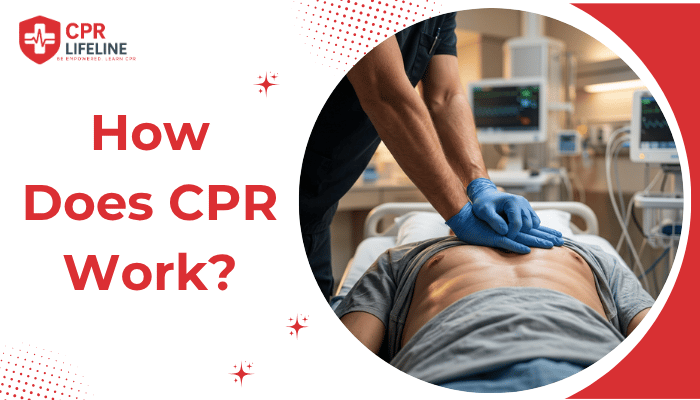
Chest compressions create pressure that pushes a small amount of blood through the circulatory system. Although this blood flow is much lower than normal, it helps keep vital organs supplied with oxygen for a limited time. Researchers use two main models to explain how chest compressions move blood through the body, and echocardiographic studies published in Circulation have examined evidence for both.
The Cardiac Pump Model
The heart sits between the breastbone (sternum) and the spine. When you press down on the center of the chest, you squeeze the heart directly between these two structures. This squeeze pushes blood out of the heart’s chambers. The blood then moves into the blood vessels, reaching the lungs and the rest of the body.
The Thoracic Pump Model
In this theory, chest compressions raise pressure across the entire chest cavity, not just around the heart. This pressure pushes blood through the circulatory system. Here, the heart acts more like a passageway than a pump. The valves still control the direction of blood flow. Many researchers believe this pressure-based mechanism drives blood flow more than the direct squeezing of the heart.
Airway
After starting compressions, the next step is to open the airway. You can do this by tilting the head back and lifting the chin, which moves the tongue away from the back of the throat and clears the path for air. An open airway allows air to travel freely into the lungs. If the airway is blocked, oxygen cannot reach the lungs or enter the bloodstream, no matter how effective the chest compressions are.
Rescue Breaths
Rescue breaths deliver oxygen into the lungs after the airway is open. That oxygen passes into the bloodstream, where chest compressions help circulate it throughout the body. Blood already contains some oxygen for a short time, which is why compression-only CPR can still help during the first few minutes of cardiac arrest. However, that oxygen supply gradually runs out, making rescue breaths increasingly important during prolonged resuscitation.
What Does CPR Do for the Body?
CPR restores only a small amount of normal blood flow, but that is often enough to make a difference. Even limited circulation helps protect vital organs and gives the person a better chance of survival until the heart can be restarted.
- Protects the brain: CPR helps move oxygen-rich blood to the brain, slowing damage caused by a lack of oxygen until normal blood flow returns.
- Supports the heart: CPR helps blood reach the heart muscle itself, giving it a better chance of responding to an AED and starting to beat normally again.
- Keeps the body functioning: Blood continues carrying oxygen to the body’s tissues while removing carbon dioxide and other waste products. Although this blood flow is much lower than normal, it helps slow damage to vital organs.
- Buys time for advanced care: CPR cannot restart the heart on its own, but it helps keep the body alive until an AED or emergency medical professionals can restore normal circulation.
Why Does Proper CPR Technique Matter?
Good CPR involves more than simply pressing on the chest. Every compression affects how much blood reaches the brain, heart, and other vital organs. High-quality CPR technique creates better blood flow, while poor technique reduces CPR’s effectiveness.
The following key techniques work together to maximize blood flow during CPR:
Proper Hand Placement
Place your hands on the center of the chest, over the lower half of the sternum (breastbone). This position directs pressure where it can best compress the heart and increase pressure inside the chest. Moving your hands too high, too low, or off-center reduces the amount of blood each compression can move and increases the risk of injury.
Compression Depth
Push the chest deep enough to create meaningful blood flow. Shallow compressions do not generate enough pressure to circulate blood effectively to the brain, heart, and other vital organs. The American Heart Association recommends compressing an adult’s chest at least 2 inches (5 cm), but no more than 2.4 inches (6 cm). Deeper compressions do not improve blood flow and increase the risk of injury.
Compression Rate
Maintain a steady rate of 100 to 120 compressions per minute. This speed provides the best balance between moving blood forward and giving the heart enough time to refill between compressions. Compressing too slowly reduces blood flow, while compressing too quickly often leads to shallower compressions and incomplete chest recoil. Listening to songs with a beat in this range, like “Stayin’ Alive” by the Bee Gees, can help you keep a steady, correct pace.
Full Chest Recoil
Let the chest return to its normal position after every compression, allowing for complete chest recoil. As the chest rises, pressure inside the chest falls, allowing the heart to refill with blood before the next compression. If you lean on the chest or prevent complete chest recoil, less blood returns to the heart, and each following compression becomes less effective.
Compression-to-Breath Ratio
CPR balances chest compressions with rescue breaths to support both circulation and oxygen delivery. For adult CPR, the American Heart Association recommends 30 compressions followed by 2 rescue breaths, whether there is one rescuer or two. For infants and children, the ratio remains 30:2 with one rescuer but changes to 15:2 when two trained rescuers are present. These ratios help maximize blood flow while providing enough oxygen to the lungs.
Minimize Interruptions
Keep interruptions as short as possible. Every time compressions stop, blood flows to the brain and heart drops quickly. It takes several compressions to build that pressure again, so frequent or long pauses reduce CPR’s effectiveness. If two rescuers are present, switch position every two minutes and keep the interruption under 10 seconds. Continuous compressions help maintain circulation until an AED or advanced medical care becomes available.
How Does an AED Work With CPR?
Chest compressions and rescue breaths keep blood and oxygen moving through the body, but they usually cannot correct the electrical problem that caused the heart to stop. In many cases of cardiac arrest, the heart’s electrical activity becomes disorganized, causing it to quiver instead of pumping blood effectively. An automated external defibrillator (AED) analyzes the heart’s rhythm through pads placed on the chest. If it detects a shockable rhythm, it delivers an electrical shock to help restore a normal heartbeat. If the rhythm is not shockable, the AED will not deliver a shock, and CPR should continue.
CPR and an AED work together rather than replacing each other. Compressions and breaths keep the brain and other organs supplied with oxygen while the AED works on the underlying electrical problem. Using both increases the chances of the heart starting to beat effectively again, compared to using either one alone.
CPR Keeps the Body Alive Until Help Can Take Over
CPR works by taking over the job the heart normally does on its own. Chest compressions squeeze the heart directly, raise pressure across the entire chest, and rely on a compression and recoil cycle to keep blood moving toward the brain and other vital organs. That movement slows the damage caused by oxygen loss and buys precious time until defibrillation or advanced medical care can take over.
Every minute without CPR after cardiac arrest reduces the odds of a good outcome. Learning to perform it correctly can make a real difference when it counts. CPR training builds the confidence and muscle memory needed to act quickly in a moment when hesitation costs precious time. If you want to be ready to help when it matters most, CPR Lifeline offers AHA CPR, BLS, ACLS, PALS, and First Aid courses at convenient training locations across Tennessee and Georgia. Explore our available CPR courses and choose the certification that’s right for you.
Faqs

Chris Peters
Chris Peters is a certified American Heart Association instructor and firefighter since 1996 with over 30 years of emergency response experience. After answering thousands of 911 calls, he founded CPR Lifeline to provide AHA-certified training that transforms bystanders into confident lifesavers who act decisively when seconds count