

An opioid overdose can slow or stop breathing, depriving the brain and other vital organs of oxygen. If the person does not receive immediate care, this can lead to cardiac arrest and become life-threatening. Recognizing the warning signs and acting quickly can help save a life.
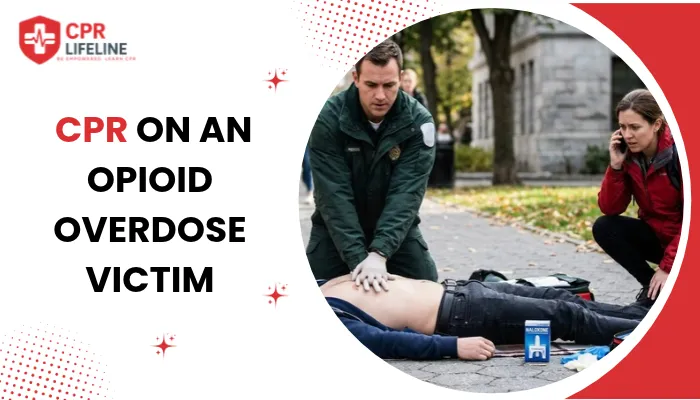
You should start CPR immediately if the victim is unresponsive and not breathing normally. You should begin with chest compressions, pushing hard and fast in the center of the chest. For an adult, give 30 compressions followed by 2 rescue breaths if you can provide them. Use an AED as soon as one is available, and administer naloxone if available. Naloxone can help reverse the effects of opioids, but you should not delay CPR.
In this blog, you will learn how to recognize an opioid overdose, what to do before starting CPR, why CPR is important, and how to provide CPR when they are unresponsive and not breathing normally.
What Are the Signs of an Opioid Overdose?
Opioids include prescription pain medications such as oxycodone and morphine, as well as illicit drugs such as heroin and illegally manufactured fentanyl. An overdose can occur when someone takes too much of an opioid or combines it with other substances. Opioids can suppress breathing, causing oxygen levels to fall. Without prompt treatment, this can lead to respiratory arrest and eventually cardiac arrest.
You should look for these warning signs:
- Slow, shallow, or absent breathing: The person may take very few breaths, breathe irregularly, or stop breathing altogether.
- Unresponsiveness: They may not wake up when you call their name or gently tap their shoulders.
- Unusual snoring, gurgling, or choking sounds: These sounds can indicate dangerously impaired breathing. Do not assume the person is simply sleeping.
- Pinpoint pupils: Their pupils may appear unusually small, although this sign is not always present.
- Blue, gray, or pale skin: The lips, nail beds, or skin may change color because the body is not getting enough oxygen. Color changes can be harder to recognize on some skin tones.
- Limpness or extreme drowsiness: The person may be unable to stay awake, speak clearly, or respond appropriately.
You may also notice drug packaging, medications, needles, or other evidence of substance use nearby. However, you do not need to confirm which drug the person took before getting help.
What to Do Before Starting CPR on an Opioid Overdose Victim
If you notice any of the above signs, you should check that the scene is safe, assess the person’s responsiveness and breathing, and call 911 or your local emergency number. Ask someone to get naloxone and an automated external defibrillator (AED) if available. Also, you should respond according to the person’s condition.
- Unconscious but breathing normally: Monitor the person’s breathing and place them in the recovery position if appropriate. If an opioid overdose is suspected, administer naloxone if available and follow the product instructions.
- Has a pulse but is not breathing normally: Trained rescuers should provide breaths or bag-mask ventilation and administer naloxone if available.
- Unresponsive and not breathing normally: Rescuers should assume cardiac arrest and begin CPR with breaths if they can provide them. Use an AED as soon as one is available and administer naloxone if available, without delaying CPR. Follow the emergency dispatcher’s instructions.
Lay rescuers should not delay CPR to check for a pulse. If the person is unresponsive and not breathing normally, you should follow the emergency dispatcher’s instructions and begin CPR quickly.
Why CPR Is Essential for an Opioid Overdose
CPR is particularly important in opioid-associated cardiac arrest because the emergency often begins with breathing suppression and a lack of oxygen. The American Heart Association’s 2025 guidelines on special circumstances of resuscitation emphasize that naloxone should not delay high-quality CPR. Naloxone can reverse the effects of opioids and help restore breathing, but it may take several minutes to work, and repeat doses may be needed. When a person is unresponsive and not breathing normally, rescuers should begin CPR with breaths and chest compressions promptly rather than wait for naloxone to take effect.
Rescue breaths help deliver oxygen to the lungs, while chest compressions circulate blood to the brain and other vital organs when the heart has stopped pumping effectively. Combining both can be especially important because an opioid overdose often causes breathing to stop before the heart stops. Research also supports combining these interventions during opioid-associated cardiac arrest. A 2025 study published in JAMA Network Open found that bystander CPR with both chest compressions and ventilation was associated with higher odds of favorable neurological outcomes than compression-only CPR.
How to Provide CPR to a Suspected Opioid Overdose Victim
When a suspected opioid overdose leads to cardiac arrest, starting CPR promptly can help maintain blood flow and oxygen delivery to vital organs. For an unresponsive person who is not breathing normally, you should begin CPR, give rescue breaths if you can, and use an AED as soon as one is available. Administer naloxone if available, but do not delay resuscitation to give it.
You should follow these steps to provide CPR while waiting for emergency medical professionals to arrive.
Step 1: Start Chest Compressions
Lay the person flat on their back on a firm, level surface. Kneel beside their chest and place the heel of one hand in the center of the chest, on the lower half of the breastbone. Place your other hand on top and keep your arms straight. Correct hand placement is essential for delivering effective compressions and reducing the risk of broken ribs during CPR.
For an adult, perform chest compressions at a rate of 100 to 120 compressions per minute and a depth of at least 2 inches (5 cm), while avoiding excessive depth beyond 2.4 inches (6 cm). Allow the chest to return fully to its normal position after each compression, and keep interruptions as short as possible. These are standard adult CPR targets. For children and infants, compression technique and depth differ, so follow age-appropriate CPR training.
Step 2: Give Rescue Breaths
For an adult in cardiac arrest, you should give 30 chest compressions followed by 2 rescue breaths.
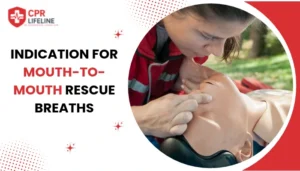
- After 30 compressions, open the airway using the head-tilt/chin-lift technique.
- Pinch the person’s nose closed and make a seal over their mouth with yours. Use a face shield or pocket mask if available and you know how to use it.
- Give one breath over about one second, watching for the chest to rise.
- Give a second breath, then immediately resume chest compressions.
If the chest does not rise, reposition the head and check the seal before attempting the next breath. Avoid repeated or forceful breaths, which can cause air to enter the stomach and increase the risk of vomiting. If you are unable or unwilling to give rescue breaths to an adult or adolescent in cardiac arrest, perform Hands-Only CPR.
Step 3: Give Naloxone
If naloxone is available, administer it according to the instructions on the nasal spray or injection product. For a nasal product, use the device as directed. Do not test or prime a single-use nasal spray unless its instructions specifically tell you to do so. A second dose may be needed if the person does not respond or their breathing problems return. Follow the product instructions regarding repeat doses.
Do not delay CPR, rescue breaths, or other emergency care to administer naloxone. If another rescuer is present, ask them to give it while you continue resuscitation. Naloxone may take several minutes to work, so continue providing care while waiting for a response.
Step 4: Use an AED
Use an AED as soon as one becomes available. Turn it on and follow the spoken instructions. Expose the person’s chest and attach the pads as shown on the device.
Make sure no one touches the person while the AED analyzes the heart rhythm or delivers a shock. Resume CPR immediately when instructed and follow the AED prompts until emergency professionals take over or the person shows signs of recovery.
Step 5: Continue CPR Until Help Arrives
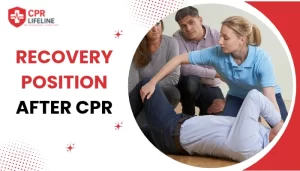
You should continue CPR, following the AED prompts and emergency dispatcher’s instructions. If the person begins breathing normally and shows signs of recovery, stop chest compressions and monitor their breathing closely. If they remain unresponsive but are breathing normally, place them in the recovery position if appropriate and continue monitoring them.
Do not leave the person alone. Even if they regain consciousness after naloxone, they still need medical evaluation because breathing problems can return.
Practical CPR Training Can Help You Respond With Confidence
A suspected opioid overdose can become life-threatening within minutes, but recognizing the warning signs and responding quickly can make a critical difference. You should call emergency services, assess the person’s breathing, and start CPR when indicated. Rescue breaths are particularly important because opioid overdoses often suppress breathing and reduce oxygen levels in the body. You should also use an AED as soon as one is available and continue providing care until emergency medical professionals take over.
CPR training helps you practice these skills so you can respond more confidently in an emergency. CPR Lifeline offers American Heart Association-certified training in CPR, BLS, ACLS, and PALS across Georgia and Tennessee. Blended courses combine self-paced online learning with a hands-on skills check, helping you build practical skills for real emergencies.
Faqs

Chris Peters
Chris Peters is a certified American Heart Association instructor and firefighter since 1996 with over 30 years of emergency response experience. After answering thousands of 911 calls, he founded CPR Lifeline to provide AHA-certified training that transforms bystanders into confident lifesavers who act decisively when seconds count