Cardiac arrest can happen anywhere, at any time. When it does, every second without action reduces the chance of survival. The Basic Life Support (BLS) Algorithm provides a high-priority, decision-based protocol that structures your response from the initial recognition of an emergency through the delivery of high-quality CPR and defibrillation. Rather than just a series of physical tasks, it functions as a comprehensive system designed to keep your interventions organized and effective, whether you are operating as a lone rescuer or as part of a high-performance team.
This content covers the complete BLS Algorithm based on the 2025 American Heart Association guidelines, ensuring your practice aligns with the most current evidence-based standards. You will find specific pathways for adult and pediatric resuscitation, alongside specialized guidance for various clinical scenarios encountered at the bedside.
The BLS Algorithm serves as a structured, step-by-step protocol developed by the American Heart Association to guide healthcare providers through life-threatening emergencies, including cardiac arrest, respiratory arrest, and airway obstruction. By establishing exactly what to do and in what order, this algorithm removes uncertainty during high-stress situations where critical steps might otherwise be missed or delayed. It functions as a broader system that includes scene safety, responsiveness checks, and emergency activation, ensuring that every intervention is delivered in a clear, prioritized sequence.
While CPR refers specifically to the physical act of chest compressions and rescue breaths, the BLS Algorithm is the comprehensive framework that integrates those actions with AED use and team coordination. The system is designed for both single-rescuer and multi-provider scenarios, maintaining a consistent core sequence with specific adjustments for team roles and patient age. Following this algorithm consistently is essential, as it directly improves survival outcomes by standardizing the delivery of high-quality and time-sensitive care.

Basic Life Support is utilized any time a person experiences a sudden life-threatening emergency that stops normal breathing or circulation. You must apply these skills during the critical window before advanced medical help arrives to maximize the patient’s chance of survival.
The primary situations that require BLS are:
The heart stops beating suddenly, leaving the person unresponsive with abnormal breathing and no pulse. You must provide immediate CPR and utilize an AED to restore a functional heart rhythm.
Infants and children most commonly experience arrest due to respiratory failure rather than a cardiac event. Your BLS interventions must address both breathing and circulation to treat the underlying cause of the emergency.
The heart is still beating, but the person has stopped breathing. You must prioritize rescue breaths to restore oxygen levels and prevent full cardiac arrest.
It causes water to enter the airway, typically leading to respiratory arrest before cardiac arrest. You should initiate BLS with 5 rescue breaths before starting CPR to address the primary oxygen deficit.
A blocked airway prevents air from reaching the lungs. You should utilize back blows and abdominal thrusts to clear the obstruction, and you must begin BLS immediately if the person becomes unresponsive.
Opioids suppress the respiratory system, which can cause both respiratory and cardiac arrest. You must apply BLS protocols alongside the administration of naloxone to restore breathing and circulation effectively.
BLS certification is required for a wide range of healthcare and safety professionals. The following roles are commonly required to hold a current AHA BLS certification:
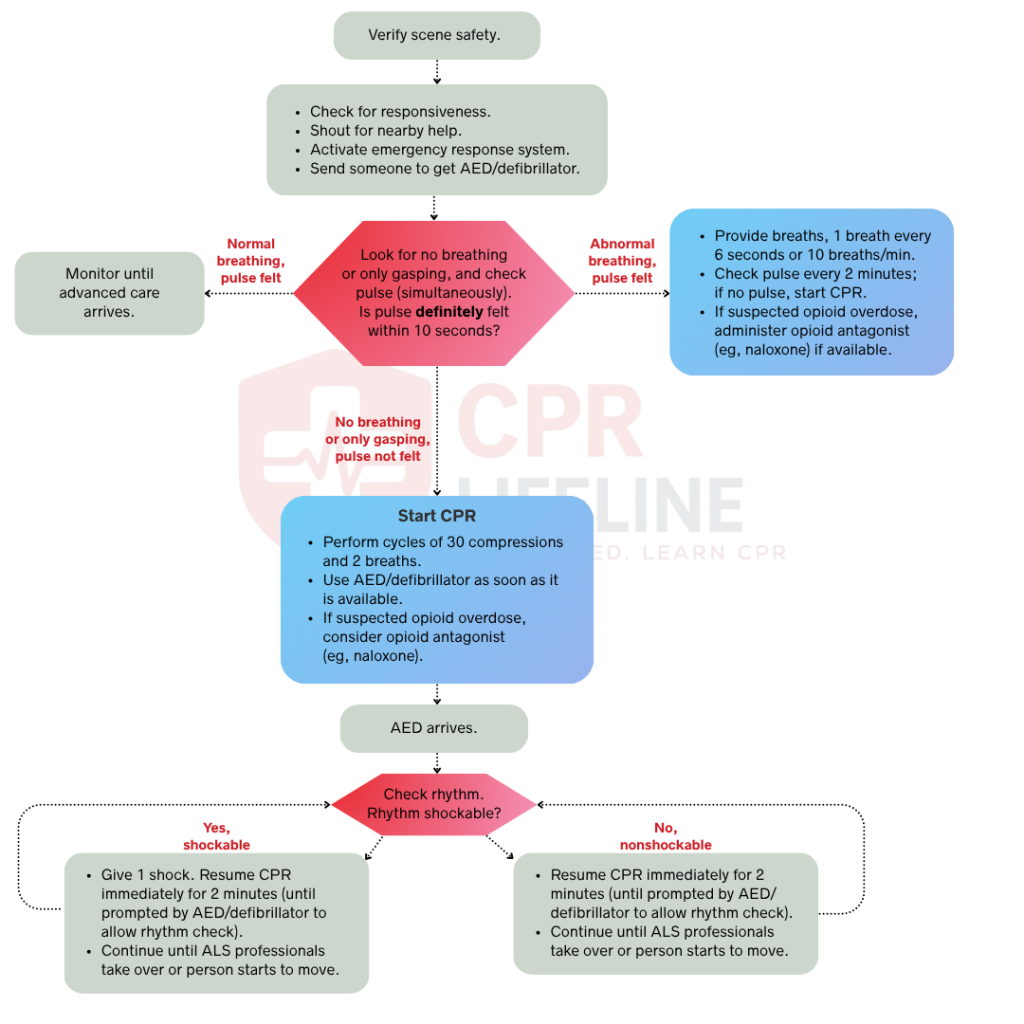
The Adult BLS Algorithm guides trained providers through a structured response to adult cardiac arrest. It covers scene safety, responsiveness check, simultaneous pulse and breathing assessment, high-quality CPR, and AED use. In cases where a second provider is present, this algorithm directs two-rescuer CPR techniques and role switching every 2 minutes to maintain compression quality.
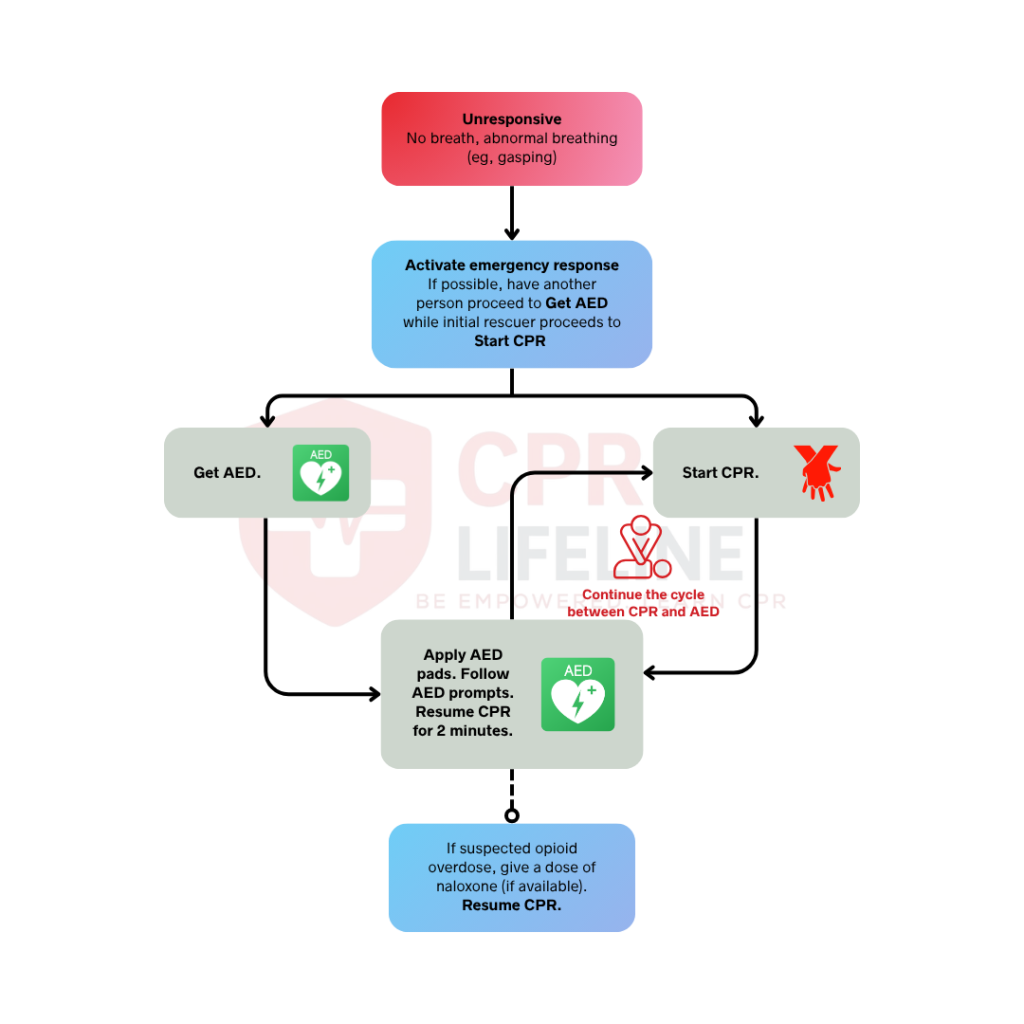
The Adult BLS Algorithm for Lay Rescuers provides a simplified emergency response for bystanders without formal medical training. It emphasizes compression-only CPR, immediate 911 activation, and use of a publicly available AED. In situations where the bystander is unsure of the technique, dispatcher-assisted CPR connects the rescuer to real-time guidance over the phone.
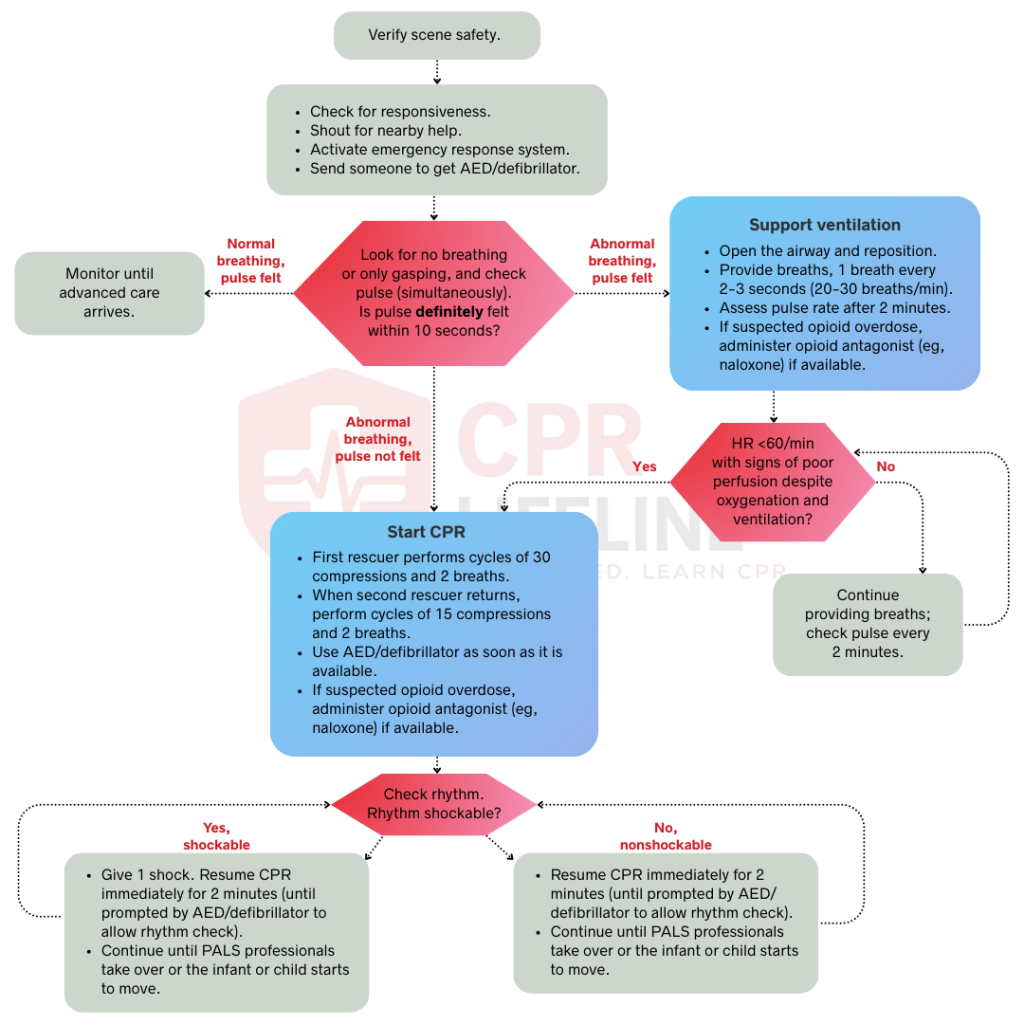
The Pediatric BLS Algorithm for Healthcare Professionals guides trained providers through cardiac arrest response in infants and children who have not yet gone through puberty. It places greater emphasis on rescue breaths compared to the adult version because most pediatric arrests result from respiratory failure rather than a primary cardiac event. In two-rescuer pediatric CPR, this algorithm directs a 15 to 2 compression-to-breath ratio along with adjusted compression depth and hand placement based on the patient’s size.
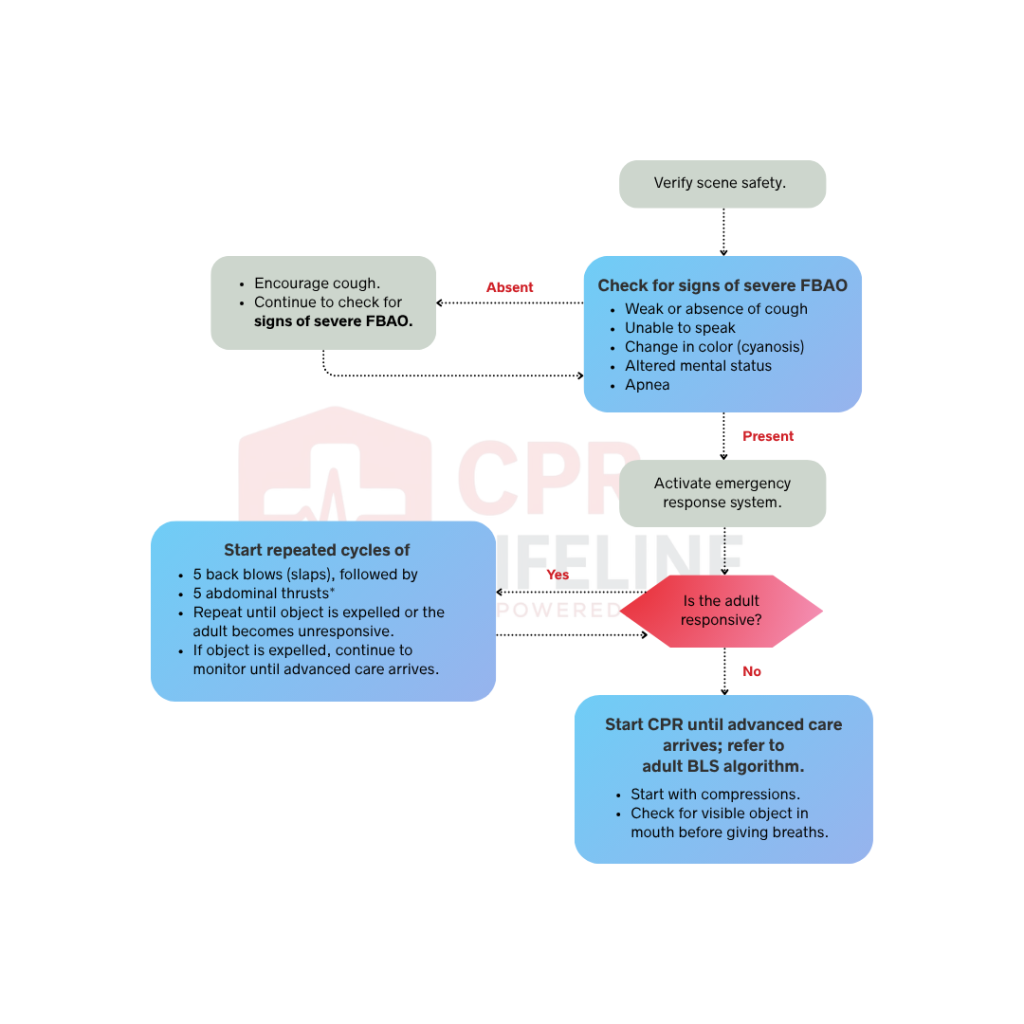
The Adult Choking Algorithm guides providers through alternating cycles of 5 back blows and 5 abdominal thrusts on a conscious choking adult until the object is expelled. When the adult becomes unresponsive, the algorithm transitions directly into the standard adult BLS sequence while directing the provider to check the mouth for a visible object before each rescue breath.
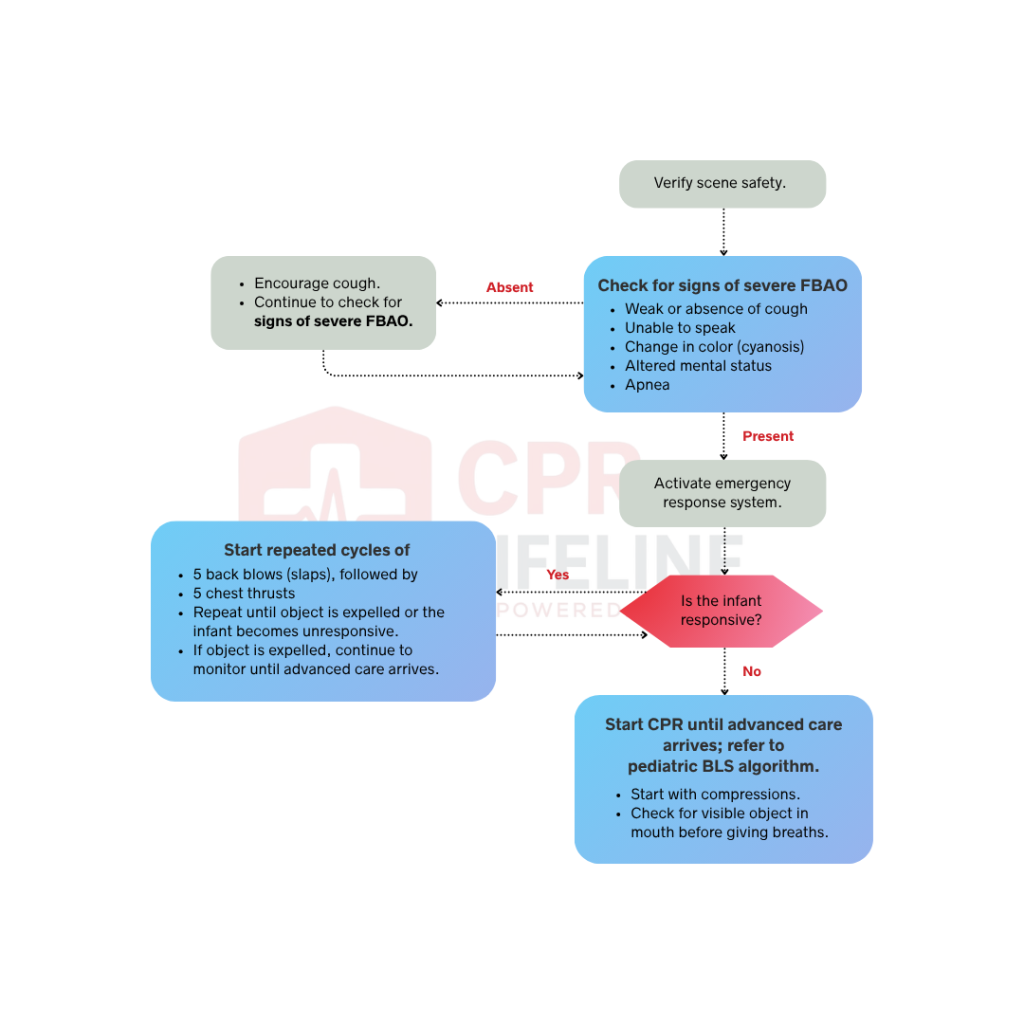
The Infant Choking Algorithm guides providers through age-appropriate choking management for infants. For infants, it directs 5 back slaps followed by 5 chest thrusts, as abdominal thrusts risk organ injury. When the infant becomes unresponsive, the algorithm transitions into CPR with a strict caution against blind finger sweeps throughout.
The AHA released updated BLS guidelines in October 2025. These updates are based on the latest resuscitation science and refine how providers deliver care during cardiac and respiratory emergencies. Here are the most important changes:
The updated algorithm for severe FBAO in conscious victims prioritizes alternating cycles of 5 back blows and 5 abdominal thrusts (Heimlich maneuver). This approach improves relief rates over abdominal thrusts alone; if the person becomes unresponsive, you must initiate CPR immediately.
Opioid overdose management is now integrated into standard BLS for suspected respiratory or cardiac arrest. You should explicitly administer opioid antagonists, like naloxone, during active resuscitation to promptly address this reversible cause and improve patient outcomes.
Target a compression depth of 5–6 cm at a rate of 100–119 per minute. You must ensure full chest recoil and a compression fraction ≥60%. Utilize feedback devices and provide ventilations that produce a visible chest rise.
Prioritize recognizing absent or abnormal breathing, including agonal gasps, without delaying CPR for pulse checks beyond 10 seconds. Lay rescuers should perform compression-only CPR if necessary, while trained rescuers must include ventilations whenever feasible to maximize effectiveness.
Adult CPR requires two hands on the lower sternum for a depth of at least 2 inches, while child and infant techniques adapt to smaller frames using one hand or the two-thumb method for a 1.5-inch depth. Because pediatric arrests are typically respiratory in origin, rescue breaths carry a higher priority in these cases than in adult cardiac events. These physiological distinctions are so critical that the AHA maintains a separate pediatric algorithm to ensure interventions specifically address the unique needs of younger patients.
Standard BLS applies to pregnant patients with two key modifications. First, position your hands slightly higher on the sternum to account for the elevated position of the heart during pregnancy. Second, a second rescuer should apply manual left uterine displacement by pushing the uterus to the left side of the abdomen. If you are operating alone, you must perform compressions while manually tilting the patient’s hips slightly to the left to maintain this circulatory improvement throughout the resuscitation.
In trauma-related cardiac arrest, controlling major bleeding is a critical priority that must occur alongside high-quality CPR. You must apply direct pressure to serious wounds while maintaining the compression sequence. If a spinal injury is suspected, stabilize the head and neck during the primary survey, but do not reduce compression force even if rib fractures are suspected. Effective compressions remain the single most important factor for survival, and this priority remains unchanged in trauma situations.
In cases of drowning, where respiratory arrest occurs before cardiac failure, you must initiate the rescue sequence with five rescue breaths before starting chest compressions to restore oxygen to the blood at the earliest possible point. Similarly, in suspected opioid overdose, administer naloxone immediately as it becomes available. You should ensure it is delivered alongside ongoing BLS interventions rather than in place of them. In both scenarios, high-quality CPR remains the non-negotiable foundation of care and must never be delayed or interrupted.


BLS certification requires no prior medical training for initial enrollment. The course validates your ability to recognize and respond to cardiac and respiratory emergencies using the BLS Algorithm.
The BLS Algorithm transforms life-saving knowledge into a clear, structured response that gives cardiac arrest victims a real chance at survival. The 2025 AHA guidelines sharpen every stage of the protocol, from recognizing an unresponsive patient to delivering high-quality compressions and timely defibrillation. Learning this algorithm prepares you to step in with confidence, precision, and speed when a life depends on it. For individuals seeking to gain this life-saving skill, AHA BLS certification is available at CPR Lifeline locations across Tennessee and Georgia. Find a location near you and complete your BLS certification on your schedule.
Support Available
Passed rate
Certified Students
The BLS Algorithm is a structured decision framework developed by the American Heart Association to guide rescuers through cardiac arrest, respiratory failure, and choking emergencies. This protocol ensures that healthcare providers and bystanders follow a precise sequence, including scene safety, responsiveness checks, high-quality CPR, and AED use.
CAB stands for Compressions, Airway, and Breathing, representing the prioritized sequence of the American Heart Association. This approach places chest compressions first because the immediate delivery of oxygenated blood to the brain and heart is the most critical action during cardiac arrest. Airway management and rescue breaths then follow in the structured protocol to ensure a comprehensive resuscitation effort.
The 30:2 rule means you deliver 30 chest compressions followed by 2 rescue breaths in a single cycle. This ratio applies to single-rescuer adult CPR. For two-rescuer pediatric CPR, the ratio changes to 15 compressions to 2 breaths.
CPR represents the physical technique of performing chest compressions and rescue breaths. However, BLS is the comprehensive protocol that includes CPR along with scene safety assessment, AED use, EMS activation, and team coordination.
Adult compressions must reach a depth of at least 2 inches for adequate blood flow to the brain and the heart. Staying within this specific range allows you to provide high-quality CPR that maximizes the patient’s chance of a positive outcome.
Home | About Us | Classes | Locations | Blogs | FAQ’s | Group Training | Referral | Contact Us
Copyright © 2025 cprlifeline. All Rights Reserved. Powered by Splendour Group
#1. Select your Course, Location and Time
#2. Complete the AHA Online Training
#3. Perform the hands on skills check
#4. CONGRATS! You are certified!