
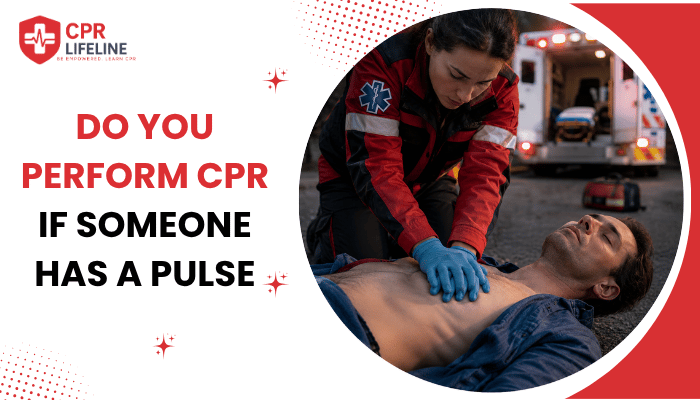

A pulse does not always mean a person is breathing normally or out of danger. When breathing stops but the heart continues to beat, the emergency requires a different response than cardiac arrest. While a pulse does not automatically mean CPR is needed, the appropriate response depends on whether the pulse is confirmed and the rescuer’s level of training.
A trained healthcare professional may check for a pulse and, if one is confirmed, provide rescue breaths to support the person’s breathing, giving one breath every 6 seconds, or about 10 breaths per minute. A lay rescuer, on the other hand, should not spend time trying to check for a pulse. Instead, follow the 911 dispatcher’s instructions and begin CPR without delay if the person is unresponsive and not breathing normally.
This blog explains what it means to have a pulse but no breathing, how to respond safely, and when rescue breaths or CPR should be used.
What Does It Mean to Have a Pulse but No Breathing?
Having a pulse but no breathing is a critical medical emergency in which the person’s heart is still pumping blood, but their body is not receiving enough oxygen. This condition is known as respiratory arrest. Unlike cardiac arrest, where the heart is no longer effectively pumping blood, respiratory arrest occurs when breathing stops while circulation is still present.
The two conditions require different interventions. In respiratory arrest, a trained professional focuses on providing rescue breaths to restore oxygen, while cardiac arrest requires CPR with chest compressions and rescue breaths. However, respiratory arrest can quickly progress to cardiac arrest if effective breathing is not restored. Without effective breathing, oxygen levels can fall rapidly, increasing the risk of brain injury and other serious complications. The American Heart Association emphasizes the importance of ventilation for a person who has a pulse but is not breathing effectively.
What Situations Cause a Pulse Without Breathing?
Respiratory arrest with a pulse can occur in many different emergencies, from accidents and overdoses to serious medical conditions. The underlying cause can vary, but recognizing these common situations helps explain how breathing can become ineffective while circulation is still present.
- Near-drowning: Water in the airway can stop breathing while the heart is still beating, especially in the first moments after a person is pulled from the water.
- Drug overdose: Certain drugs, particularly opioids, can suppress the part of the brain that controls breathing, causing it to slow or stop even though the heart keeps pumping.
- Severe asthma attack or COPD flare-up: When the airways become too constricted to move air, breathing can stop well before the heart does.
- Trauma: A serious injury, such as a blow to the chest or head, can interrupt breathing directly or through loss of consciousness, even when circulation is still intact.
- Poisoning: Some poisons and toxic fumes affect the nervous system or airway, disrupting breathing before the heart is affected.
- Diabetic emergency: Extreme blood sugar swings can lead to unconsciousness and breathing changes, even while the heart continues to beat normally.
- Stroke: Depending on which part of the brain is affected, a stroke can impair the brain’s ability to control breathing.
Respiratory arrest can have many different causes, so you do not need to determine the exact cause before taking action. Focus first on what you can assess immediately, whether the person is responsive and whether they are breathing normally.
What to Do If Someone Has a Pulse but Is Not Breathing
If someone has a confirmed pulse but is not breathing, the immediate goal is to support their breathing and prevent the situation from progressing to cardiac arrest. The appropriate response depends on whether you are a trained healthcare professional or a lay rescuer.
The following steps explain how to respond safely and what to do if the person’s condition changes.
1. Make Sure the Scene Is Safe
Before approaching the person, quickly check the area for anything that could put you or the person in danger. Look for hazards such as traffic, fire, exposed electrical wires, unsafe water, toxic fumes, or an aggressive person. If the scene is unsafe, do not put yourself at risk to provide care. Wait for emergency responders when necessary. If the area is safe, approach the person and begin your assessment.
2. Check for Responsiveness
Try to get the person’s attention by speaking loudly and tapping their shoulder. Ask whether they are okay and look for any response, such as speaking, moving, or opening their eyes. If the person does not respond at all, treat the situation as an emergency and move on to the next step.
3. Call 911
Call 911 immediately or ask someone nearby to make the call. If another person is present, have them call 911 while you continue assessing and helping the person. If you are alone, use your phone’s speaker mode so you can communicate with the dispatcher while providing care. Stay on the line and follow the dispatcher’s instructions, including CPR guidance if it becomes necessary.
4. Check for Normal Breathing
Look at the person’s chest to determine whether they are breathing normally. Gasping is not considered normal breathing. Occasional, irregular gasps can occur during cardiac arrest and should not be mistaken for effective breathing.
5. Respond Based on Your Training
If you don’t have medical training, do not spend time trying to confirm a pulse. If the person is unresponsive and not breathing normally, treat the situation as cardiac arrest rather than checking for a pulse. Perform steps of CPR according to the emergency dispatcher’s instructions.
If you are a trained healthcare professional, you may check for a pulse, but take no more than 10 seconds. If you can confidently confirm that the person has a strong pulse but is not breathing, current AHA guidelines recommend providing 1 breath every 6 seconds, or 10 breaths per minute. Each breath should produce visible chest rise. To provide a breath, first open the person’s airway using the appropriate head and chin positioning, then create a seal over the person’s mouth and deliver a controlled breath while watching for the chest to rise. If you cannot identify a definite pulse within 10 seconds, or the person loses their pulse at any point, CPR should be started right away.
6. Use an AED When Available
If an AED is available and cardiac arrest is suspected, use it as soon as possible. Turn on the device and follow its voice or visual instructions. Expose the person’s chest and apply the AED pads. The AED will analyze the person’s heart rhythm and determine whether a shock is advised. Do not touch the person while the AED is analyzing or delivering a shock. After the device gives its instructions, continue following its prompts and provide CPR when directed.
How to Perform CPR If You Can’t Find a Pulse
For lay rescuers, do not repeatedly stop to search for a pulse. If an adult is unresponsive and not breathing normally, or is only gasping, start CPR based on those signs alone. Chest compressions for adults, children, and infants should be performed at a rate of 100 to 120 compressions per minute. However, the technique differs depending on the person’s age.
Adult CPR:
Compress the chest to a depth of at least 2 inches (5 cm). If providing conventional CPR, use a 30:2 compression-to-breath ratio. When two trained rescuers are present, switch positions every 2 minutes to reduce fatigue and maintain effective compressions. For untrained bystanders witnessing a sudden adult collapse, hands-only CPR is also an appropriate option.
Child CPR:
Compress the chest to about one-third of its depth. Rescue breaths matter more here than in adults, since cardiac arrest in children is often linked to respiratory failure rather than a sudden heart issue. Use a 30:2 compression-to-breath ratio when alone, or 15:2 when two trained rescuers are present.
Infant CPR:
Compress the chest to roughly one-third of its depth. Do not forget that rescue breaths are equally critical, just as they are in child CPR. Current AHA/AAP guidance recommends the one-hand or two-thumb encircling-hands method for infant CPR. Use a 30:2 compression-to-breath ratio for a lone rescuer, or 15:2 with two trained rescuers.
Why Don’t You Give Chest Compressions to Someone With a Pulse?
Chest compressions are designed to help circulate blood when the heart is no longer effectively pumping. If a person has a definite, strong pulse, their heart is still producing circulation. Performing compressions on someone whose heart is already circulating blood adds needless injury risk without any corresponding benefit. When the problem is respiratory arrest rather than cardiac arrest, the immediate need is to restore effective breathing. For trained healthcare professionals, this means providing ventilations rather than automatically performing chest compressions.
However, this does not mean that a layperson should avoid CPR simply because they think they might feel a pulse. Pulse detection can be difficult, and spending too long searching for one can delay CPR in someone who is actually experiencing cardiac arrest. The AHA therefore recommends that lay rescuers rely primarily on responsiveness and breathing to recognize adult cardiac arrest.
When a Pulse Is Present, Rescue Breaths Take Priority
A person with a pulse but no breathing needs immediate help. The priority is to support breathing and prevent respiratory arrest from progressing to cardiac arrest. Trained healthcare professionals who confirm a pulse should provide rescue breaths, while lay rescuers should focus on responsiveness and normal breathing and follow 911 dispatcher instructions rather than spending time checking for a pulse.
Knowing the difference between respiratory arrest and cardiac arrest helps you respond appropriately in an emergency. At CPR Lifeline, we provide AHA-certified CPR training that helps you build the knowledge and hands-on skills needed to respond confidently when an emergency occurs. Regular CPR practice helps you stay prepared to act quickly when every second matters.
Faqs

Chris Peters
Chris Peters is a certified American Heart Association instructor and firefighter since 1996 with over 30 years of emergency response experience. After answering thousands of 911 calls, he founded CPR Lifeline to provide AHA-certified training that transforms bystanders into confident lifesavers who act decisively when seconds count