
CPR skills can fade faster than you expect, and guidelines change over time as new research becomes available. A certification you earned two years ago might not reflect the latest recommendations or techniques. Even confident responders can forget key steps like compression depth or AED use without regular practice. Staying aware of your expiration date helps ensure your training remains current.
CPR recertification usually involves learning and reviewing updated course content, then passing a test or hands-on skills check. Depending on the course, you might complete training in person, online, or through a blended format with a hands-on skills check. The exact process depends on which format you choose and what your employer or licensing board expects.
This blog covers everything you need to know about CPR certification renewal, including why it matters, when to renew, which renewal option to choose, and the steps to get your new certification.
Why CPR Certification Renewal Matters
CPR is a skill you need to maintain, not something you learn once and remember forever. Without regular practice, it becomes easier to forget important details such as compression depth, compression rate, hand placement, rescue breath timing, and AED steps. CPR guidelines also change as new research becomes available, so renewal gives you a chance to review current recommendations and refresh your skills. Research on skill retention shows that CPR competency can start to decline within just a few months of training, well before your two-year certification expires, which is part of why regular renewal, not just a one-time class, is the standard across the industry.
CPR renewal is also important because many jobs require an active certification. Nurses, teachers, lifeguards, personal trainers, childcare workers, and other professionals might need to show current CPR certification to their employer or licensing board. Letting your certification expire could leave you without the credentials you need for your role.
When Do You Need to Renew CPR Certification?
Most CPR certifications are valid for two years, although the exact validity period depends on the course and training provider. AHA course completion cards, for example, are generally valid through the end of the month in which the card expires. Check the expiration date on your certification card or with your training provider to confirm when you need to renew.
It is a good idea to start planning your renewal before your certification expires. Starting 60 to 90 days in advance gives you time to choose a course, complete any required coursework, and schedule a hands-on skills check if needed. Renewing early also helps you avoid a gap in certification if your employer requires you to maintain an active card.
What Are Your CPR Certification Renewal Options?
The right renewal format depends on your schedule, learning preference, and your employer or licensing board’s requirements. Some courses include hands-on practice with an instructor, while others let you complete the training on your own.
You will choose from three formats: in-person, online, or blended. Here’s a detailed look at what each one offers:
In-Person CPR Renewal
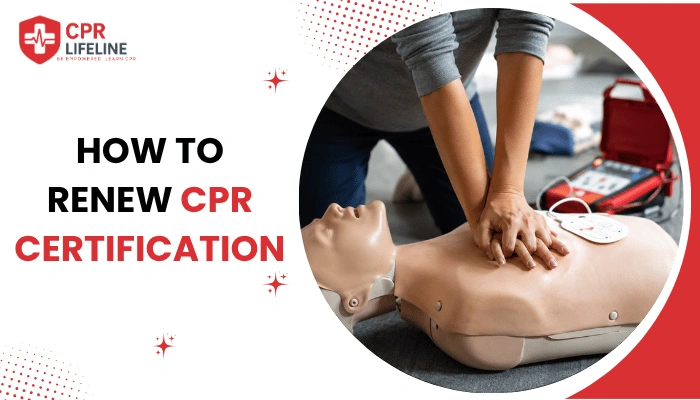
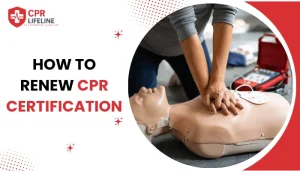
In-person CPR renewal involves completing the required training with an instructor at a scheduled location. You review the course material and practice compressions, rescue breaths, and AED skills on a manikin while receiving feedback on your technique. This format is a good choice if you prefer direct instruction or your employer requires a hands-on skills assessment as part of your renewal.
The main drawback of this format is scheduling. You need to attend the course at a specific time and location, which can be harder to fit around a busy schedule. However, the structured environment and direct feedback can be helpful if you want to practice your skills under an instructor’s supervision.
Online CPR Renewal
Fully online CPR renewal lets you complete the course from home and work through the material at your own pace. Depending on the provider, the course might include videos, quizzes, and a final test. Once you pass the final test, most providers issue your digital certificate right away.
This option is convenient for people who need to refresh their knowledge without an in-person skills check. It also tends to be faster and less expensive than classroom training. Before choosing an online-only course, check whether your employer or licensing board accepts it because most jobs require a hands-on skills assessment. You can learn more about online CPR renewal to understand what online training options are available.
Blended CPR Renewal
Blended CPR renewal combines online coursework with a hands-on skills check. You complete the learning portion online, then attend a short session where you demonstrate your CPR and AED skills. It is a popular option for healthcare workers and others who need both online coursework and a practical skills check.
This format offers more flexibility than a full classroom course while still giving you hands-on practice and assessment. If your employer requires hands-on verification but you want to complete most of the course on your own schedule, blended renewal offers a practical middle ground.
How to Renew Your CPR Certification: Step-by-Step
Renewing your CPR certification is usually straightforward once you know what your employer or licensing board requires. Whether this is your first time renewing or you have done it several times before, having a clear checklist can help you avoid last-minute scrambling.
Follow these steps to find the right course, complete the required training, and receive your updated certification.
Step 1: Check Your Current Certification
Start by checking your current CPR card or digital certificate. Look at the expiration date, course type, and organization that issued your certification. This helps you determine which renewal course you need and whether you need to renew before your current card expires. If you are not sure which course you previously completed, check your employer’s records or contact the training provider.
Step 2: Check Your Renewal Requirements
Before enrolling in a renewal course, check what your employer, school, licensing board, or other organization requires. Some organizations accept online renewal, while others require an in-person course or a hands-on skills check. Healthcare workers, for example, often have different requirements from people who only need CPR certification for a workplace or personal qualification. Confirm these requirements first so you do not complete a course that does not meet your specific needs.
Step 3: Choose a Renewal Course and Training Provider
Once you know the requirements, choose the renewal format that works for you: in-person, online, or blended. Compare providers based on the certification offered, course content, price, schedule, and whether the course meets your employer or licensing requirements. If you need a specific certification such as BLS, ACLS, or PALS, make sure the provider offers the exact course you need rather than a general CPR course.
Step 4: Complete the Required Training
Complete the coursework for your selected renewal course. Depending on the format, this could involve classroom instruction, online lessons, or a combination of online coursework and in-person training. Pay attention to the updated CPR procedures, compression techniques, AED use, and other skills covered in the course. If you are completing the course online, finish all required lessons and quizzes before moving on to the final assessment.
Step 5: Complete the Test or Skills Check
Complete any required final test or hands-on skills check. An online course might require a knowledge test, while courses that include a hands-on component require you to demonstrate the required skills. For AHA blended courses such as HeartCode BLS, completing both the online portion and hands-on session is required to receive the course completion card.
Step 6: Receive and Save Your Updated Certification
Once you successfully complete all course requirements, you will receive your updated CPR certification. Depending on the provider and course, this could be a digital certificate, an AHA eCard, a physical card, or a combination of these. Save a copy of your certification somewhere you can easily access it, especially if your employer needs proof of current training. If your provider offers online verification, keep the verification information with your certification records.
Step 7: Keep Track of Your Next Expiration Date
After renewing, note the new expiration date on your calendar or set a reminder on your phone. Starting the renewal process a few months before your certification expires gives you time to compare courses, complete the required training, and schedule a skills check if needed. Keeping track of the date also helps prevent your certification from expiring before your next renewal is complete.
Keep Your CPR Skills Up to Date
Renewing your CPR certification does not have to be difficult. Check your expiration date, confirm your employer or licensing requirements, and choose a course that matches your certification level and schedule. You can renew through an in-person, online, or blended format, depending on the course and requirements. Completing the required training and skills check on time helps keep your certification current and ensures you are prepared to use your CPR skills when they are needed.
If you need CPR certification for work or want to stay prepared to help someone in need, do not wait until your certification expires. CPR Lifeline offers AHA CPR, BLS, ACLS, and PALS courses with flexible online training and convenient hands-on skills checks. With several locations across Tennessee and Georgia, you can choose a CPR course that fits your schedule and location.
Faqs
Most CPR certifications are valid for two years, although the exact validity period depends on the course and provider. Check the expiration date on your certification card or with your training provider.
Yes, you can usually start the renewal process before your current certification expires. Starting early gives you time to complete the course and any required skills check without risking a gap in certification.
Once your certification expires, you no longer have a current certification card to show your employer or licensing organization. Most providers, including the AHA, do not offer an official grace period, so an expired card typically means retaking the full initial course rather than a shorter renewal. Some training centers allow a short window past the expiration date at their own discretion, so it's worth checking directly with your provider before assuming you need to start over.
Yes, you do not always need to return to the provider that issued your original certification. Make sure the new provider offers the certification your employer, school, or licensing organization accepts.
Yes, losing your card does not necessarily mean you need to retake the course. Many providers issue a digital certificate or eCard, so you might be able to access your certification online or request a replacement from your training provider.
The time taken for CPR certification renewal depends on the course and renewal format. Online coursework can often be completed at your own pace, while in-person and blended courses also require time for a classroom session or hands-on skills check.
Yes, some providers offer fully online CPR renewal with no in-person component, and many employers accept it for general workplace or personal certification. However, healthcare employers and many licensing boards prefer or require a hands-on skills check, especially for courses like BLS, ACLS, or PALS.

Chris Peters
Chris Peters is a certified American Heart Association instructor and firefighter since 1996 with over 30 years of emergency response experience. After answering thousands of 911 calls, he founded CPR Lifeline to provide AHA-certified training that transforms bystanders into confident lifesavers who act decisively when seconds count