
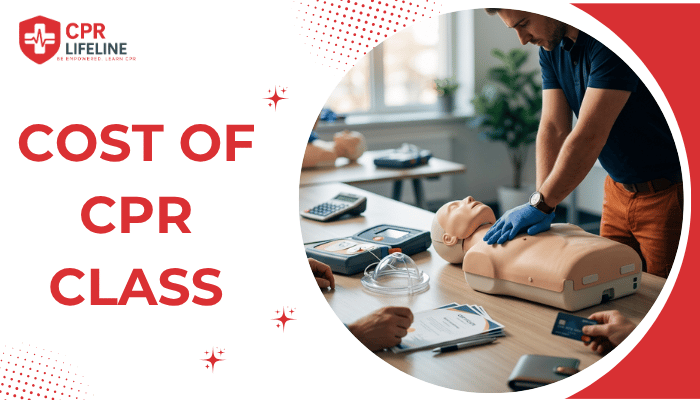
The cost of a CPR class depends on the type of certification, training format, location, and what the course includes. CPR courses range from basic CPR/AED training for the general public to professional certifications such as BLS, ACLS, and PALS for healthcare providers. Each course covers different skills and has different training requirements, which affects the overall cost.
CPR training costs can vary from one provider to the next, but understanding the general ranges for each certification type can help you know what to expect before you enroll. Basic CPR/AED training often costs around $50 to $100, while CPR and First Aid courses typically range from $75 to $150. BLS certification generally costs $60 to $150, while advanced certifications such as ACLS and PALS often range from $200 to $350 or more.
In this blog, you’ll learn how much a CPR class typically costs, the factors that affect pricing, how the different certification types compare, and how to find an affordable course that still meets your certification requirements.
How Much Does CPR Certification Cost?
The cost of CPR certification varies widely depending on the level of training and who the course is designed for. A basic CPR course for the general public is typically more affordable than professional healthcare certifications, which require more advanced instruction and skills.
The table below provides a quick overview of the typical costs for common CPR certifications.
| CPR Certification Type | Typical U.S. Price Range | Who It’s For |
|---|---|---|
| Basic CPR/AED | $50–$100 | General public, employees, teachers, coaches, and caregivers |
| CPR and First Aid | $75–$150 | Workplace employees, caregivers, teachers, childcare workers, and others responsible for safety |
| BLS | $60–$120+ | Nurses, physicians, EMTs, medical assistants, dentists, and other healthcare professionals |
| ACLS | $200–$300+ | Healthcare professionals and advanced providers who respond to serious cardiovascular emergencies |
| PALS | $200–$300+ | Healthcare professionals who care for infants and children, including pediatric nurses, physicians, and paramedics |
These are budgeting ranges rather than fixed prices. The same certification can have different prices depending on the provider you choose, your location, and what’s bundled into the registration fee, such as course materials, skills testing, or the certification card itself.
Basic CPR/AED Certification
Basic CPR/AED certification is generally priced at $50 to $100. It is usually the most affordable CPR certification option because it focuses on essential emergency-response skills without advanced healthcare training. The course is suitable for people seeking CPR training for work, personal preparedness, or other requirements.
Depending on the provider, basic CPR/AED courses may cover adult, child, and infant CPR, AED use, choking response, and recognizing cardiac or breathing emergencies. The American Red Cross and American Heart Association both offer basic CPR/AED courses.
CPR and First Aid Certification
CPR and First Aid courses usually range from $75 to $150. They generally cost more than CPR-only training because they combine two areas of emergency training into one course. This broader coverage makes them useful for people who may need to respond to both cardiac emergencies and common injuries or medical situations.
Depending on the course, training may cover AED use, choking, bleeding, burns, shock, injuries, and other common emergencies. CPR and First Aid certification is often useful for teachers, caregivers, coaches, childcare workers, and workplace employees.
Basic Life Support (BLS) Certification
BLS certification generally falls between $60 and $150. The cost is higher than basic CPR in many cases because BLS provides professional-level resuscitation training and is designed for healthcare professionals and others with professional certification requirements.
BLS training typically covers high-quality CPR, AED use, ventilation, and responding effectively as part of a resuscitation team. It is commonly required for nurses, physicians, EMTs, paramedics, medical assistants, dental professionals, and other healthcare workers.
Advanced Cardiovascular Life Support (ACLS) Certification
ACLS certification is typically priced at $200 to $350 or more. The cost is higher because it involves advanced clinical training for managing serious cardiovascular emergencies. Prices also vary based on the provider, location, and course format.
ACLS training covers areas such as cardiac rhythms, resuscitation algorithms, advanced airway considerations, stroke, and team-based response. Healthcare professionals should confirm which ACLS certification their employer requires before enrolling.
Pediatric Advanced Life Support (PALS) Certification
PALS certification generally runs from $200 to $350 or more. It is priced higher than basic CPR and BLS because it provides specialized training for serious emergencies involving infants and children. The course is intended for healthcare professionals who respond to or care for pediatric patients.
Training focuses on recognizing and managing pediatric respiratory, shock, and cardiac emergencies. PALS may be required for pediatric nurses, physicians, paramedics, emergency department professionals, and other healthcare providers who work with children.
What Factors Affect the Cost of CPR Certification?
The CPR training cost can vary depending on several factors. The type of course is important, but location, course format, certifying organization, training time, additional fees, hands-on requirements, renewal, and class size can also influence the final cost. Understanding these factors makes it easier to compare CPR classes and choose an option that fits your needs.
Here’s a closer look at each of these factors and how they can affect the total cost of CPR certification.
Location
The location of your CPR class can affect the cost because training providers have different expenses for instructors, facilities, equipment, travel, and administration. Demand and competition in a particular area can also influence what providers charge. Compare local providers to see how location affects the overall cost of CPR training.
Course Duration
The length of the course can influence the cost because longer training requires more instructor time, equipment, facility use, and course materials. Basic CPR courses are usually shorter, while courses that include first aid or advanced healthcare training require more extensive instruction.
Training Format
The training format can affect the cost because in-person, online, and blended courses require different levels of instructor involvement, equipment, and facility use. Online courses generally have fewer physical requirements, while in-person and blended courses may include instructor-led skills practice and testing.
In-Person: In-person CPR classes require an instructor, training facility, CPR manikins, AED equipment, and hands-on skills practice. These additional resources can increase the overall cost, but they also provide direct instruction and practical experience.
Online: Online CPR classes typically require fewer physical resources, which can make them less expensive. However, they may not include hands-on skills training. Before choosing an online course, check whether your employer or organization accepts online-only certification.
Blended: Blended CPR training combines online coursework with an in-person skills session. The cost of blended CPR training depends on how the provider structures the course, including the online learning portion and the hands-on instruction.
Certifying Organization
The certifying organization can affect the cost because different organizations have different course structures, materials, certification processes, and training requirements. Two of the most recognized CPR training organizations in the United States are the American Heart Association (AHA) and the American Red Cross (ARC).
American Heart Association (AHA): The AHA offers courses for the general public and healthcare professionals, including CPR, BLS, ACLS, and PALS. The AHA CPR certification cost can vary depending on the course, training format, and authorized training center.
American Red Cross (ARC): The American Red Cross provides CPR/AED, first aid, BLS, and other emergency training courses. The cost can vary depending on the course type, location, and training format. When comparing Red Cross courses, make sure you choose the certification level and format required by your employer or organization.
Certification and Card Fees
Certification cards, digital certificates, course materials, and other administrative fees can affect the total CPR certification cost. Some providers include these items in the course fee, while others may charge separately. Checking what is included before registering can help you understand the complete cost.
Hands-On Skills Testing
Hands-on skills testing can affect the cost because it requires an instructor, training equipment, and additional time. Courses that include practical CPR and AED demonstrations generally require more resources than courses that only provide online instruction. If your employer requires hands-on training, make sure it is included in the course you choose.
Group and Private CPR Classes
The number of people taking a CPR class can also affect the cost per person. Training providers may offer group discounts or private training options for businesses, schools, healthcare facilities, and other organizations. If several people need certification, ask providers about group-training rates and on-site training to determine whether a private class offers better value.
Is CPR Certification Worth the Cost?
CPR certification is worth the cost for many people because it provides practical skills that can make a critical difference during a medical emergency. Knowing how to perform high quality CPR, use an automated external defibrillator (AED), and respond appropriately while waiting for professional help can give you the confidence to act when every second matters. These skills can be especially valuable for parents, caregivers, teachers, healthcare workers, fitness professionals, and workplace employees.
Beyond the potential to save a life, CPR certification can also strengthen your resume and help you meet workplace or professional requirements. Although the course fee varies depending on the provider and certification level, the knowledge and confidence gained can last far longer than the certification period. CPR certification is a valuable investment for personal preparedness and the safety of people around you.
How to Find an Affordable CPR Class
Finding an affordable CPR class does not necessarily mean choosing the cheapest option available. Instead, compare the total cost, course requirements, training format, and certification you receive. A slightly more expensive course may provide better value if it includes hands-on training, skills testing, certification, and other required components.
Here are some ways to find a CPR class that fits your needs and budget:
Compare Several Local Providers
CPR class costs can vary between training providers, even within the same city. Compare several local options and look at the total price, course length, certification provider, training format, skills testing, certification card, course materials, and renewal requirements. This can help you find a course that offers the right combination of price and value.
Check Your Employer’s Requirements
Before registering for a course, confirm exactly what certification your employer or organization accepts. For example, a healthcare employer may require BLS from a recognized provider rather than general CPR certification. Choosing the wrong course could mean paying for another class later, increasing your overall CPR certification cost.
Look for Group Discounts
If several coworkers, employees, or members of an organization need CPR certification, ask training providers about group discounts. A private or workplace class may have a higher total cost but a lower cost per person. Some providers may also offer on-site training, which can make group certification more convenient.
Compare the Total Price
When comparing courses, do not look at the advertised price alone. A low-cost online course may not include instructor training, hands-on skills practice, an AED session, or a certification card, while a classroom course may include these components in one fee. Comparing what is included will give you a more accurate picture of the actual cost of CPR certification.
Cheaper CPR Training Is Not Always the Better Choice
Basic CPR courses are generally less expensive than advanced certifications such as BLS, ACLS, and PALS, but the cheapest certification is not always the right one. Choosing the right CPR course starts with understanding what training you need. Your job or organization might require a specific certification, so check the requirements before choosing a course. When comparing CPR classes, consider the certification provider, course format, skills testing, certification card, and any additional fees to understand the full cost.
Once you know which certification you need, finding a course that fits your budget and schedule becomes easier. If you are looking for convenient CPR training around Tennessee and Georgia, CPR Lifeline offers affordable AHA-certified CPR, First Aid, BLS, ACLS, and PALS courses. Our CPR courses combine online training with a 30-minute in-person skills check, with an AHA eCard issued after successful completion.
Faqs

Chris Peters
Chris Peters is a certified American Heart Association instructor and firefighter since 1996 with over 30 years of emergency response experience. After answering thousands of 911 calls, he founded CPR Lifeline to provide AHA-certified training that transforms bystanders into confident lifesavers who act decisively when seconds count