
Babysitting involves much more than keeping children occupied until their parents return. A babysitter is responsible for supervising children, maintaining a safe environment, and knowing how to respond when an emergency happens. CPR and first aid training can be an important part of preparing for babysitting, particularly when caring for infants and young children.
In the U.S., there is no general legal requirement for someone providing occasional babysitting to be CPR certified. However, CPR certification may be required by a particular employer, childcare agency, or regulated childcare program. Parents may also prefer or require a babysitter to have current CPR and first aid training before hiring them, even when the law does not require it.
In this blog, we’ll look at why CPR training can be valuable for babysitters, what type of certification to consider, and how to become CPR certified.
Is CPR Certification Legally Required for Babysitting?
There is no single U.S. law that requires every babysitter to be CPR certified. Requirements can vary depending on the childcare setting and the rules that apply in your state. Occasional babysitting for a family is different from working as a caregiver in a licensed childcare program. States and territories establish training requirements for staff and providers in licensed childcare settings, and these requirements can include infant and child first aid and CPR.
CPR certification may therefore be required or expected if you work for a:
- Licensed childcare center
- Daycare or family childcare provider
- Childcare agency
- Camp or youth program
- Professional nanny or babysitting service
- Employer that requires current CPR certification
Even where certification isn’t legally mandated, it’s worth checking directly with the family or agency you’re working with, since individual expectations can go beyond what the law requires.
Why Should Babysitters Get CPR Certified?
Babysitters take on an important responsibility when they care for a child without a parent or guardian present. Their role involves more than supervising children and managing everyday routines. Accidents and unexpected situations can arise at any time, making preparedness an important part of responsible childcare.
CPR certification can support babysitters in several important aspects of their role, including the following:
Respond Quickly During Life-Threatening Emergencies
A child can become unresponsive or stop breathing because of drowning, choking, a severe allergic reaction, or another medical emergency. CPR training teaches babysitters how to recognize when immediate action is needed, contact emergency services, and begin CPR or appropriate emergency procedures. Prompt action can help maintain circulation and oxygen delivery until professional medical help arrives.
Be Prepared for Infant and Child Emergencies
Babysitters may care for children of different ages, from infants to school-age children, and emergency-response techniques can vary by age and size. Pediatric CPR training helps caregivers understand appropriate responses for infants and children, including what to do when a child is unresponsive or not breathing normally. This knowledge is directly relevant to the children a babysitter may be responsible for.
Stay Calm and Take Appropriate Action
An emergency can be stressful, particularly when a caregiver is responsible for a child without another adult present. CPR and first aid training gives babysitters an opportunity to learn and practice emergency-response skills before they are needed. This preparation can help caregivers remain focused and follow appropriate steps during a stressful situation.
Give Parents Greater Peace of Mind
Parents often want to know that a babysitter is prepared to handle more than everyday childcare responsibilities. Current CPR and first aid certification can demonstrate that a caregiver has taken steps to prepare for potential emergencies. For parents comparing caregivers, this additional qualification may be an important consideration when choosing a babysitter.
Strengthen Babysitting and Childcare Qualifications
CPR certification can also add value to a babysitter’s professional qualifications. Families, childcare agencies, and employers may consider CPR and first aid training when selecting caregivers, while some professional childcare positions and licensed programs may have specific certification requirements. Including CPR certification on a resume or babysitting profile can also help you stand out to families comparing candidates.
What Should CPR Certification for a Babysitter Cover?
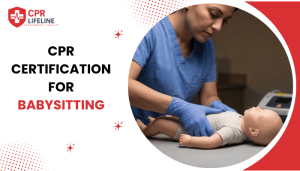
A pediatric CPR and first aid course is the most relevant option for babysitters. Rather than a course focused only on adult CPR, look for training that covers infants and children and prepares caregivers for emergencies they may encounter while babysitting.
A good babysitter CPR course should cover:
Infant and Child CPR
Babysitters should learn CPR techniques appropriate to the child’s age. Pediatric training covers how to respond when an infant or child is unresponsive or not breathing normally, including when to start CPR and how to perform it correctly. A pediatric course is useful for babysitters because it’s built around the needs of infants and children.
Choking Response
A pediatric CPR course teaches babysitters how to recognize a serious airway obstruction and what steps to take based on the child’s age. Babysitters should take a current course rather than rely on an old class or informal online source because choking-response guidelines can change
AED Training
An automated external defibrillator (AED) is used during certain cardiac emergencies. CPR courses teach babysitters how to recognize when an AED may be needed, how to operate it, and how to follow its voice or visual instructions. Learning AED use alongside CPR broadens a caregiver’s ability to respond to a cardiac emergency.
Pediatric First Aid
CPR covers only part of emergency preparedness but babysitters can also face injuries or medical problems that require first aid instead. Pediatric first aid training covers severe bleeding, burns, allergic reactions, breathing problems, drowning, heat-related illness, low blood sugar, and common childhood injuries. These skills help babysitters respond to a wider range of situations, not just cardiac emergencies.
How to Get CPR Certified for Babysitting?
CPR certification is a straightforward process to complete, but not every course is built the same way. Some focus on adults only, some skip hands-on practice, and certification periods can vary by provider. A few minutes spent choosing the right course upfront saves you from having to redo training later.
Below are the steps to help you understand what’s involved before signing up for a course.
1. Check the CPR Requirements
Start by checking whether the family, employer, childcare agency, or state requires a specific type of CPR certification. For occasional babysitting, an online-only course can be a valid way to build your knowledge and improve emergency preparedness. For a professional childcare position, the employer may require a particular course, a certification from a specific provider, or one that includes hands-on skills training rather than an online-only format.
2. Choose a Recognized Training Provider
Choose a reputable CPR training organization with a course designed for people who care for children. A few places to look include:
- National organizations like the American Heart Association or American Red Cross, which run structured caregiver courses across the country
- Local hospitals or community health centers, which often hold in-person classes at a lower cost
- Fire departments and community centers, which sometimes offer CPR training as a public safety service
Look for training that covers infant CPR, child CPR, pediatric first aid, choking response, and AED use, since these are the situations babysitters are most likely to encounter. If you’re unsure which course to choose, ask the employer what certification they accept before paying for training.
3. Complete the CPR and First Aid Training
Depending on the course, training may be offered in a classroom, online, or through a blended format that combines both. Classroom and blended courses typically involve a few hours of instruction, while online-only courses may be self-paced. Choose a format that fits your schedule while still meeting any hands-on requirements your employer or state may expect.
4. Complete the Hands-On Skills Training
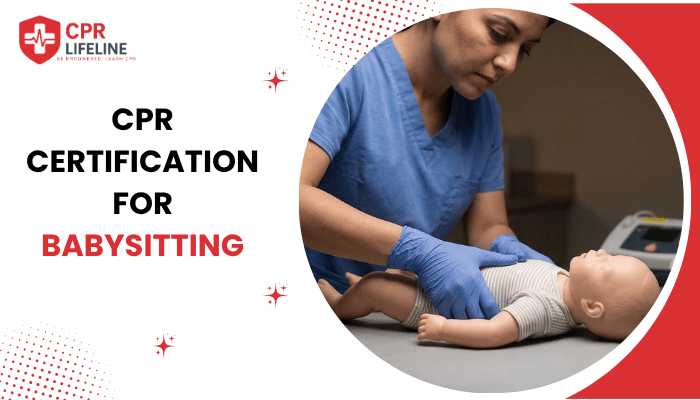
Some certification programs require you to demonstrate CPR and first aid skills in person rather than simply completing online lessons. This may involve practicing compressions, rescue breaths, or choking-response techniques on a training mannequin under an instructor’s supervision. Hands-on practice is valuable because CPR is a physical skill, and performing it correctly requires more than understanding the information in a textbook or video.
5. Receive and Maintain Your Certification
After completing all required parts of the course, you’ll receive your certification or course completion card, which typically includes an issue date and an expiration date. Most CPR certifications are valid for two years, though this can vary by provider and course type. When your certification approaches expiration, check the current renewal requirements and complete the appropriate refresher or renewal course.
Being Prepared Matters When Caring for Children
Being prepared is an important part of responsible babysitting. CPR training can give caregivers practical knowledge to draw on if an unexpected emergency occurs, while also complementing the everyday skills needed to care for children. For occasional babysitters, CPR certification may not be a legal requirement, but it can still be a useful addition to their childcare skills. For those pursuing babysitting or childcare as paid work, having current training may also help meet the expectations of families and employers.
When choosing a course, consider the ages of the children you care for and the type of emergencies you may need to handle. Keeping your certification current also ensures that your training stays aligned with the latest guidance. With the right preparation, babysitters can approach their responsibilities with greater confidence and readiness. CPR Lifeline offers AHA-certified HeartCode CPR courses with a short hands-on skills check and same-day eCard.
Faqs

Chris Peters
Chris Peters is a certified American Heart Association instructor and firefighter since 1996 with over 30 years of emergency response experience. After answering thousands of 911 calls, he founded CPR Lifeline to provide AHA-certified training that transforms bystanders into confident lifesavers who act decisively when seconds count