

A gunshot can cause catastrophic injuries within seconds, including damage to the heart, lungs, major blood vessels, and other vital organs. Depending on the location and severity of the injury, the victim may experience severe blood loss, lose consciousness, or go into cardiac arrest. If cardiac arrest occurs, the situation becomes even more critical, and CPR becomes part of the immediate response.
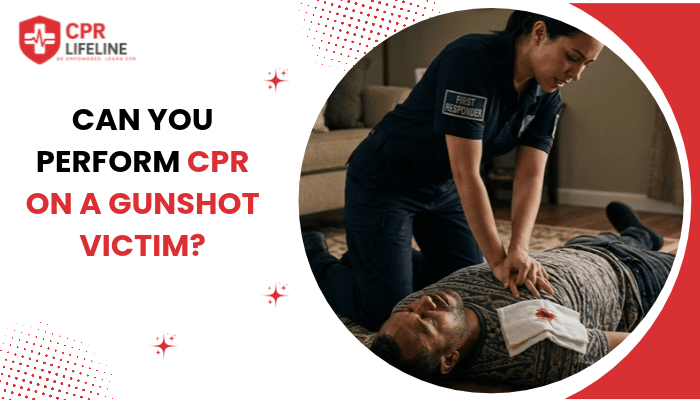
CPR can be performed on a gunshot victim when the person is unresponsive and not breathing normally. CPR can help maintain blood flow to the brain and other vital organs during cardiac arrest, but it does not treat the underlying gunshot injury. The victim may also have internal bleeding or other serious trauma that requires immediate medical attention, making a quick and appropriate response essential.
In this blog, you’ll learn when CPR is appropriate after a gunshot injury, how gunshot wounds can result in cardiac arrest, how to perform CPR, what risks to keep in mind, and what steps to take while waiting for emergency medical help.
When Should You Perform CPR on a Gunshot Victim?
CPR should be performed when a gunshot victim is unresponsive and not breathing normally. A person in cardiac arrest may suddenly collapse, fail to respond when spoken to or touched, or stop breathing normally. They may also make occasional gasping sounds, but gasping does not count as normal breathing. When you see these signs, treat the situation as cardiac arrest and start high-quality CPR while emergency medical help is on the way.
CPR is not appropriate if the victim is conscious and breathing normally. If the person has lost consciousness but continues to breathe normally, monitor their breathing and follow emergency medical instructions instead. Also, remember that severe blood loss can cause weakness, confusion, pale or clammy skin, and loss of consciousness without causing cardiac arrest. In that situation, focus on getting emergency help and controlling life-threatening bleeding when you can do so safely.
Why Gunshot Injuries Can Lead to Cardiac Arrest
A gunshot can cause cardiac arrest through several mechanisms. The projectile may directly injure the heart or major blood vessels, or the injury may cause such severe blood loss that the cardiovascular system can no longer maintain adequate circulation.
Some of the major causes include:
Severe Blood Loss
Major blood loss is one of the most serious complications of penetrating trauma. Severe blood loss can prevent the body from maintaining adequate circulation to the brain and other vital organs. Life-threatening bleeding can sometimes be recognized by rapidly flowing or spurting blood, large amounts of blood, pooling blood, or symptoms such as weakness, dizziness, drowsiness, or loss of consciousness. The 2024 AHA/American Red Cross first-aid guidelines emphasize that uncontrolled bleeding can become fatal within minutes and that immediate bleeding control is an important first-aid intervention.
Injury to the Heart
A bullet that damages the heart can interfere with its ability to pump blood throughout the body. The injury may also cause dangerous changes in the heart’s rhythm, which can lead to cardiac arrest. Severe damage to the heart can cause the victim’s condition to deteriorate rapidly, which requires immediate emergency treatment.
Damage to Major Blood Vessels
A gunshot can damage a major artery or vein and cause rapid blood loss. When a large blood vessel becomes damaged, the body can quickly lose the blood it needs to maintain circulation. This bleeding may occur inside the body and remain hidden, so a victim can have a life-threatening injury even when the external wound does not appear severe.
Severe Injury to Other Organs
Gunshot wounds to the chest, abdomen, head, or other critical areas can damage organs and disrupt essential body functions. Lung injuries can interfere with breathing and oxygen delivery, while injuries to organs such as the liver can cause significant internal bleeding. As a result, even a wound that looks relatively small from the outside can cause life-threatening internal damage.
Can CPR Save Someone With a Gunshot Wound?
CPR can potentially help save a gunshot victim who goes into cardiac arrest, but it cannot treat the gunshot injury itself. By providing chest compressions, CPR helps circulate blood to the brain and other vital organs when the heart can no longer pump effectively on its own. This can keep the victim alive until emergency medical professionals can provide the treatment needed for the underlying injuries.
CPR can help maintain circulation, but it cannot address the physical damage caused by the bullet. However, CPR cannot:
- Stop internal bleeding
- Repair damage to the heart or major blood vessels
- Replace blood lost through severe bleeding
- Repair damaged organs
- Treat other traumatic injuries caused by the gunshot
For this reason, CPR should be part of a broader emergency response rather than the only treatment. If the victim has severe external bleeding, control it when it is safe to do so while emergency medical help is on the way. The victim may ultimately require advanced trauma care, surgery, blood transfusions, or other hospital treatment.
How to Perform CPR on a Gunshot Victim
CPR for a gunshot victim generally follows the same basic steps as standard CPR, but the traumatic injury adds a few important considerations. You still need to respond to cardiac arrest quickly, while also being aware of severe bleeding, possible injuries to the chest or other vital areas, and your own safety.
The steps below show you how to perform CPR while keeping these extra concerns in mind.
1. Make Sure the Scene Is Safe
Before approaching the victim, check the area for an active threat, weapons, traffic, fire, or other hazards. Do not enter an unsafe area, because you cannot effectively help someone if you become injured yourself.
2. Check Responsiveness and Breathing
Speak loudly to the victim and gently tap their shoulder to see whether they respond. If they do not respond, check whether they are breathing normally for no more than 10 seconds. Occasional gasping or irregular breaths do not count as normal breathing.
If the victim is unresponsive and not breathing normally, they need CPR. If they are breathing normally, do not start chest compressions and continue monitoring them while following the emergency dispatcher’s instructions.
3. Call 911 or Your Local Emergency Number
Call 911 or your local emergency number as soon as possible. If another person is nearby, ask them to make the call while you stay with the victim. Tell the dispatcher that the person has suffered a gunshot wound and explain whether they are conscious and breathing normally. If you are alone, put the phone on speaker so you can follow the dispatcher’s instructions while providing care.
4. Control Life-Threatening Bleeding
Look for life-threatening external bleeding and apply firm, direct pressure to the wound when it is safe to do so. Use your hands, a clean cloth, or a dressing to maintain steady pressure.
If severe bleeding from an arm or leg cannot be controlled with direct pressure, apply a tourniquet if one is available and you know how to use it. Do not put yourself in danger while trying to control the bleeding.
5. Start Chest Compressions
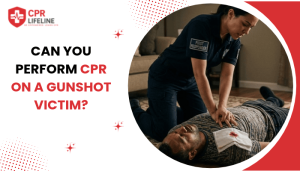
Place the victim on their back on a firm, flat surface if you can do so quickly and safely. Place the heel of one hand in the center of the chest, on the lower half of the breastbone, and your other hand on top. Keep your shoulders directly over your hands and your elbows straight as you press down. Correct hand placement matters, since compressions in the wrong spot are less effective and more likely to cause injury.
Compress at a rate of 100 to 120 per minute, pushing about 2 to 2.4 inches (5 to 6 cm) deep. Allow the chest to return fully after every compression and keep pauses as short as possible.
6. Give Rescue Breaths If You Are Trained
Provide rescue breaths if you are trained. If head or neck trauma is suspected, avoid unnecessary movement of the head and neck. Give 2 breaths after every 30 chest compressions, making sure the chest rises with each breath. For infants, use small, gentle puffs instead of full breaths. With two trained rescuers, use 15 compressions to 2 breaths for children and infants. If you are not trained to provide rescue breaths or do not feel comfortable giving them, hands-only CPR is acceptable.
7. Continue CPR
Keep performing CPR until the victim starts breathing normally, shows clear signs of life, a trained responder takes over, the scene becomes unsafe, or you can no longer continue. Continue following the emergency dispatcher’s instructions until professional help arrives.
Can You Use an AED on a Gunshot Victim?
Yes, you can use an automated external defibrillator (AED) alongside CPR on a gunshot victim. A gunshot wound does not automatically prevent AED use. Turn on the AED, follow its voice or visual instructions, and allow it to analyze the victim’s heart rhythm. The device determines whether a shock is appropriate, so you should not delay using it while trying to make that decision yourself.
Before applying the AED pads, expose and dry the victim’s chest as needed and place the pads according to the instructions. Do not place an AED pad directly over an open wound. Place the pads on dry skin according to the AED’s instructions. Keep everyone away from the victim while the AED analyzes the rhythm or delivers a shock, then resume CPR as soon as the device instructs you to do so. Continue following the AED prompts and emergency dispatcher’s instructions until medical professionals arrive.
Possible Risks of Performing CPR on a Gunshot Victim
Although CPR can be lifesaving, chest compressions place considerable force on the chest and can cause injuries even when someone performs them correctly. This becomes especially important with a gunshot victim because the bullet may have already damaged the ribs, lungs, heart, or other structures in the chest.
These are the risks you should keep in mind while doing CPR on a gunshot victim.
Broken or cracked ribs
Strong, repeated chest compressions can fracture or crack ribs, particularly in older adults or people with weaker bones. Rib injuries can be painful and may require additional treatment after the emergency has been stabilized.
Additional chest injury
A gunshot may already have damaged the lungs, chest wall, heart, or nearby structures. Although chest compressions can cause injuries, do not delay or stop necessary CPR because of concern about causing additional injury.
Bleeding complications
Chest compressions may worsen bleeding from some existing injuries, particularly if the wound is near the chest or abdomen. The victim may still need urgent surgery, blood replacement, or other hospital treatment. Controlling any visible external bleeding alongside CPR, when it’s safe to do so, remains important.
Blood exposure
Gunshot wounds can involve significant external bleeding, which may expose the person providing CPR to blood. When available, use gloves or another barrier and avoid unnecessary contact with blood while continuing to provide lifesaving care.
Even when serious injuries are present, do not delay CPR when a gunshot victim is unresponsive and not breathing normally. Start CPR, follow the emergency dispatcher’s instructions, and continue until trained medical professionals take over.
Quick Action Matters in a Gunshot Emergency
A gunshot victim who is unresponsive and not breathing normally needs immediate emergency care. If the scene is safe, calling for help, controlling severe bleeding, and starting CPR can provide valuable support while professional responders are on their way. CPR cannot repair the damage caused by a bullet or stop internal injuries, but it can help maintain circulation and give the victim a better chance while they wait for advanced medical care.
Knowing what to do in these moments starts with having the right CPR skills before an emergency happens. CPR Lifeline provides AHA-certified CPR training that combines online learning with hands-on skills practice, helping participants build the knowledge and confidence needed to respond when lifesaving care is required. Learning CPR through proper training can prepare you to take action while professional medical help is on the way.
Faqs

Chris Peters
Chris Peters is a certified American Heart Association instructor and firefighter since 1996 with over 30 years of emergency response experience. After answering thousands of 911 calls, he founded CPR Lifeline to provide AHA-certified training that transforms bystanders into confident lifesavers who act decisively when seconds count