


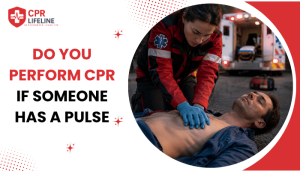
“What if I hurt them while doing CPR?” It’s one of the most common fears that stops people from acting during a cardiac emergency, and the hesitation it causes can cost precious seconds when someone’s life is on the line.
The direct answer is yes, CPR can cause injuries, particularly rib fractures and bruising to the chest, but chest compressions are still necessary to keep a person alive during cardiac arrest. A person in cardiac arrest is unconscious and unresponsive, which means the immediate concern about causing pain should never delay the start of compressions. The alternative to CPR-related injury is not a painless outcome. It is the near-certainty of death without intervention.
This blog breaks down the questions people ask most about CPR and pain, including whether ribs can break, what survivors actually feel afterward, and why hesitation is far riskier than the injuries CPR can sometimes cause. Understanding that distinction is what allows a bystander to act without hesitation. If you suspect cardiac arrest, call emergency medical services and begin CPR immediately.
Does CPR Hurt the Person Receiving It?
A person in cardiac arrest is unconscious and does not experience pain from chest compressions the way an awake person would. If the person survives and regains consciousness, they may later notice chest soreness, tenderness, or bruising, along with little or no memory of the resuscitation itself.
Once return of spontaneous circulation (ROSC) occurs, pain can become part of their recovery. Soreness, sternum tenderness, and bruising are common findings afterward, not signs that something went wrong. CPR is not always painless, but the discomfort a survivor experiences comes later. It does not occur during the unconscious state that cardiac arrest itself creates. For anyone hesitating to act, that distinction matters.
Can CPR Break Ribs?
Yes, CPR can fracture ribs or injure the sternum, and this is a well-documented, expected part of effective chest compressions rather than a sign that something went wrong. A recent systematic review and meta-analysis covering more than 16,000 patients found that CPR-related injury occurred in roughly 60 percent of patients, with rib fractures being the most common finding.
Chest compressions require significant force to be effective. Current guidelines call for compressing the adult chest to a depth of about 5 to 6 cm at a rate of 100 to 120 compressions per minute, and generating that depth consistently often exceeds what the rib cage can absorb without fracturing. This is not evidence of incorrect technique. Compressions performed too gently to reach adequate depth fail to circulate blood effectively, which is a far more dangerous outcome than a rib fracture. Age, bone density, chest anatomy, and compression force all influence fracture risk, and each of these factors is covered in more detail later in this article.
The priority during cardiac arrest is restoring circulation, and that priority outweighs the risk of injury every time. The brain and vital organs cannot survive extended periods without blood flow, and hesitating to compress hard enough out of fear of causing a fracture puts the person’s life at far greater risk than the fracture itself.
What Does CPR Feel Like?
What CPR feels like depends entirely on whether the person receiving it is conscious. For someone in cardiac arrest, the answer is nothing, since the person is unconscious and unaware of the compressions happening to them. CPR should only be performed on someone who is unresponsive and not breathing normally, which is why this difference matters. It separates cardiac arrest from a heart attack, where the heart continues beating while a blocked artery cuts off blood flow to part of the heart muscle and the person typically remains conscious and breathing. Chest compressions are not a treatment for chest pain in a conscious person. If someone is awake and reporting chest pain, the correct response is to call emergency services and keep them calm and still, not to begin CPR.
Once cardiac arrest resolves and return of spontaneous circulation occurs, the person moves from feeling nothing to potentially feeling quite a lot. Chest soreness, bruising, and pain around the ribs or sternum are common in the hours and days that follow. Medical teams typically evaluate survivors for CPR-related injuries as part of standard post-resuscitation care, since fractures and chest wall injuries are common enough to check for routinely rather than treat as unexpected complications.
Why Does CPR Require So Much Force?
CPR requires significant force because compressions must physically squeeze the heart between the breastbone and spine to push blood through the body. Without enough depth and speed, chest compressions fail to generate the pressure needed to circulate oxygenated blood to the brain and vital organs, which is the entire point of performing CPR in the first place.
Every element of technique exists to maximize that circulation. Correct hand position on the lower half of the sternum allows compressions to target the heart directly. Adequate compression depth and an appropriate compression rate work together to move enough blood with each cycle, while full chest recoil between compressions allows the heart to refill before the next compression begins. Minimizing interruptions preserves the chest compression fraction, a key measure of how much of the resuscitation effort actually involves active compressions rather than pauses. High-quality CPR prioritizes this effective circulation over avoiding every possible injury, because generating enough force to move blood is what gives a person in cardiac arrest any chance of survival at all.
Should You Perform CPR If You Are Afraid of Hurting Someone?
Yes, if an adult is unresponsive and not breathing normally, start CPR and follow emergency-dispatch instructions. Fear of causing injury should never be the reason someone delays action, since every minute without CPR after cardiac arrest significantly reduces the chance of survival. If you are untrained or uncomfortable delivering rescue breaths, hands-only CPR is a proven and effective option for adult sudden cardiac arrest and removes one of the biggest barriers keeping bystanders from acting.
The fears that hold people back usually come down to three questions, and each one has a straightforward answer. A broken rib is a treatable, expected complication, not a reason to hold back the force needed to circulate blood. Performing CPR imperfectly still saves lives far more often than doing nothing at all, and an emergency dispatcher can talk you through each step in real time if you call before starting. If the person wakes up during compressions, that means circulation is returning, which is the outcome CPR is meant to produce, and you should stop only once they show clear signs of recovery or begin breathing normally on their own.
Does CPR Hurt More for Some People?
CPR carries a higher risk of injury for some people than others, largely due to differences in bone strength, chest structure, and age. Understanding these differences helps explain why the same compression technique can produce very different outcomes from one person to the next, without ever suggesting the technique itself should change to avoid injury.
The following factors most directly influence CPR-related injury risk:
- Age: Bone density naturally decreases with age, making the ribs and sternum more prone to fracture even under standard compression force. Older adults face the highest injury risk during CPR as a result.
- Bone density: Conditions like osteoporosis reduce bone strength independent of age, increasing fracture risk for anyone affected by them. Lower bone density means less force is needed to cause a fracture during compressions.
- Chest anatomy: Chest size, shape, and rigidity vary between individuals and affect how compression force is absorbed and distributed. A smaller or more fragile chest cavity responds differently to standard compression depth than a larger one.
- Body size and physical condition: Overall body composition influences injury patterns beyond chest anatomy alone. These differences affect the likelihood of injury but should never change how hard or how deep compressions are delivered, since adequate depth remains necessary for effective circulation regardless of age or size.
Children and infants require an entirely different approach rather than a scaled-down version of adult CPR. Pediatric CPR uses age-appropriate hand placement, depth, and technique specifically because a child’s chest anatomy and bone structure differ significantly from an adult’s. Using adult technique on a child risks both inadequate circulation and unnecessary injury, which is why CPR must always be adapted to the person receiving it rather than applied as a single, one-size-fits-all method.
Does CPR Hurt More Than Doing Nothing?
The real comparison a bystander faces during cardiac arrest is not CPR versus a pain-free alternative. It is CPR versus almost certain death. Without intervention, a person in cardiac arrest has essentially no chance of survival, since the heart cannot restart circulation on its own once it stops beating effectively.
According to the American Heart Association, immediate bystander CPR can double or triple a person’s chance of surviving out-of-hospital cardiac arrest compared to no CPR at all. The International Liaison Committee on Resuscitation and the European Resuscitation Council reach the same conclusion in their own published guidelines, both of which emphasize that early, high-quality compressions are the single most important factor a bystander controls in that moment. Against that outcome, a possible rib fracture is not a meaningful risk to weigh. It is a manageable, treatable side effect of the one action proven to give the person a real chance of survival. Fear of causing injury should not normally prevent CPR when cardiac arrest is suspected, because the alternative to that injury is not comfort. It is the loss of a life that CPR could have saved.
How Can You Perform CPR Safely and Effectively?
Safe and effective CPR follows the same core technique regardless of who is performing it or where the emergency happens. Following these steps gives a person in cardiac arrest the best possible chance of survival:
- Use a firm, flat surface when possible: Move the person to the floor or another firm surface if they are on a bed or couch. A soft surface absorbs compression force and makes it difficult to reach adequate depth.
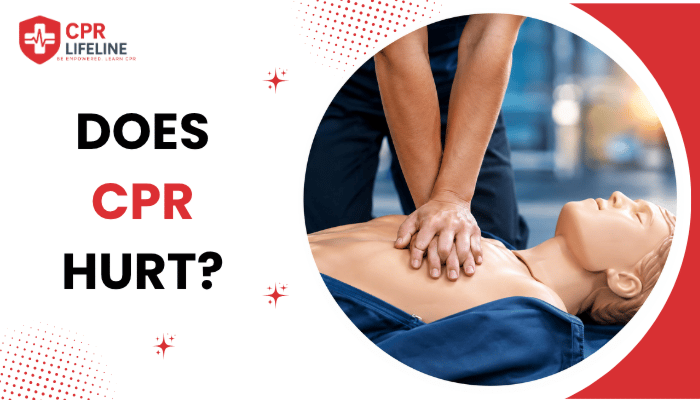
- Place your hands correctly: Position the heel of one hand on the lower half of the sternum, at the center of the chest, with your second hand on top. Correct hand placement is one of the clearest predictors of whether compressions actually move blood effectively.
- Compress to the correct depth and rate: Push at least 2 inches deep for adults at a rate of 100 to 120 compressions per minute, following current AHA guidelines. Depth and rate work together, and falling short on either one reduces how much blood circulates with each compression.
- Allow full chest recoil: Let the chest rise completely between compressions so the heart can refill with blood. Leaning on the chest during recoil reduces the volume pumped with the next compression.
- Minimize interruptions: Keep pauses under ten seconds except during AED rhythm analysis. Every second without active compressions reduces blood flow to the brain and vital organs.
- Use an AED as soon as one is available: Power it on, apply the pads as directed, and follow its audio prompts. Resume compressions immediately after any shock is delivered.
If you have never been trained, do not let that stop you from starting. Emergency dispatchers are trained to walk untrained bystanders through CPR step by step over the phone, a service known as dispatcher-assisted CPR, and calling before you begin means you are never acting alone. Technique also needs to adapt to the situation, whether that means adjusting hand placement for a child, using two fingers or two thumbs for an infant, or accounting for a person’s size and physical condition.
What Matters Most When CPR Is Needed
CPR can cause pain and physical injury, particularly rib fractures, but those risks do not outweigh the need for immediate resuscitation during cardiac arrest. Correct technique, adequate depth, full chest recoil, and minimal interruptions all improve how effectively compressions circulate blood, and that effectiveness matters more than avoiding every possible injury. Early emergency activation, immediate chest compressions, and AED use remain the actions most likely to save a life.
Fear of hurting someone should never be the reason CPR is delayed or withheld. If you want to build real confidence before an emergency happens, CPR Lifeline offers AHA-certified CPR courses across Tennessee and Georgia. Browse available CPR certification classes and learn to act without hesitation the moment it counts most.
Faqs
CPR should not be performed on a conscious person who is breathing normally, since chest compressions are not a treatment for ordinary chest pain. If someone is awake and reporting chest pain, call emergency services and keep them calm and still instead of beginning CPR.

Chris Peters
Chris Peters is a certified American Heart Association instructor and firefighter since 1996 with over 30 years of emergency response experience. After answering thousands of 911 calls, he founded CPR Lifeline to provide AHA-certified training that transforms bystanders into confident lifesavers who act decisively when seconds count