

Most people use “heart attack” and “sudden cardiac arrest” as if they mean the same thing. They do not. Treating them as interchangeable is more than a vocabulary mistake. It can delay the right response during an emergency and reduce a person’s chance of survival.
A heart attack occurs when a blockage cuts off blood flow to the heart muscle. Sudden cardiac arrest occurs when the heart’s electrical system malfunctions and the heart stops beating effectively. A heart attack can trigger sudden cardiac arrest, but the two conditions have different causes, different symptoms, and require different emergency responses.
Learn what each condition is, how their symptoms and causes differ, what to do during each type of emergency, and what steps can reduce your risk of both.
What Is Sudden Cardiac Arrest?
Sudden cardiac arrest occurs when the heart’s electrical system malfunctions and causes the heart to stop beating effectively. Instead of pumping blood in a coordinated rhythm, the heart quivers uselessly or stops altogether, cutting off blood flow to the brain and vital organs within seconds. The most common electrical disturbance behind sudden cardiac arrest is ventricular fibrillation, a chaotic rhythm in which the heart’s lower chambers fire irregularly and lose the ability to pump blood. Pulseless ventricular tachycardia, another abnormal rhythm, can also trigger cardiac arrest by causing the heart to beat so fast that it effectively pumps nothing.
A person in sudden cardiac arrest loses consciousness almost immediately and has no detectable pulse. Breathing stops or becomes limited to infrequent gasping, which is not effective breathing and should not delay emergency action. Without intervention, brain damage begins within four to six minutes, and death follows shortly after. Survival depends almost entirely on how quickly CPR and defibrillation are delivered. According to the American Heart Association, survival rates drop by seven to ten percent for every minute that passes without defibrillation. An Automated External Defibrillator delivers an electric shock that can restore a normal heart rhythm, and starting CPR immediately keeps oxygenated blood moving until a defibrillator is available.
What Is a Heart Attack?
A heart attack occurs when blood flow through a coronary artery becomes blocked, depriving part of the heart muscle of the oxygen it needs to survive. The blockage is almost always caused by the rupture of a plaque deposit built up inside the artery wall. When that plaque ruptures, the body responds by forming a blood clot at the site, which can partially or completely seal off the artery. The longer that blockage remains, the more heart muscle tissue dies, which is why rapid treatment is critical.
Unlike sudden cardiac arrest, the heart continues beating during a heart attack. The damage is circulatory rather than electrical. Doctors classify heart attacks into two primary types based on the severity of the blockage. A STEMI, or ST-elevation myocardial infarction, involves a complete blockage of a coronary artery and is considered the most severe type. An NSTEMI, or non-ST-elevation myocardial infarction, involves a partial blockage that still causes measurable damage to the heart muscle. Both require urgent emergency care, but a STEMI demands the fastest possible response. Treatment typically involves restoring blood flow through procedures such as angioplasty, where a catheter is used to open the blocked artery, often with the placement of a stent to keep it open.
Sudden Cardiac Arrest vs Heart Attack: What Are the Key Differences?
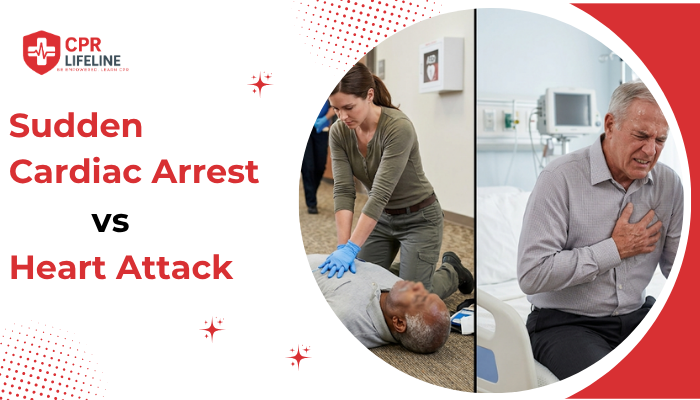
Sudden cardiac arrest and a heart attack are both life-threatening cardiac events, but they affect the heart in fundamentally different ways. Cardiac arrest is an electrical problem. A heart attack is a plumbing problem. In cardiac arrest, the heart stops beating effectively and the person collapses immediately. In a heart attack, the heart continues beating but is being starved of blood due to a blocked artery. That distinction changes everything about how each emergency looks, how it is treated, and how survival depends on the speed and type of response.
The table below outlines the key differences between the two conditions:
| Feature | Sudden Cardiac Arrest | Heart Attack |
|---|---|---|
| Primary problem | Electrical malfunction | Blood flow blockage |
| Heart beating | Stops or becomes ineffective | Usually continues beating |
| Consciousness | Immediate loss | Usually remains conscious initially |
| Pulse | Absent | Usually present |
| Breathing | Stops or gasping | Usually continues |
| Treatment | CPR + AED | Emergency cardiac care |
| Survival depends on | Immediate defibrillation | Rapid restoration of blood flow |
Recognizing which emergency you are dealing with determines the action you take. A person in cardiac arrest needs CPR and an AED without delay. A person experiencing a heart attack needs emergency medical care as quickly as possible, but they are conscious and breathing and do not require CPR unless their condition deteriorates into cardiac arrest. Understanding these distinctions is one of the most important steps the public can take toward improving cardiac emergency survival rates.
Can a Heart Attack Cause Sudden Cardiac Arrest?
Yes, a heart attack can trigger sudden cardiac arrest, but the two are not the same event. When a blockage cuts off blood flow to the heart muscle, the resulting damage can disrupt the heart’s electrical system and cause it to enter a life-threatening arrhythmia. Ventricular fibrillation is the most common arrhythmia that bridges the two conditions, and it can develop rapidly in the minutes or hours following a heart attack. According to the American Heart Association, heart attacks are one of the leading triggers of sudden cardiac arrest, which is why every heart attack must be treated as a potential precursor to a more severe emergency.
Not every heart attack leads to cardiac arrest, and not every cardiac arrest is caused by a heart attack. Cardiac arrest has several other causes that are entirely unrelated to coronary artery blockage. Cardiomyopathy, congenital heart defects, severe electrolyte imbalances, drug overdose, and blunt chest trauma can all trigger the electrical malfunction that causes cardiac arrest.
Symptoms of Sudden Cardiac Arrest
Sudden cardiac arrest gives almost no warning. In most cases, the first observable sign is sudden collapse. The person loses consciousness within seconds of the electrical malfunction and cannot be roused by voice or touch. There is no detectable pulse, and normal breathing stops. Some people display agonal breathing, which are infrequent, irregular gasps that can be mistaken for normal breathing but are a sign that the body is shutting down. Agonal breathing is not effective respiration and must not delay CPR.
In a small number of cases, a person may experience brief warning symptoms in the minutes before cardiac arrest, including sudden dizziness, chest discomfort, or a racing heartbeat. These symptoms are not reliable predictors and often go unnoticed or are attributed to something less serious. The American Heart Association advises that because cardiac arrest is so sudden and so rapidly fatal, bystander response is the most critical factor in survival. Waiting to see whether symptoms resolve is not an option. Any person who collapses, is unresponsive, and is not breathing normally requires an immediate call to emergency services and CPR without delay.
Symptoms of a Heart Attack
The most recognized symptom of a heart attack is chest pain or pressure that feels like squeezing, tightness, or a heavy weight pressing on the chest. That discomfort can radiate outward to the left arm, right arm, jaw, neck, or upper back. Shortness of breath, nausea, cold sweats, and lightheadedness frequently accompany the chest pain, though they can also appear without it. Unlike sudden cardiac arrest, heart attack symptoms often build gradually over several minutes, giving the person time to recognize what is happening and call for help.
Symptoms vary significantly depending on the person. Women are more likely than men to experience atypical symptoms such as unusual fatigue, nausea, vomiting, and back or jaw pain without prominent chest discomfort. Older adults and people with diabetes may experience silent heart attacks, where symptoms are mild, vague, or absent entirely. Younger adults may dismiss early warning signs as anxiety, indigestion, or muscle strain. Regardless of age, sex, or health history, any combination of the symptoms below warrants an immediate call to emergency services:
- Chest pain, pressure, tightness, or squeezing
- Pain radiating to the arm, jaw, neck, or back
- Shortness of breath
- Nausea or vomiting
- Cold sweats
- Lightheadedness or dizziness
- Unusual or sudden fatigue
What Causes Sudden Cardiac Arrest?
Sudden cardiac arrest is caused by a disruption to the heart’s electrical system that prevents it from beating in a coordinated rhythm. Ventricular fibrillation, the most common cause, occurs when disordered electrical impulses cause the heart’s lower chambers to quiver rather than pump blood. Cardiomyopathy, a disease that enlarges or weakens the heart muscle, is one of the most frequent underlying structural causes. Congenital heart defects, Long QT syndrome, and severe electrolyte imbalances involving potassium, magnesium, or calcium can each destabilize the heart’s electrical signaling and trigger arrest. Drug overdose, particularly from stimulants or opioids, is a growing cause across all age groups. Commotio cordis, a rare event caused by a sharp blow to the chest at a precise moment in the heart’s electrical cycle, can trigger ventricular fibrillation in otherwise healthy individuals, most commonly young athletes.
What Causes a Heart Attack?
Heart attacks are caused by atherosclerosis, a condition in which fatty plaque accumulates inside the coronary artery walls over many years, narrowing the arteries and reducing blood flow to the heart muscle. When a plaque deposit ruptures, the body triggers an immediate clotting response that can partially or fully block the artery, cutting off oxygen to the heart muscle it supplies. Coronary artery disease is the primary driver, but several risk factors accelerate plaque buildup and increase the likelihood of a rupture, including smoking, high blood pressure, high cholesterol, type 2 diabetes, obesity, physical inactivity, chronic kidney disease, and a family history of coronary artery disease.
How Doctors Diagnose Each Condition
Diagnosis for each condition follows a different path based on how the emergency presents. Here is what doctors use for each:
Sudden Cardiac Arrest
- ECG: Identifies the abnormal rhythm responsible for the arrest and guides immediate treatment decisions.
- Continuous cardiac monitoring: Detects recurring arrhythmias after resuscitation to prevent a second arrest.
- Blood tests: Measure enzyme levels that indicate how much heart muscle damage occurred during the event.
- Echocardiogram: Evaluates the heart’s structure and pumping function following resuscitation.
- Cardiac MRI: Used in selected cases to identify underlying structural abnormalities that contributed to the arrest.
Heart Attack
- ECG: Detects electrical changes that indicate a blocked artery. A STEMI produces a distinctive pattern that signals a complete blockage requiring immediate intervention.
- Troponin blood test: Confirms heart muscle damage by measuring proteins released into the bloodstream when heart cells die.
- Coronary angiography: Maps the coronary arteries using dye and imaging to locate the exact blockage site.
- Echocardiogram: Assesses heart function and identifies areas of reduced blood flow after initial treatment.
- Stress testing: Used after stabilization to evaluate recovery and detect any remaining arterial narrowing.
Emergency Treatment: What Should You Do?
Responding correctly to each emergency requires knowing which condition you are dealing with. Cardiac arrest demands immediate physical intervention. A heart attack demands urgent emergency medical care. Acting quickly in both situations improves survival, but the actions themselves are different.
Sudden Cardiac Arrest Response
- Call emergency services immediately: Dial 911 the moment a person collapses and is unresponsive. Every second without blood flow to the brain increases the risk of permanent damage.
- Begin CPR without delay: Place the heel of your hand on the center of the chest and deliver hard, fast compressions at a rate of 100 to 120 per minute. Do not wait for signs of breathing to start.
- Use an AED as soon as one is available: Power on the device, follow the audio prompts, and deliver a shock if advised. Resume CPR immediately after the shock is delivered.
- Continue until help arrives: Do not stop CPR unless the person begins breathing normally or professional responders take over.
Heart Attack Response
- Call emergency services immediately: Do not drive the person to the hospital unless emergency services are completely unavailable. Paramedics can begin treatment en route.
- Keep the person calm and still: Physical exertion increases the heart’s demand for oxygen and can worsen the damage caused by the blockage.
- Follow dispatcher instructions: Emergency dispatchers can guide you through appropriate steps while help is on the way.
- Monitor for deterioration: A heart attack can progress into cardiac arrest. Stay with the person and be prepared to begin CPR if they lose consciousness and stop breathing normally.
Knowing how to perform CPR and operate an AED can mean the difference between life and death during a cardiac arrest.
Prevention Strategies for Both Conditions
Many of the risk factors behind both sudden cardiac arrest and heart attack are modifiable, meaning consistent lifestyle changes can meaningfully reduce your risk of both conditions. The American Heart Association recommends the following lifestyle strategies for long-term cardiovascular health:
- Quit smoking: Smoking damages artery walls, accelerates plaque buildup, and significantly increases the risk of both heart attack and cardiac arrest.
- Exercise regularly: Aim for at least 150 minutes of moderate-intensity physical activity per week to strengthen the heart and improve circulation.
- Follow a heart-healthy diet: Prioritize vegetables, fruits, whole grains, lean protein, and healthy fats while limiting sodium, processed foods, and added sugars.
- Control blood pressure: High blood pressure accelerates arterial damage and is one of the most significant modifiable risk factors for both conditions.
- Manage cholesterol levels: Elevated LDL cholesterol speeds up plaque formation inside the coronary arteries and increases heart attack risk.
- Manage diabetes: Uncontrolled blood sugar damages blood vessels and compounds the effects of other cardiovascular risk factors.
- Maintain a healthy weight: Excess body weight increases strain on the heart and raises the likelihood of high blood pressure, diabetes, and high cholesterol.
- Prioritize sleep: Poor sleep quality and duration are independently associated with increased cardiovascular risk.
- Manage stress: Chronic stress elevates blood pressure and contributes to behaviors that worsen cardiovascular health.
Medical prevention plays an equally important role for people with identified risk factors. Statins reduce LDL cholesterol and lower heart attack risk in high-risk individuals. Blood pressure medications protect artery walls from ongoing damage. For people with a history of dangerous arrhythmias or a high risk of sudden cardiac arrest, an implantable cardioverter-defibrillator automatically detects and corrects life-threatening rhythms. Cardiac rehabilitation programs, offered after a heart attack or cardiac arrest, combine supervised exercise, education, and lifestyle support to reduce the risk of a future event.
When Should You Seek Emergency Medical Care?
Seek emergency medical care immediately for any symptom that could indicate a heart attack or sudden cardiac arrest. Do not wait to see whether symptoms improve on their own, and do not drive yourself to the hospital if you suspect a heart attack. Minutes of delay translate directly into greater heart muscle damage and lower survival rates. Call 911 for any of the following:
- Sudden collapse or loss of consciousness
- No detectable pulse or normal breathing
- Chest pain, pressure, or tightness lasting more than a few minutes
- Pain spreading to the arm, jaw, neck, or back
- Sudden severe shortness of breath
- Unexplained cold sweats combined with nausea or lightheadedness
- A sensation of the heart racing, fluttering, or pounding abnormally
Certain groups face a higher risk of delayed recognition and should be especially vigilant. Women, older adults, and people with diabetes are more likely to experience atypical or mild symptoms that do not match the classic heart attack presentation.
Know the Difference, Act Quickly, and Improve Survival
Sudden cardiac arrest and a heart attack are two distinct emergencies that require two different responses. Cardiac arrest stops the heart’s ability to pump blood and demands CPR and defibrillation within minutes. A heart attack blocks blood flow to the heart muscle and requires urgent emergency medical care to restore circulation before permanent damage sets in. Recognizing the difference between the two, identifying symptoms early, and knowing exactly what to do in each situation are the most important steps any person can take toward improving cardiac emergency survival rates.
Understanding these conditions is only part of the equation. Knowing how to act on that understanding is what saves lives. CPR certification equips you with the hands-on skills to respond immediately during a cardiac arrest, before professional help arrives. CPR Lifeline offers AHA-certified CPR courses across Tennessee and Georgia for individuals, healthcare professionals, and workplace teams. Browse available CPR certification classes and take the step that puts life-saving skills in your hands.
Faqs

Chris Peters
Chris Peters is a certified American Heart Association instructor and firefighter since 1996 with over 30 years of emergency response experience. After answering thousands of 911 calls, he founded CPR Lifeline to provide AHA-certified training that transforms bystanders into confident lifesavers who act decisively when seconds count