


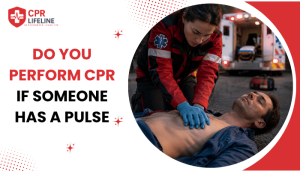
Recognizing when CPR is needed can determine whether someone survives a cardiac emergency. Many bystanders freeze in the critical first seconds, not because they lack the physical ability to help, but because they are unsure whether the situation actually calls for CPR. That hesitation takes time, and time is what a cardiac arrest victim can’t afford.
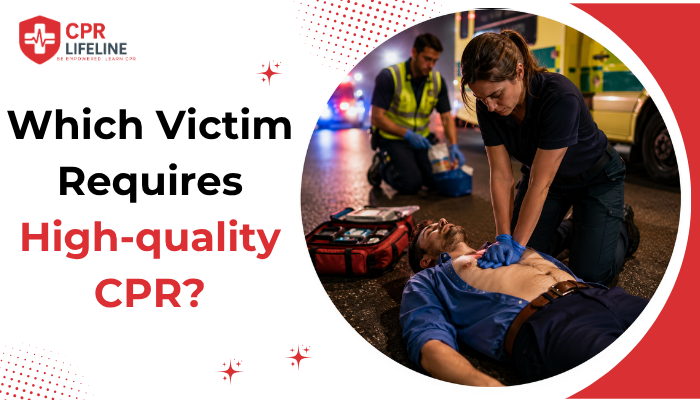
A victim requires high-quality CPR when they are unresponsive, not breathing normally, or only gasping, and have no detectable pulse. Immediate chest compressions and early AED use significantly improve the chance of survival.
This blog defines high-quality CPR based on current American Heart Association guidelines. It explains how to identify a victim who needs CPR, covers the key differences between adult, child, and infant responses, and walks you through the step-by-step process for delivering effective, life-saving compressions.
What Is High-Quality CPR?
High-quality CPR is defined by the American Heart Association as a set of measurable performance standards that maximize blood flow to the brain and heart during a cardiac emergency. Meeting each standard consistently is what separates effective CPR from compressions that simply resemble the correct technique. Understanding the components of high-quality CPR in detail gives rescuers a clear benchmark to follow under pressure. The core elements are covered below.
Compression Rate
Deliver compressions at a rate of 100 to 120 per minute for adults. Rates below 100 reduce blood flow to the brain and vital organs, while rates above 120 shorten the time available for the chest to refill between compressions.
Compression Depth
Compress the adult chest at least two inches with every compression. Shallow compressions fail to generate enough pressure to circulate blood effectively through the body.
Full Chest Recoil
Allow the chest to fully rise between every compression. Leaning on the chest during recoil prevents the heart from refilling completely and reduces the volume of blood pumped with each cycle.
Minimal Interruptions
Keep pauses in chest compressions under ten seconds except during AED rhythm analysis. Maintaining a high chest compression fraction is one of the strongest predictors of survival, according to the International Liaison Committee on Resuscitation.
Compression-to-Breath Ratio
Deliver 30 compressions followed by 2 rescue breaths for single-rescuer adult CPR. Rescue breaths restore oxygen to the blood alongside the circulation that compressions provide, working together to sustain the body until advanced care arrives.
Which Victim Requires High-Quality CPR?
A victim requires high-quality CPR when they are unresponsive, not breathing normally, or only gasping, and have no detectable pulse. Recognizing these signs quickly ensures CPR starts in time to make a difference. Understanding what CPR is and how it works clarifies why the intervention applies specifically to the absence of effective circulation, not simply the presence of a medical emergency.
High-quality CPR is required across several distinct emergency situations, all of which share the same underlying sign (the absence of effective breathing and circulation).
Sudden Cardiac Arrest
A person whose heart has stopped beating effectively due to an electrical malfunction requires immediate CPR. The person collapses suddenly, loses consciousness within seconds, and has no detectable pulse. This is the most common and most time-sensitive scenario requiring high-quality CPR.
Drowning
A drowning victim who is unresponsive and not breathing normally requires CPR the moment they are removed from the water. Oxygen deprivation during submersion can lead to cardiac arrest quickly, and rescue breaths are especially important in drowning cases because the arrest originates from a lack of oxygen rather than a primary cardiac event.
Drug Overdose
An opioid or stimulant overdose can suppress breathing to the point of respiratory arrest, which can progress to cardiac arrest if untreated. A victim who is unresponsive and not breathing normally following a suspected overdose requires the same immediate CPR response as any other cardiac arrest victim.
Electrocution
Electrical current passing through the body can disrupt the heart’s rhythm directly and cause cardiac arrest on contact. Before beginning CPR, confirm the power source is off or the victim is safely separated from it, since touching an electrocuted person who is still in contact with the current puts the rescuer at risk. Once the scene is safe, a victim who is unresponsive and not breathing normally requires immediate CPR.
Trauma-Related Arrest
Severe blood loss, blunt chest trauma, or major injury from a fall or vehicle accident can cause the heart to stop. A trauma victim who is unresponsive and not breathing normally still requires CPR, though rescuers should remain aware of possible additional injuries while positioning the victim.
Agonal gasping deserves particular attention across all of these scenarios. It consists of infrequent, irregular gasps that can resemble snoring, but it is not effective breathing. Bystanders who mistake it for normal breathing often delay CPR at the exact moment it is needed most. Healthcare providers trained to check for a pulse should limit that check to ten seconds. Untrained bystanders should skip the pulse check entirely, since hands-only CPR is a proven and effective option that removes the barriers keeping bystanders from acting.
Step-by-Step Guide to Performing High-Quality CPR
Performing high-quality CPR follows a clear sequence that any trained or untrained bystander can execute under pressure. Each step builds on the one before it, and completing them in order gives the victim the best possible chance of survival. Follow these seven steps once you have identified that a victim requires CPR:
- Step 1. Ensure scene safety: Check for hazards before approaching the victim. Do not put yourself at risk, especially in cases involving electrocution, traffic, or unstable structures.
- Step 2. Check responsiveness: Tap the victim’s shoulders firmly and shout loudly. Look for any reaction, including movement, sound, or eye opening. Look for chest rise, listen for breath sounds, and feel for air movement for no more than ten seconds.
- Step 3. Call emergency services: Dial 911 immediately or instruct a bystander to call while you begin assessment and compressions. Use speakerphone if you are alone. Dispatch a bystander to locate and retrieve the nearest AED while you begin CPR.
- Step 4. Begin chest compressions: Place the heel of one hand on the center of the chest with the other hand on top. Compress at least two inches deep at a rate of 100 to 120 compressions per minute, allowing full chest recoil between each one.
- Step 5. Deliver rescue breaths if trained: After 30 compressions, deliver 2 rescue breaths with a proper seal over the mouth. If untrained or unwilling to perform rescue breaths, continue with hands-only compressions instead.
- Step 6. Use the AED immediately when available: Power on the device, apply the pads as directed, and follow the audio prompts. Resume compressions immediately after any shock is delivered or if no shock is advised.
- Step 7. Continue until EMS arrives: Maintain compressions and follow AED prompts without stopping unless the victim begins breathing normally or professional responders take over.
Practicing these steps of CPR in a hands-on setting is what builds the muscle memory needed to execute it correctly during a real emergency.
Common CPR Mistakes That Reduce Survival
Even well-intentioned rescuers can unintentionally reduce the effectiveness of CPR through small, avoidable errors. Most of these mistakes stem from panic, fatigue, or a lack of hands-on practice rather than a lack of effort. Recognizing them in advance is what allows a rescuer to self-correct during a real emergency instead of repeating the same error throughout the resuscitation.
Compressing Too Shallow and Slowly
A compression rate below 100 per minute fails to generate adequate blood flow, and rescuers under stress often slow down without realizing it. That is why counting aloud or using a metronome can help. The same applies to compression depth. Compressions that do not reach at least two inches in adults cannot circulate blood effectively. Fatigue is the leading cause of shallow compressions, so rotating rescuers every two minutes is essential.
Leaning on the Chest
Failing to allow full chest recoil between compressions prevents the heart from refilling with blood. This reduces the volume of blood pumped with each subsequent compression, even if depth and rate remain correct.
Excessive Pauses
Interruptions longer than ten seconds reduce the chest compression fraction and directly lower survival odds. Common causes include repositioning hands, checking for a pulse unnecessarily, or hesitating during rescuer transitions.
Delayed AED Use
Waiting to retrieve or apply the AED until you feel settled into CPR can cost critical time. The AED should be requested the moment cardiac arrest is suspected and applied as soon as it arrives, without pausing ongoing compressions any longer than necessary.
Incorrect Hand Placement
Placing hands too high, too low, or off-center on the chest reduces compression efficiency and increases the risk of rib injury. Hands should be placed on the lower half of the sternum, in the center of the chest, for every compression.
Why High-Quality CPR Improves Survival Rates?
The link between CPR quality and survival is well established in resuscitation science. According to the American Heart Association, immediate bystander CPR can double or triple a victim’s chance of surviving out-of-hospital cardiac arrest compared to no CPR at all. That improvement depends directly on meeting the compression rate, depth, recoil, and minimal interruption standards covered earlier in this article. CPR performed below these standards still provides some benefit, but it falls well short of the survival advantage that high-quality technique delivers.
Every minute that passes without CPR after cardiac arrest reduces the victim’s chance of survival, and combining early CPR with early defibrillation produces the strongest outcomes available outside of a hospital setting. The Centers for Disease Control and Prevention and the International Liaison Committee on Resuscitation both reinforce that bystander action in the first few minutes, before EMS arrives, is the single greatest determinant of survival in sudden cardiac arrest. High-quality CPR is the difference between a resuscitation attempt and a resuscitation that works.
Know the Signs. Act Without Delay. Save a Life.
High-quality CPR is required for any victim who is unresponsive, not breathing normally, or only gasping due to suspected cardiac arrest. Recognizing these signs quickly, without hesitation, is what opens the window for effective intervention. Beginning chest compressions immediately, maintaining the correct rate and depth, and using an AED as soon as one is available are the actions that give a victim the best possible chance of survival, whether the cause is cardiac arrest, drowning, overdose, electrocution, or trauma.
Reviewing current American Heart Association guidance regularly keeps your knowledge sharp, but hands-on practice is what builds real confidence under pressure. CPR Lifeline offers AHA-certified CPR and AED training courses across Tennessee and Georgia designed to prepare individuals and healthcare teams for the moment high-quality CPR is needed. Browse available CPR certification classes and take the step that puts life-saving skills in your hands.
Faqs

Chris Peters
Chris Peters is a certified American Heart Association instructor and firefighter since 1996 with over 30 years of emergency response experience. After answering thousands of 911 calls, he founded CPR Lifeline to provide AHA-certified training that transforms bystanders into confident lifesavers who act decisively when seconds count