
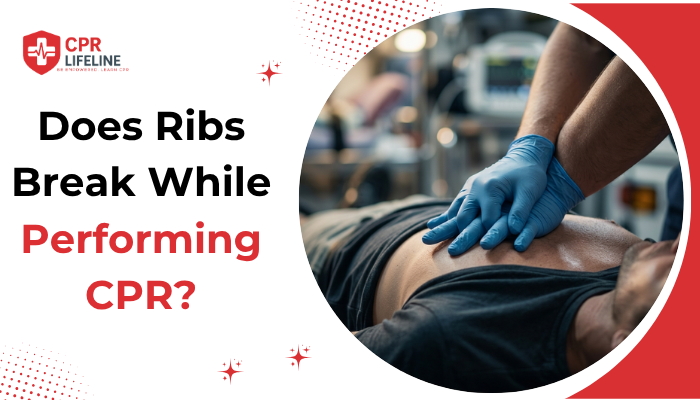


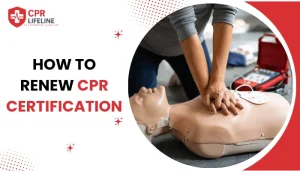
Cardiopulmonary Resuscitation (CPR) requires hard and fast chest compressions to keep blood moving to the brain and vital organs during cardiac arrest. That same force is often strong enough to fracture ribs or the cartilage connecting them to the sternum, which is why so many people hesitate before performing CPR on someone.
CPR can break ribs, and it does so more often than most people realize. Studies show rib fractures happen in up to 90% of CPR cases, depending on the patient’s age, bone density, and gender. A cracked rib during compressions doesn’t mean you’ve done anything wrong. It is simply a byproduct of applying the force needed to keep blood moving through the body and save a life.
In this blog, you’ll learn how common rib fractures are during CPR, what causes them, and who’s most at risk. You’ll also learn the signs of a broken rib, what to do if you suspect one, and how to reduce unnecessary injury without compromising your compressions.
Is It Common to Break Ribs During CPR?
Yes, rib fractures are incredibly common during CPR, and they happen far more often than most people assume. In fact, a study published in the Journal of the American Heart Association scanned U.S. patients who survived out-of-hospital cardiac arrest with full-body CT and found rib fractures in 75% of them. On average, patients had 4 to 5.7 rib fractures each, with the higher end of that range seen in patients who ultimately didn’t survive their hospital stay.
Some research links the increase in rib fracture rates to changes in CPR guidelines themselves. A study in the Scandinavian Journal of Trauma, Resuscitation and Emergency Medicine tested this directly, comparing rib fracture rates before and after the 2010 American Heart Association (AHA) guideline update that pushed for deeper, faster compressions. Fractures jumped from 62.8% to 78.9% of patients after the change, with an even sharper increase among patients under 65 (38.1% to 64.5%). In other words, better CPR technique tends to come with a higher chance of a broken rib.
Who Is Most at Risk for Rib Injuries During CPR?
Individuals with reduced bone density or fragile chest structures are most at risk for rib injuries during CPR. Knowing who falls into these categories can help you understand what to expect, though it should never change whether or how hard you perform compressions.
Here’s a closer look at the group most prone to rib fractures during CPR:
Older Adults
Age is one of the biggest risk factors. Bone density naturally decreases over time and cartilage becomes less flexible, so the same amount of compression force is more likely to cause a fracture in a 75-year-old than in a 25-year-old.
Women
Women experience skeletal chest injuries at higher rates than men. They suffer from more rib fractures and sternum fractures overall, because they have a thinner sternum and thinner cortical bone lining ribs compared to men. This reduces the amount of pressure female bones can tolerate before they fail.
People With Osteoporosis
Osteoporosis thins and weakens bone tissue. The ribs of people suffering from osteoporosis cannot withstand the 100 to 125 pounds of force needed to compress the chest deep enough to pump blood. So people with osteoporosis are far more likely to experience fractures even under the force of CPR.
Smaller or Thinner Individuals
A smaller chest circumference and lighter build means there is less muscle and soft tissue around the chest, so less cushioning between your hands and the rib cage. This can raise the risk of fracture even with proper steps of CPR, since the same 2-inch compression depth has less tissue to absorb the impact before it reaches bone.
Causes of Rib Fractures During CPR
Rib fractures during CPR aren’t caused by bad technique alone. They’re mostly a byproduct of doing CPR correctly.
A mix of factors causes rib breakage during CPR, from compression mechanics to bone condition. Here’s what’s really behind it:
The Force Required for Effective Compressions
Current guidelines call for compressions of about 2 to 2.4 inches (5 to 6 cm) in adults, delivered at a rate of 100 to 120 compressions per minute. Reaching that depth on a human chest takes 100 to 125 pounds of pressure. That kind of repeated pressure on the rib cage is the main reason ribs and cartilage crack or break.
The Rib Cage Isn’t Built for Repetitive Compression
A human rib cage is not designed to withstand more than 100 forceful compressions a minute for several minutes straight. Even if your hand placement is perfect, that repetitive load can crack ribs or separate the cartilage connecting them to the sternum.
Bone and Cartilage Changes With Age
As people get older, bones lose density and cartilage stiffens. Both changes make the chest wall more brittle and less able to absorb compression force, which is why older adults break ribs during CPR far more often than younger patients.
Mechanical CPR Devices Can Increase Fracture Rates
There is more risk of rib fractures with mechanical CPR. Research comparing manual compressions to mechanical devices like the LUCAS system found that automated active compression-decompression CPR led to rib fractures in 96% of cases, compared to 77% with standard manual CPR. Machines don’t get tired, so they deliver more consistent depth, which causes more consistent stress on the rib cage.
Signs of a Broken Rib During CPR
Broken ribs during CPR are common, but you won’t always know for certain that a rib has broken while you’re in the middle of performing CPR.
Here are a few clues of fractured ribs to watch for:
1. A Cracking or Popping Sound or Feeling: This is the most common sign people notice. This sound or sensation is a normal consequence of performing deep, life-saving chest compressions.
2. A Sudden Change in Chest Resistance: If the chest suddenly feels like sinking more easily under your hands, that shift in resistance can be a sign that a rib or the cartilage around it has broken.
3. Visible Chest Deformity or Instability: You might notice an area of the chest that looks uneven, sinks in or moves differently than the rest of the rib cage. This can indicate multiple fractures in the same area, sometimes referred to as a flail segment.
4. Bruising Around the Compression Site: Bruising isn’t always immediate, but it’s a common after-the-fact sign of the force applied during compressions. It may appear alongside a fracture or on its own.
None of these signs are a reason to stop CPR. Note them and report each one to emergency responders the moment they arrive.
What to Do If You Suspect a Broken Rib After CPR
Your instinct might be to slow down or check the damage the moment you feel or hear something crack. You need to override that instinct. What you do in the next few seconds and minutes matters more than the fracture itself.
If you think you’ve broken someone’s ribs while performing CPR, here are the key steps you should follow:
1. Continue Compression
A suspected rib fracture is never a reason to pause CPR, so do not stop chest compressions. Keep your depth at 2 to 2.4 inches (5 to 6 cm) and your pace at 100 to 120 compressions per minute, and don’t break rhythm to check for damage. The victim’s survival depends on continuous blood flow to their brain and organs, and stopping to check on a rib injury can undo the progress you’ve made.
2. Maintain Proper Hand Placement
Keep your hands centered on the lower half of the sternum, with one hand stacked on top of the other and fingers interlaced and lifted off the ribs. This helps distribute force evenly and can reduce unnecessary rib injury, even though some degree of rib stress is unavoidable with effective compressions. If a rescuer places their hands too low on the sternum, they will break the xiphoid process (the bony tip at the bottom of the breastbone).
3. Let Emergency Responders Know
Once paramedics or Emergency Medical Service (EMS) arrive, tell them if you heard or felt a crack during compressions. This will help them assess for internal injuries and plan appropriate care right away.
4. Let Medical Professionals Handle Treatment
Once the patient is in professional hands, rib fractures are typically managed with pain control, rest, and monitoring for complications like pneumothorax or pneumonia. In some more serious cases, doctors may consider surgical rib fixation, though this is uncommon and reserved for severe or unstable fractures.
How to Reduce the Risk of Rib Fractures During CPR
You cannot eliminate the risk of rib fractures entirely, since some degree of force is necessary for CPR to work. But high-quality CPR technique can help minimize unnecessary injury while keeping compressions effective.
The following adjustments will help you avoid unnecessary rib damage during CPR:
1. Use Correct Hand Placement: Place the heel of one hand on the center of the chest, on the lower half of the sternum, with your other hand on top and fingers interlaced. This spreads out the force instead of concentrating it on one small area of bone.
2. Compress to the Recommended Depth: Aim for 2 to 2.4 inches (5 to 6 cm) in adults. Pushing significantly deeper than recommended doesn’t improve outcomes and may increase unnecessary injury.
3. Maintain a Steady Rate and Rhythm: Stick to 100 to 120 compressions per minute. A controlled, consistent rhythm is more effective and gentler on the chest than panicked compressions.
4. Use Body Weight, Not Just Arm Strength: Keep your arms straight, elbows locked, and shoulders positioned directly over your hands. Don’t rely purely on arm strength and let your body weight do the work. This improves consistency and control.
5. Allow Full Chest Recoil: Let the chest fully rise back up between compressions instead of leaning on it. Full chest recoil reduces constant pressure on already-stressed ribs.
6. Rotate Rescuers When Possible: Fatigue can make compression technique sloppy. If more than one trained person is present, switch who’s performing compressions every two minutes to keep quality high throughout the resuscitation.
7. Use CPR Feedback Devices: Modern smart manikins, clinical feedback pads, and advanced professional-grade emergency equipment provide real-time digital or audio feedback on the exact physical pressure you apply. Using these tools trains you to hit the precise target depth consistently without over-compressing.
8. Follow AED Voice Prompts: AEDs provide clear, automated voice prompts that guide the rescuer on when to perform CPR, when to stand clear, and when to deliver a shock, reducing panic.
CPR Training Reduces Risk of Rib Injury
Breaking a rib during CPR sounds scary, but it’s one of the most well-documented and widely accepted side effects of a technique that saves lives every single day. The research backs this up consistently: rib fractures happen often, they happen more in older adults and women, and they happen simply because effective compressions require real force. Cardiac arrest without CPR is almost always fatal, while a broken rib is treatable and heals in a matter of weeks. So if you ever find yourself in a position to perform CPR, push hard and fast, and don’t let the fear of a fracture hold you back.
Getting properly certified can also help you compress with the right depth and confidence from the start, so you’re ready to act without hesitation when it matters most. CPR Lifeline offers AHA-certified courses in CPR, First Aid, BLS, ACLS, and PALS, pairing flexible online modules with a short in-person skills check on a responsive manikin. This hands-on practice is what gives you confidence to push hard and deep even when a rib cracks, because you’ll already know that a temporary fracture is a small trade-off for a life saved.
Faqs

Chris Peters
Chris Peters is a certified American Heart Association instructor and firefighter since 1996 with over 30 years of emergency response experience. After answering thousands of 911 calls, he founded CPR Lifeline to provide AHA-certified training that transforms bystanders into confident lifesavers who act decisively when seconds count