


Cardiac arrest gives no warning, and the person standing closest when it happens is rarely a paramedic. Recognizing cardiac arrest quickly can mean the difference between life and death, yet many bystanders hesitate in that critical moment simply because they are unsure whether CPR is actually needed.
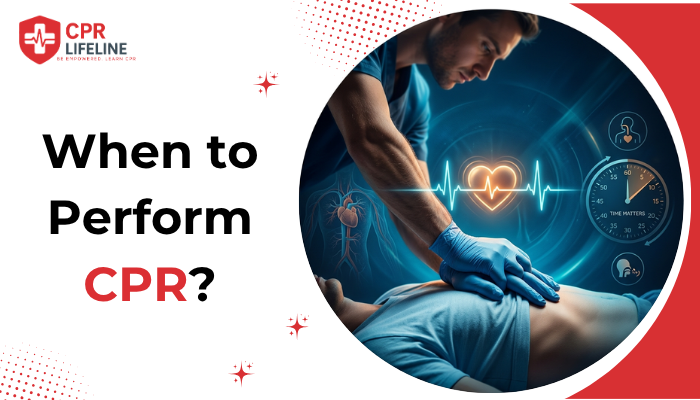
Knowing when to perform CPR comes down to three signs: the person is unresponsive, not breathing normally, or only gasping. When any of these signs are present, call emergency services immediately and begin chest compressions without delay.
This blog covers the signs that indicate CPR is needed, the situations where it should not be performed, the correct step-by-step technique, how compressions differ across adults, children, and infants, and the common mistakes that can reduce CPR’s effectiveness when it matters most.
When Should You Perform CPR?
Perform CPR when a person is unresponsive, is not breathing normally, or is only gasping. Call emergency services immediately and begin chest compressions while another person retrieves an AED if available.
Recognizing these signs quickly is what determines whether CPR begins in time to matter. Sudden cardiac arrest rarely gives a clear warning, and every second of hesitation reduces the chance of survival. The signs below are what to look for before starting CPR.
Unresponsiveness
A person who does not react to voice or touch requires an immediate assessment. Tap the shoulders firmly and shout loudly. No response to either action is a critical sign that CPR may be needed.
Not Breathing Normally
Absent breathing or labored, irregular breathing indicates the body is not receiving adequate oxygen. Check for chest rise, breath sounds, and airflow for no more than ten seconds before concluding that breathing is abnormal.
Agonal Gasping
Agonal gasping consists of infrequent, irregular gasps that can resemble snoring and is often mistaken for normal breathing. It is not effective respiration and is a clear sign that CPR should begin immediately.
No Detectable Pulse (For Trained Responders)
Healthcare providers trained to check for a pulse should limit that check to no more than ten seconds before beginning compressions. Untrained bystanders should skip the pulse check entirely and begin CPR immediately if the person is unresponsive and not breathing normally.
Learning what CPR actually involves before an emergency occurs is what removes hesitation when these signs appear in real time.
Situations When CPR Should Not Be Performed
CPR is a powerful intervention, but it is not appropriate in every emergency. Performing CPR when it is not needed can cause unnecessary injury, and recognizing when to hold back is just as important as knowing when to act. The situations below are the exceptions to starting CPR immediately.
The Person Is Responsive
A person who reacts to voice or touch does not require CPR. Responsiveness confirms that the brain is receiving oxygenated blood, which means the heart and circulation are still functioning.
The Person Is Breathing Normally
Normal breathing confirms the heart is still pumping blood effectively. CPR performed on someone who is breathing normally can cause rib fractures and other unnecessary injury without providing any benefit.
The Environment Is Unsafe
Traffic, fire, live electrical current, or an unstable structure can put the rescuer at risk. Do not attempt CPR until the scene has been made safe, even if that means briefly delaying the response.
There Are Obvious Signs of Irreversible Death
Signs such as rigor mortis or decomposition indicate that resuscitation will not be effective. In these rare cases, calling emergency services remains necessary, but performing CPR is not appropriate.
A DNR Order Is Confirmed and Legally Valid
A Do Not Resuscitate order that has been verified and is legally applicable means CPR should not be performed. If no such order is visible or verifiable at the scene, the default response is to begin CPR immediately without searching for hidden documentation.
Understanding these boundaries prevents wasted time in the situations that call for CPR and prevents unnecessary harm in the ones that do not. When in doubt about responsiveness or breathing, the safer choice is almost always to begin CPR rather than wait.
How to Perform CPR Step by Step
Performing CPR correctly follows a specific sequence, and skipping or reordering steps can reduce its effectiveness. Each step builds on the one before it, from checking the scene to calling for help to delivering compressions at the correct rate and depth. Following these steps of CPR exactly is what gives a person in cardiac arrest the best possible chance of survival.
Follow these seven steps in order to perform CPR correctly:
- Step 1. Ensure the scene is safe: Check for hazards such as traffic, fire, or unstable surfaces before approaching. Your safety comes first, since an injured rescuer cannot help the victim.
- Step 2. Check responsiveness: Tap the person’s shoulders firmly and shout loudly. No reaction to voice or touch indicates CPR may be needed.
- Step 3. Call emergency services: Dial 911 immediately or instruct a bystander to call while you begin your assessment. Use speakerphone if you are alone.
- Step 4. Ask someone to bring an AED: Send a bystander to locate and retrieve the nearest AED while you begin compressions. Every second the device is away is a second without defibrillation.
- Step 5. Begin chest compressions: Place the heel of one hand on the center of the chest with the other hand on top. Compress at least two inches deep at a rate of 100 to 120 compressions per minute, allowing full chest recoil between each one.
- Step 6. Give rescue breaths if trained: After 30 compressions, deliver 2 rescue breaths with a proper seal over the mouth. If untrained or unwilling to give breaths, continue with hands-only compressions instead.
- Step 7. Continue CPR until help arrives: Maintain compressions and follow AED prompts without stopping unless the person begins breathing normally or professional responders take over.
Reading the steps is a starting point, but performing them correctly under pressure takes practice. Build your muscle memory through hands-on training, so the sequence becomes automatic rather than something you have to think through during a real emergency.
Should You Perform Hands-Only CPR?
Yes, hands-only CPR is a safe and effective option for adult sudden cardiac arrest, particularly for untrained bystanders. It involves continuous chest compressions without pausing for rescue breaths, and it removes the hesitation that often prevents people from acting when a stranger needs help. Hands-only CPR is a proven and effective option that the American Heart Association has specifically recommended since 2008 to reduce the barrier of performing mouth-to-mouth breathing on someone the rescuer does not know.
Hands-only CPR is not appropriate in every situation. Children and infants should still receive rescue breaths whenever possible, since their cardiac arrests are more often caused by a breathing problem than a primary heart issue. Rescue breaths also remain important in cases of drowning, drug overdose, and any situation where the person’s oxygen levels were already low before the heart stopped. For adult sudden cardiac arrest with no known respiratory cause, hands-only CPR performed correctly, at the right rate and depth, provides nearly the same survival benefit as CPR with rescue breaths, and it is far better than no CPR at all.
Common Mistakes to Avoid During CPR
Even well-intentioned rescuers can reduce the effectiveness of CPR through small, avoidable errors made under pressure. Most of these mistakes come from hesitation, panic, or a lack of hands-on practice rather than a lack of effort. Knowing what to avoid in advance is what allows a rescuer to act correctly and confidently when a real emergency occurs.
Hesitating to Start
Waiting to confirm every detail before beginning CPR wastes critical time. If a person is unresponsive and not breathing normally, begin compressions immediately rather than waiting for certainty.
Compressing Too Slowly or Too Shallow
A compression rate below 100 per minute or a depth of less than two inches fails to generate adequate blood flow to the brain. Push hard and fast, and do not let fear of causing injury slow down your compressions.
Leaning on the Chest Between Compressions
Failing to let the chest fully rise between compressions prevents the heart from refilling with blood. This reduces the amount of blood pumped with each subsequent compression, even if depth and rate are correct.
Stopping Too Soon
Stopping CPR before professional responders arrive, before an AED prompts you to stop, or before the person shows clear signs of recovery reduces survival odds. Continue compressions even if you feel tired, and switch with another rescuer if one is available.
Delaying AED Use
Waiting to retrieve or apply the AED until CPR feels established costs valuable time. Request the AED the moment cardiac arrest is suspected and apply it as soon as it arrives.
Checking for a Pulse for Too Long
Untrained bystanders often spend too long searching for a pulse instead of starting compressions. Skip the pulse check entirely if you are untrained, and begin CPR immediately based on unresponsiveness and abnormal breathing alone.
Knowing When CPR Can Save a Life
CPR is needed when you see three clear signs. The person is unresponsive, their breathing is absent or abnormal, or they are gasping. Acting on those signs immediately, without waiting for certainty, is what gives a person in cardiac arrest the best chance of survival. From checking the scene and calling emergency services to delivering compressions at the correct rate and depth, each step in the sequence matters, and avoiding the common mistakes covered in this blog keeps your response effective under pressure.
Understanding the steps is important, but hands-on practice is what truly prepares you to perform instinctively during a real emergency. CPR Lifeline offers AHA-certified CPR training courses across Tennessee and Georgia for individuals, healthcare professionals, and workplace teams. Browse available CPR certification classes and build the confidence to act the moment it counts.
Faqs
Check for responsiveness by tapping the shoulders firmly and shouting loudly, then check for breathing by looking, listening, and feeling for airflow for no more than ten seconds. Absent breathing, abnormal breathing, or agonal gasping all indicate that CPR is needed.

Chris Peters
Chris Peters is a certified American Heart Association instructor and firefighter since 1996 with over 30 years of emergency response experience. After answering thousands of 911 calls, he founded CPR Lifeline to provide AHA-certified training that transforms bystanders into confident lifesavers who act decisively when seconds count