
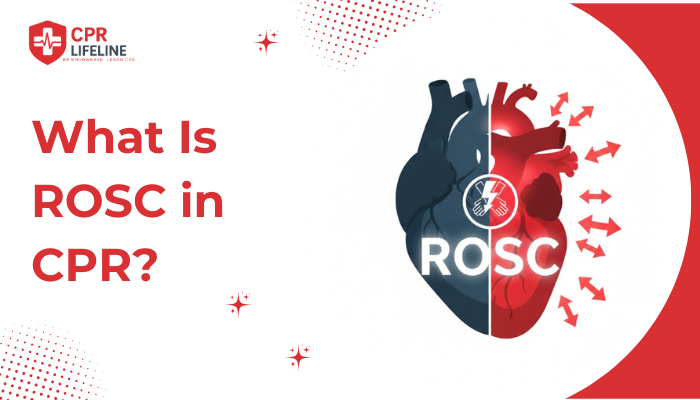

ROSC (Return of Spontaneous Circulation) refers to the restoration of a detectable pulse and effective blood circulation following cardiac arrest. It is a crucial milestone in cardiopulmonary resuscitation (CPR), showing that the heart has started pumping blood on its own without the need for ongoing chest compressions. ROSC is the primary goal of emergency resuscitation, marking the shift from complete cardiac arrest to restored heart function.
When cardiac arrest occurs, the heart stops beating effectively, cutting off oxygen and blood flow to vital organs, including the brain. CPR provides temporary circulation through chest compressions, while defibrillation and medications work to restore the heart’s natural rhythm. Achieving ROSC means these interventions have successfully restarted the heart’s ability to circulate blood independently.
What Does ROSC Stand For?
ROSC stands for Return of Spontaneous Circulation, which occurs when the heart resumes generating adequate blood flow independently after cardiac arrest. The word “spontaneous” highlights that the heart is pumping on its own, as opposed to circulation artificially maintained through CPR. When ROSC happens, the heart begins pumping blood effectively without requiring continued chest compressions, though patients typically still need comprehensive medical support. Clinically, ROSC is confirmed by a palpable pulse and measurable blood pressure without ongoing compressions.
It is also important to distinguish between temporary and sustained ROSC, as this affects the patient’s outcomes. Temporary ROSC occurs when circulation briefly returns, but the patient re-arrests, requiring further resuscitation. Sustained ROSC, by contrast, indicates stable circulation for at least 20 minutes without compressions, representing a more significant milestone and markedly increasing the likelihood of survival.
How Does ROSC Occur During CPR?
Achieving ROSC during CPR depends on coordinated interventions that restore both the heart’s electrical signals and its mechanical pumping ability. Each component of resuscitation plays a specific role in restarting circulation, and understanding these highlights why high-quality, uninterrupted efforts are essential for success.
1. Role of Chest Compressions
Chest compressions form the foundation of CPR by manually circulating blood to vital organs. High-quality compressions in adults should be at least two inches deep and performed at 100–120 compressions per minute. These compressions maintain coronary perfusion pressure, which is critical for the heart muscle to generate energy to restart effectively. Interruptions in compressions reduce this pressure, lowering the chances of achieving ROSC.
2. Role of Defibrillation
Defibrillation delivers a controlled electrical shock that resets chaotic cardiac electrical activity. This allows the sinoatrial node to resume its role as the heart’s natural pacemaker, producing coordinated contractions. Defibrillation is most effective for shockable rhythms like ventricular fibrillation and pulseless ventricular tachycardia, and early use significantly improves ROSC rates.
3. Role of Medications
Medications support ROSC by enhancing blood flow, stabilizing rhythms, and increasing the heart’s responsiveness. Epinephrine increases coronary and cerebral perfusion by constricting peripheral vessels, while antiarrhythmics like amiodarone help treat refractory ventricular fibrillation. Targeted treatments, such as sodium bicarbonate for acidosis or calcium for hyperkalemia, address underlying reversible causes.
Ultimately, ROSC occurs when organized electrical activity translates into mechanical contractions strong enough to produce measurable blood pressure and a detectable pulse.
What are the Signs of ROSC?
Recognizing ROSC quickly is essential to stop compressions and transition to post-resuscitation care. Healthcare providers monitor multiple indicators simultaneously to confirm ROSC and avoid unnecessary continued compressions.
Here are the signs of ROSC:
- A palpable pulse: The most direct sign of ROSC is a pulse felt at central arteries, such as the carotid (neck) or femoral (groin). Peripheral pulses (like the wrist) may remain absent even after central circulation is restored.
- Rise in End-Tidal Carbon Dioxide (ETCO₂): A sudden, sustained rise in ETCO₂ on capnography is an early sign of ROSC. ETCO₂ is low during arrest due to poor circulation and rises quickly when blood flow returns.
- Blood pressure detection: A measurable blood pressure, obtained through arterial line monitoring or an automated cuff, confirms adequate circulatory pressure. Immediately after ROSC, blood pressure may be low and often requires vasopressor support to maintain stability.
- Spontaneous breathing: As brainstem function recovers, patients may start taking irregular gasps (agonal breaths) or more organized, rhythmic breaths. Many patients will still require mechanical ventilation initially.
- Movement or coughing: Purposeful movement, coughing, or eye-opening may occur as cerebral perfusion improves. These signs indicate that the brain is receiving sufficient oxygenated blood to support neurological activity.
What Happens After ROSC?
Achieving ROSC restores circulation, but it does not signal the end of treatment. Instead, it begins a complex and high-risk phase known as post-cardiac arrest care, where the focus shifts from restarting the heart to stabilizing the patient, preventing re-arrest, and protecting the brain and other vital organs. Outcomes during this period depend heavily on careful monitoring, rapid intervention, and structured critical care management.
1. Post-Cardiac Arrest Care
After achieving ROSC, post-cardiac arrest care is critical for patient survival. The healthcare team quickly addresses challenges like cardiovascular instability, neurological injury, systemic inflammation, and multi-organ dysfunction. Intensive monitoring allows them to respond immediately to complications. For the healthcare team, identifying and treating the underlying cause is a top priority. This may involve cardiac catheterization for heart attacks, CT scans for stroke or pulmonary embolism, or laboratory tests to detect metabolic disturbances.
2. Oxygenation and Ventilation
Oxygenation and ventilation must be carefully managed after ROSC. Both low and excessive oxygen levels can harm the recovering brain. Clinicians target normal oxygen saturation rather than maximizing delivery, and mechanical ventilation is often used to maintain proper carbon dioxide levels, which supports cerebral blood flow and neurological outcomes.
3. Blood Pressure Stabilization
Many patients require medications to support blood pressure after ROSC because the heart muscle may be temporarily weakened. Vasopressor medications like norepinephrine and inotropes like dobutamine maintain adequate perfusion pressure to vital organs while avoiding excessive pressure that could cause complications.
4. Targeted Temperature Management
Targeted temperature management involves carefully controlling body temperature to reduce metabolic demand and protect the brain. Protocols typically maintain temperature between 32 and 36 degrees Celsius for 12 to 24 hours following ROSC. This improves neurological outcomes in patients who remain unconscious after cardiac arrest, particularly those with initial shockable rhythms.
The American Heart Association and European Resuscitation Council have established comprehensive guidelines for post-cardiac arrest care that emphasize integrated, multidisciplinary approaches to maximize survival and functional recovery.
Is ROSC the Same as Survival?
Achieving ROSC is an important milestone, but it does not guarantee survival. Even after the heart starts beating again, the period of circulatory arrest may have caused significant organ damage, especially to the brain. Neurological outcomes can range from full recovery to severe impairment or persistent vegetative state, depending on factors such as the duration of the arrest, quality of CPR, and time to ROSC.
Post-ROSC care is intensive and often involves mechanical ventilation, continuous hemodynamic monitoring, and support for multiple organ systems. The first 48 hours are particularly critical, as patients remain at high risk of re-arrest due to ongoing cardiac instability, underlying heart disease, or metabolic disturbances. Successful survival therefore, requires not only achieving ROSC but also comprehensive post-resuscitation care to stabilize organ function and improve long-term outcomes.
How Long Does It Take to Achieve ROSC?
The likelihood and speed of achieving ROSC depend on multiple interrelated factors. Rapid, high-quality interventions and patient-specific conditions play a crucial role in restoring circulation effectively. Understanding these key factors helps guide resuscitation efforts and improves the chances of survival.
Here are the factors influencing ROSC:
- Time to CPR: Immediate initiation of CPR is critical; every minute delay reduces survival chances.
- Initial Heart Rhythm: Shockable rhythms (ventricular fibrillation, pulseless VT) respond faster than non-shockable rhythms (asystole, PEA).
- Cause of Arrest: Underlying medical issues or reversible causes affect how quickly ROSC can be achieved.
- Patient Age & Health: Younger, healthier patients generally achieve ROSC more rapidly; comorbidities or advanced age may delay recovery.
- Quality of Compressions: Deep, fast, and uninterrupted chest compressions maximize coronary perfusion and improve chances of successful ROSC.
- Early Defibrillation & Medications: Prompt shocks and targeted drug therapy enhance the likelihood of restoring effective circulation.
What Is the Survival Rate After ROSC?
Survival after ROSC depends heavily on where the cardiac arrest occurs and how quickly interventions are delivered. For out-of-hospital cardiac arrests (OHCA), around 350,000–356,000 adults experience arrest annually in the U.S., with only about 10% surviving to hospital discharge. Survival is higher in public settings (20.8%) than at home (8.6%), and bystander CPR can improve outcomes from 7.5% to 13%. In-hospital cardiac arrests (IHCA), affecting about 292,000 adults annually, show better survival at 23.6%, with approximately 70% to 90% of survivors achieving favorable neurological outcomes, thanks to immediate monitoring, trained staff, and rapid post-arrest care.
Key factors influencing survival include the initial cardiac rhythm, with shockable rhythms like ventricular fibrillation or pulseless VT responding better than non-shockable rhythms. Time to defibrillation, early recognition, and high-quality CPR also significantly affect outcomes. Post-resuscitation care, including targeted temperature management, early coronary interventions, and optimal oxygen and blood pressure support, further improves both survival and neurological recovery, highlighting the importance of rapid, coordinated action in cardiac arrest scenarios.
Understanding ROSC Is Key to Saving Lives
Understanding ROSC, its clinical signs, and the care that follows cardiac arrest is essential for improving survival and neurological outcomes. High-quality CPR, timely defibrillation, and structured post-resuscitation care work together to restore circulation, stabilize organ function, and reduce the risk of re-arrest. Early recognition and coordinated intervention remain critical to increasing the likelihood of sustained circulation and meaningful recovery.
CPR Lifeline offers you comprehensive courses in CPR, First Aid, BLS, ACLS, and PALS designed for both healthcare professionals and the general public. With flexible learning options, hands-on training, and certification aligned with American Heart Association (AHA) standards, you can gain essential life-saving skills efficiently. Enroll today and be ready to make a difference when every second matters.
Faqs
Yes, ROSC can occur without defibrillation, particularly in cases of non-shockable rhythms like asystole or pulseless electrical activity. High-quality CPR and timely medications are critical in these scenarios, although survival rates are generally lower than with shockable rhythms.
Brain cells begin to suffer irreversible damage within 4–6 minutes of oxygen deprivation. Achieving ROSC quickly is critical, and immediate CPR helps maintain partial circulation to delay neurological injury.
Yes, younger patients generally have higher ROSC rates due to better cardiovascular resilience. Older patients or those with chronic illnesses may take longer to achieve ROSC and have higher risks of complications.
Yes, temporary ROSC can occur, where circulation briefly returns, but the patient re-arrests. Multiple ROSC events may happen before sustained ROSC is achieved.
Conditions such as heart disease, diabetes, or kidney failure can reduce the likelihood of successful ROSC and affect post-resuscitation recovery, including neurological outcomes.
Mechanical CPR devices provide consistent chest compressions and may reduce fatigue-related interruptions in prolonged resuscitation. Studies show mixed results, but they can be useful in specific scenarios like transport or extended CPR.
Mild therapeutic hypothermia, or targeted temperature management, after ROSC can protect the brain and improve neurological outcomes. Extremely low body temperatures before resuscitation may complicate achieving ROSC.
The principles are similar, but pediatric CPR emphasizes higher ventilation rates relative to chest compressions, and cardiac arrests in children are often caused by respiratory issues rather than primary heart problems.

Chris Peters
Chris Peters is a certified American Heart Association instructor and firefighter since 1996 with over 30 years of emergency response experience. After answering thousands of 911 calls, he founded CPR Lifeline to provide AHA-certified training that transforms bystanders into confident lifesavers who act decisively when seconds count