
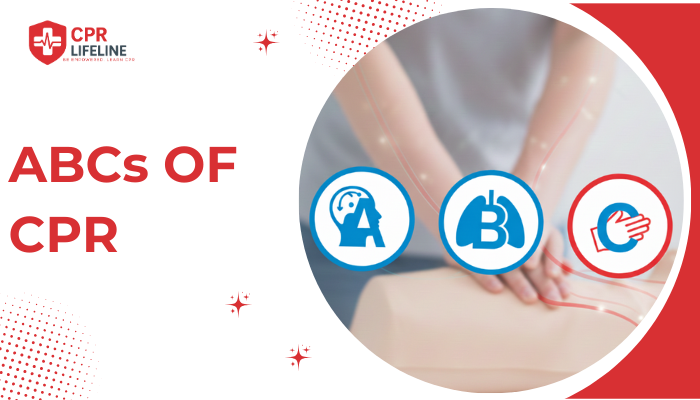

In life-threatening emergencies like cardiac arrest, every second counts and knowing the ABCs of CPR can mean the difference between life and death. This foundational framework, endorsed by the American Heart Association, guides rescuers through the essential steps, i.e., Airway (clearing the path for oxygen), Breathing (delivering rescue breaths), and Circulation (restoring blood flow via compressions). Whether you’re a healthcare professional preparing for BLS or ACLS certification or a concerned parent, mastering these ABCs equips you to act confidently and save lives.
In this blog, we dive deeper into each component of the ABCs, breaking down practical techniques, why it matters, and more to help you apply CPR effectively in emergencies. From assessing and opening the airway safely to delivering high-quality compressions that mimic a heartbeat, you’ll gain the hands-on knowledge endorsed by leading organizations like the American Heart Association. Whether refreshing for BLS certification or building confidence for everyday readiness, these insights empower you to respond swiftly and save lives.
Why the ABCs of CPR Still Matter in 2026?
CPR training followed the sequence of ABC, i.e., Airway → Breathing → Circulation, in the past. However, in 2010, the American Heart Association (AHA) updated its recommendation to CAB, i.e., Circulation (chest compressions) first for adult cardiac arrest victims. This shift prioritized immediate blood flow to the brain and heart, which is critical in the first minutes after collapse.
However, the ABC framework remains indispensable, especially in emergencies where breathing stops before the heart does. In case of situations like drowning, choking, opioid overdose, or pediatric incidents, opening the airway and delivering rescue breaths can be the decisive first actions. Also, ABC ensures oxygen reaches the lungs, enters the bloodstream, and is circulated to vital organs. These principles also form the basis for advanced assessment models in hospitals and trauma care, helping responders act efficiently in emergencies and improve patient outcomes.
What Are the ABCs of CPR?
The ABCs of CPR are a structured emergency-response framework that helps rescuers prioritize life-saving actions when a person experiences cardiac arrest or respiratory failure. In CPR, ABC stands for Airway, Breathing, and Circulation-the three critical body functions that must work together to deliver oxygenated blood to the brain and vital organs. When the heart stops or breathing fails, these functions collapse in sequence, and immediate intervention is required to prevent brain damage or death.
- A – Airway: Make sure the airway is clear.
- B – Breathing: Check for breathing and give rescue breaths if needed.
- C – Circulation: Perform chest compressions if no pulse or signs of circulation.
These ABC steps are physiologically linked and time-critical. If the airway is blocked, breathing cannot occur. If breathing stops, oxygen levels drop rapidly. If circulation ceases, oxygen cannot reach the brain, causing irreversible brain injury within minutes. The ABC framework helps rescuers assess problems quickly and intervene immediately in a structured, lifesaving way.
Airway
The airway is the tube that allows air to pass into or out of the lungs. Airway management focuses on one essential question: Can air reach the lungs? In unconscious individuals, airway obstruction is extremely common, even when no foreign object is present. The most frequent cause is loss of muscle tone, which allows the tongue to fall backwards and block the throat during cardiac arrest or unresponsiveness.
Additional airway threats include choking on food, vomit, blood, swelling, or other foreign material. If the airway is not open (patent), rescue breaths cannot enter the lungs, and oxygen delivery stops completely. This makes airway control a critical early step, especially in emergencies caused by breathing problems rather than sudden cardiac causes.
How to Open the Airway
- Head-Tilt, Chin-Lift: Use this method when no spinal injury is suspected. Place one hand on the forehead and gently tilt the head back while lifting the chin with the other hand. This action shifts the tongue away from the back of the throat and opens the airway, allowing the air to reach the lungs.
- Jaw-Thrust Maneuver: Use this technique if the individual has suffered a neck or spinal injury. Position your hands at the angles of the lower jaw and push the jaw forward without moving the head or neck. This opens the airway while protecting the cervical spine.
Correct airway positioning improves breathing assessment and increases the effectiveness of rescue breaths, in line with current AHA Basic Life Support guidelines.
Breathing
Once the airway is open, you must immediately check for normal breathing. This assessment should not take more than 10 seconds, following AHA guidance. Look for chest rise, listen for breath sounds, and feel for airflow.
A critical and often misunderstood sign is agonal gasping. These are irregular, shallow, or snorting breaths that may occur in the first minutes of cardiac arrest. Agonal gasps are not normal breathing and do not provide effective oxygenation. If gasping is present, treat the person as not breathing and begin CPR immediately.
If there is no sign of normal breathing, then rescue breaths should be delivered, which help to supply oxygen. You can provide rescue breath in the following way;
- Use your thumb and index finger to pinch the person’s nostrils closed, creating a seal.
- Take a regular (not deep) breath, then place your mouth over the person’s mouth, forming a tight seal. Avoid overinflation by watching for chest rise as your guide.
- Blow steadily into the mouth for about 1 second per breath, just enough to make the chest rise visibly. Each breath should deliver approximately 500-600 mL of air for adults. Allow the chest to fall completely between breaths.
- After two breaths, quickly check for a pulse (no more than 10 seconds) at the carotid artery. If no pulse, proceed to chest compressions.
Rescue breaths are especially important in:
- Pediatric cardiac arrests
- Drowning incidents
- Respiratory failure that leads to cardiac arrest
These situations are typically oxygen-deprived emergencies, making ventilation a key component of effective CPR.
Circulation
Circulation refers to the movement of oxygenated blood throughout the body. During cardiac arrest, the heart stops pumping, and circulation halts almost immediately. Chest compressions manually pump blood, delivering oxygen to the brain and heart until normal circulation can be restored through defibrillation or advanced care.
Some of the common elements of high-quality chest compression include;
- The rate of compression should be between 100 to 120 per minute.
- The depth of compression in CPR is at least 2 inches for adults(up to 2.4 inches), 2 inches for children, and 1.5 inches for infants.
- Allow full chest recoil after every compression.
- Maintain a consistent compression rate with minimal interruptions.
Compression-to-ventilation ratios depend on the situation:
- A single rescuer with an adult should try to maintain 30 compressions to 2 breaths.
- Trained rescuers with a child or infant should maintain 30:2 or 15:2 if two people are available
- Untrained bystanders should perform continuous hands-only compressions
Common errors such as shallow compressions, leaning on the chest, or frequent pauses dramatically reduce blood flow to the brain and heart and significantly lower survival chances.
ABC vs. CAB in CPR: Why the Sequence Changed
For many years, CPR training taught rescuers to follow ABC (Airway, Breathing, Circulation) first. However, research into sudden adult cardiac arrest showed a critical problem, i.e., spending time opening the airway and checking breathing often caused dangerous delays in starting chest compressions. During cardiac arrest, every second without circulation reduces the chance of survival.
As a result, the American Heart Association and other international resuscitation councils updated CPR guidelines to emphasize CAB (Circulation, Airway, Breathing) for most adult cardiac arrests. This change ensures that blood flow to the brain and heart begins immediately, which is the most urgent need when the heart suddenly stops.
When ABC Is Still the Best Approach
Despite the shift to CAB for adults, ABC remains the preferred sequence when oxygen deprivation is the primary cause of collapse. In these situations, restoring airflow and breathing must happen early.
Pediatric CPR
Infants and children usually suffer cardiac arrest due to respiratory failure, such as choking, asthma, infections, or drowning. In these cases, opening the airway and providing breaths first is critical because oxygen levels are already dangerously low.
Drowning Emergencies
For drowning victims, the priority is to clear water from the airway to allow oxygen to reach the lungs. AHA protocols for drowning emphasize starting with rescue breaths (ABC) as soon as the victim is removed from the water (or even while in the water if the rescuer is trained).
Opioid Overdose
In an overdose, the drug suppresses the central nervous system until the person stops breathing. Because the heart is still beating for several minutes after breathing stops, providing rescue breaths (ABC) can often prevent the heart from stopping entirely.
How ABCs Are Used in Basic Life Support (BLS)
Basic Life Support (BLS) builds on the ABC framework to provide a coordinated, systematic approach to lifesaving care. While ABC teaches the priority of Airway, Breathing, and Circulation, BLS adds structure and teamwork to ensure that interventions are efficient, continuous, and effective.
Team-Based Roles
In BLS, multiple rescuers can work together. Typically, one rescuer focuses on chest compressions (Circulation) while another manages airway and breathing. This division of tasks ensures that compressions continue with minimal interruption, maximizing oxygen delivery to vital organs.
Early AED Use
BLS emphasizes the use of an Automated External Defibrillator (AED) as soon as it is available. AED analysis and shocks are applied quickly, while chest compressions are paused only briefly, following AHA recommendations to maintain circulation.
Advanced Airway Tools
BLS-trained providers may use devices like bag-valve masks (BVMs) or oropharyngeal airways to support ventilation more effectively than rescue breaths alone. These tools help ensure oxygen reaches the lungs safely and efficiently.
By integrating ABC principles into a structured team approach, BLS not only guides what to do first but also how to do it efficiently, improving patient outcomes during cardiac or respiratory emergencies.
Common Mistakes When Applying the ABCs of CPR
Even trained rescuers can make errors during high-stress emergencies. Awareness of these common mistakes is crucial because even small errors can reduce the effectiveness of CPR and lower survival chances.
- Spending too long checking for breathing: Prolonged assessment delays chest compressions. According to AHA guidelines, checking for breathing should take no more than 10 seconds. Any delay reduces oxygen delivery to the brain and can lead to irreversible death.
- Delaying chest compressions: Chest compressions are the most critical part of CPR. Pausing too long to perform other steps prevents blood from reaching vital organs and diminishes survival outcomes.
- Mistaking agonal gasps for normal breathing: Irregular or shallow breaths, known as agonal gasps, are not effective breathing. Treat the person as unresponsive and start compressions immediately.
- Over-ventilating or giving excessive breaths: Giving too many breaths or blowing too forcefully increases chest pressure, which reduces venous return and lowers cardiac output. Follow the recommended 30:2 compression-to-breath ratio for adults.
- Leaning on the chest and preventing full recoil: Not allowing the chest to recoil between compressions fully reduces blood flow to the heart and brain. Ensure complete chest recoil to maintain effective circulation.
From ABCs to Action: Empowering Lifesavers in Emergencies
Knowing the ABCs sequence is important, but true readiness comes from hands-on experience. Certified CPR, BLS, ACLS, and PALS courses teach airway management, effective rescue breaths, and high-quality chest compressions through realistic scenarios, helping you develop the confidence and muscle memory to respond quickly in emergencies. Regular certification and renewal ensure your skills stay current and aligned with the latest AHA guidelines, so you’re always prepared to act when it matters most.
The ABCs of CPR—Airway, Breathing, and Circulation—form the foundation of lifesaving care. Whether using ABC or CAB, these principles guide responders to deliver oxygen efficiently to vital organs. Mastering them can mean the difference between hesitation and saving a life.
Take the next step in emergency preparedness by enrolling in a CPR Lifeline’s CPR, BLS, ACLS, or PALS course today. Practice these critical skills under expert guidance and hands-on training, and ensure you’re ready to make a life-saving impact when it counts.
Faqs
ABC focuses on the airway and breathing before circulation, whereas the CAB prioritizes chest compressions (circulation) to ensure blood reaches the brain immediately. CAB is the standard for adult cardiac arrest.
No, the ABC sequence is not obsolete. CAB is now standard for adult cardiac arrest, but ABC remains appropriate for respiratory emergencies, infants, and children. The context determines the right approach for you.
Stop the CAB sequence and place the person in the recovery position. Continue to monitor their airway (A) and breathing (B) until paramedics arrive.
Hands-Only CPR is for untrained bystanders. It focuses solely on "C" (Circulation) because it is easier to remember and perform correctly, and it is highly effective for the first few minutes of adult cardiac arrest.
Chris Peters
Chris Peters is a certified American Heart Association instructor and firefighter since 1996 with over 30 years of emergency response experience. After answering thousands of 911 calls, he founded CPR Lifeline to provide AHA-certified training that transforms bystanders into confident lifesavers who act decisively when seconds count