
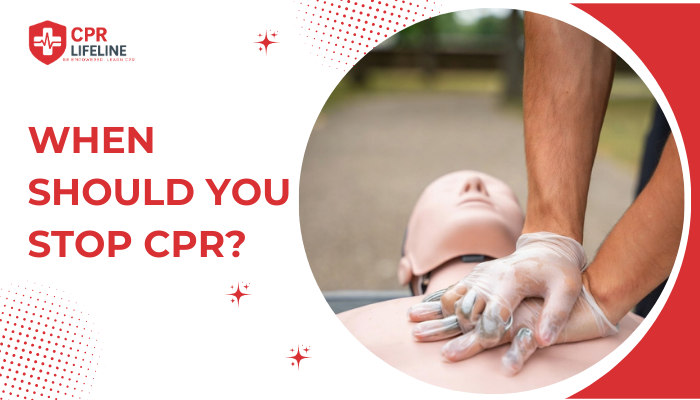

Stopping CPR at the right moment during a cardiac emergency can be crucial for maximizing survival odds. While high-quality CPR sustains vital blood flow to the heart and brain, knowing precisely when to halt prevents unnecessary harm or interference with advanced care. However, stopping too early can reduce survival chances, while continuing in unsafe or inappropriate situations can put rescuers at risk.
You should stop CPR in key situations, such as when the victim shows signs of life, Emergency Medical Services Take Over, Rescuer fatigue, unsafe scene, irreversible signs of death and more. According to American Heart Association and Red Cross guidelines, it is always necessary to reassess quickly and never exceed 10 seconds for checks and resume if needed.
Whether you’re a certified responder or a bystander lifesaver, mastering when to stop CPR boosts effectiveness and outcomes. Keep reading to explore when to stop in detail and understand how mistimed stops affect survival rates.
What Does It Mean to Stop CPR?
Stopping CPR means ending chest compressions and rescue efforts once specific medical, safety, or legal conditions are met. CPR is not meant to continue indefinitely without purpose. It is designed to bridge the time between cardiac arrest and advanced medical care.
In most cases, CPR continues until the heart starts beating again, professional help takes over, or continuing becomes unsafe. Understanding these limits helps ensure CPR remains effective and safe for both the victim and the rescuer.
When to Stop CPR (Medically and Legally Accepted Situations)
The American Heart Association outlines clear situations when CPR should be stopped. Below are the most widely accepted reasons for stopping CPR.
1. The Person Shows Clear Signs of Life (ROSC)
You should stop CPR if the victim shows clear signs that circulation has returned. It is known as Return of Spontaneous Circulation (ROSC).
The signs include:
- Normal breathing – meaning steady and regular breaths, not gasping
- Purposeful movement – such as moving arms, legs, or responding to touch
- Regaining consciousness -including opening eyes or responding verbally
If the person starts breathing normally, place them in the recovery position and continue to monitor them closely until emergency help arrives. Do not resume CPR unless breathing stops again or the person becomes unresponsive.
2. Emergency Medical Services Take Over
You should stop CPR once trained medical professionals arrive and take responsibility, unless they specifically ask you to continue. Emergency responders have advanced equipment, medications, and monitoring tools that allow for more effective resuscitation than bystander CPR.
Continuing CPR after they take over may interfere with their procedures or slow advanced interventions. It is important to follow their instructions carefully and assist only if requested, ensuring the victim receives optimal professional care without unnecessary interruptions.
3. Rescuer Fatigue
CPR is physically demanding and requires sustained effort to be effective. So, if you become completely exhausted from performing effective compressions, you can stop the CPR. Quality compressions require pushing at least 2 inches deep at 100-120 beats per minute, which is impossible if you’re physically exhausted.
If possible:
- Rotate rescuers every two minutes to maintain strong and consistent compressions
- Minimize pauses during switches to avoid disrupting blood flow
If no replacement is available and physical exhaustion prevents effective chest compressions, stopping CPR may be necessary, as poor-quality CPR is unlikely to be beneficial.
4. Unsafe Scene
You must stop CPR if the environment becomes dangerous, as rescuer safety always comes first. Continuing CPR in an unsafe setting can put both you and others at serious risk.
Unsafe situations include:
- Fire or heavy smoke
- Traffic hazards or moving vehicles
- Risk of structural collapse
- Violence, electrical hazards, or exposed wires
Leaving an unsafe scene helps prevent additional injuries and allows trained emergency professionals to control the situation and manage the risks safely.
5. Clear, Irreversible Signs of Death Are Present
CPR should not be started, or must be stopped, if there are clear signs that the victim is already deceased and resuscitation would be futile. Recognizing these signs ensures that rescuers focus their efforts where they can make a difference.
Some of the clear signs of irreversible death include:
- Rigor mortis: This is the stiffening of the body’s muscles that occurs a few hours after death. It happens because the muscles no longer receive oxygen, and chemical changes cause them to lock in place.
- Livor mortis: This refers to the purplish or bluish discoloration of the skin that appears after death. It occurs when blood settles in the lowest parts of the body due to gravity, indicating that circulation has stopped.
- Catastrophic injuries incompatible with life: These are severe injuries that make survival impossible, such as decapitation, destruction of the brain, or crushing injuries to vital organs. They indicate that resuscitation efforts will not succeed.
In these situations, continuing CPR will not be effective and may place rescuers at unnecessary risk.
What Happens If You Stop CPR Too Early?
Stopping CPR too early massively lowers the survival chances of victims. When compressions stop, blood flow to the brain and vitals organs drops immediately, increasing the risk of brain damage and death. Without ongoing compressions, the brain starts dying from oxygen deprivation within 4-6 minutes, with damage often becoming irreversible after 8-10 minutes. Studies consistently show that prolonged interruptions lower rates of return of spontaneous circulation (ROSC) and survival, underscoring the critical need to minimize pauses to under 10 seconds during actions like defibrillation.
Many victims do not show quick signs of improvement, even when CPR is effective. Ending CPR due to doubt or fatigue can stop lifesaving circulation before help arrives. CPR should continue until clear signs of life appear, professionals take over, or the scene becomes unsafe.
Should You Pause CPR to Check Breathing or Pulse?
Untrained rescuers should not stop CPR to check for a pulse, as detecting a pulse without proper training is difficult and often inaccurate. Pausing compressions unnecessarily can reduce blood flow to vital organs and lower survival chances.
For trained responders:
- Limit pulse checks to under 10 seconds – Quick assessment helps avoid prolonged interruptions.
- Resume compressions immediately if unsure – If you cannot confidently feel a pulse, continue CPR without delay.
- Minimizing interruptions improves outcomes – Maintaining continuous chest compressions ensures oxygenated blood reaches the brain and heart, increasing the victim’s chance of survival.
By focusing on continuous, high-quality compressions and minimizing pauses, rescuers provide the most effective care during cardiac arrest.
Legal Considerations When Stopping CPR
Most regions have Good Samaritan laws that protect individuals who provide CPR in good faith. A common concern among bystanders is whether can you get sued for doing CPR, and the answer is covered in detail alongside the legal protections that apply. These laws are designed to encourage bystanders to act without fear of legal consequences and generally cover:
- Starting CPR – You are legally protected when you initiate CPR to help someone in cardiac arrest.
- Continuing CPR – Performing ongoing compressions and rescue breaths in line with standard guidelines is covered.
- Stopping CPR appropriately – If the victim shows signs of life, you are exhausted, or the scene becomes unsafe, stopping CPR is acceptable.
As long as you act reasonably, follow standard CPR procedures, and avoid negligence, the legal risk is very low. These protections aim to prioritize saving lives while reassuring rescuers that acting in an emergency is supported by law.
Strengthen Your Lifesaving Skills with Professional Training
Understanding when to stop CPR is just as important as knowing how to perform it. The right decision at the right moment can mean the difference between saving a life and putting yourself or others at risk. Remember to stop CPR when the person shows clear signs of life, when professional help arrives and takes over, when you’re too exhausted to continue effectively, when the scene becomes unsafe, or when there are irreversible signs of death.
If you’re serious about being prepared to save a life, consider taking a comprehensive CPR course. At CPR Lifeline, we focus on real-world scenarios and practical skills that stick with you long after certification. You’ll learn not just the techniques, but the decision-making skills that turn knowledge into action when someone’s life is on the line.
Faqs
No, CPR should continue as long as the victim needs it and stopping conditions haven't been met. Quality compressions maintain vital blood flow to the brain and heart, so keep going until help arrives, signs of life appear, or you physically can't continue safely.
No, the AED will guide you through the process with voice prompts. When it analyzes the heart rhythm or delivers a shock, briefly pause compressions, then immediately resume CPR. The AED and CPR work together to maximize survival chances, not replace each other.
No, don't stop. Quickly turn the victim's head to the side, clear the airway if needed, then get right back to compressions. Vomiting during CPR is actually somewhat common, so stay calm, clear it quickly, and continue your lifesaving efforts without significant delay.
Only if you're completely physically exhausted and can't maintain effective compressions anymore, or if the scene becomes dangerous. Otherwise, keep going. Even imperfect CPR is better than none. If you need a brief break, keep it under 10 seconds before resuming compressions.
The same stopping rules apply to children and infants as to adults. However, rescue breaths are especially critical for pediatric cases, so continue alternating compressions and breaths. Stop only when they show signs of life, help arrives, you're exhausted, or the scene is unsafe.

Chris Peters
Chris Peters is a certified American Heart Association instructor and firefighter since 1996 with over 30 years of emergency response experience. After answering thousands of 911 calls, he founded CPR Lifeline to provide AHA-certified training that transforms bystanders into confident lifesavers who act decisively when seconds count