
CPR certification is a crucial life-saving skill for healthcare providers, teachers, childcare workers, and anyone dedicated to emergency preparedness. Whether you’re pursuing American Heart Association (AHA) CPR classes, Red Cross training, or other accredited programs, completing the course is just the first step. But once you’ve completed your training, a common question that arises is how long does CPR certification last before you need to renew it?
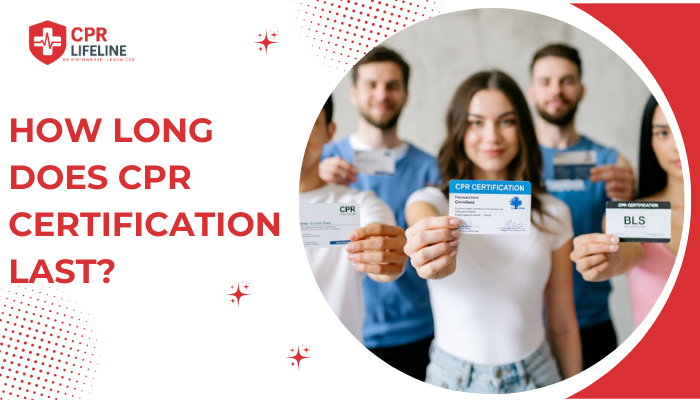
Typically, CPR certification is valid for two years from the date of issue. This standard is established by major organizations like the AHA and the American Red Cross (ARC). The two-year validity period is widely recognized across various industries. It applies to most CPR programs, including Heartsaver CPR AED, Pediatric CPR, Basic Life Support (BLS), and advanced certifications like ACLS and PALS.
In this comprehensive guide, you will learn how long CPR certification is valid, the duration of CPR classes, what to do if your certification expires, and how to choose the right course for CPR, BLS, ACLS, or PALS.
What Is CPR Certification and Why Is It Important?
CPR certification is an official credential that confirms an individual has been properly trained to perform Cardiopulmonary Resuscitation (CPR) according to current, evidence-based medical guidelines. It verifies that the person can recognize cardiac arrest, deliver high-quality chest compressions, provide rescue breaths when appropriate, and use an Automated External Defibrillator (AED) safely and effectively.
Certification is issued only after completing structured training and passing a skills assessment, ensuring practical, real-world competence rather than just theoretical knowledge.
CPR certification is important because immediate action during cardiac arrest can double or triple survival rates. Many employers, healthcare facilities, and regulatory bodies require valid certification to meet safety and legal standards. Beyond compliance, CPR training improves confidence, decision-making, and readiness to act quickly when every second matters.
How Long Is a CPR Certificate Valid?
The CPR certification typically lasts for two years from the date of issue, as set by major providers like the American Heart Association (AHA) and American Red Cross (ARC). This two-year validity period applies across most AHA-approved CPR programs and is widely accepted by employers, schools, licensing boards, and regulatory agencies. After 2 years from the date of issue, your certification is considered expired, and you’ll need to complete a renewal or full CPR course.
Why CPR Certifications Expire After Two Years
CPR (Cardiopulmonary Resuscitation) certifications typically expire after two years because life-saving techniques and medical guidelines are continually updated based on the latest scientific research and clinical evidence. Organizations like the American Heart Association (AHA) and the American Red Cross regularly review and revise CPR protocols to reflect the most effective practices for improving survival outcomes during cardiac arrest. Skills such as chest compression depth, ventilation rates, and the use of automated external defibrillators (AEDs) may evolve, and staying updated ensures rescuers provide the best possible care in emergencies.
Additionally, CPR skills deteriorate naturally just after 1 to 6 months without ongoing practice, with research indicating significant declines in chest compression quality and rescue breathing accuracy. Maintaining the components of high-quality CPR requires regular practice and reinforcement. After 2 years, you are required to take refresher courses to rebuild these hands-on abilities and ensure compliance in high-stakes environments like healthcare facilities, schools, and gyms.
Who needs to renew CPR certification?
Anyone holding a CPR certification needs to renew it before it expires, typically every two years. This is especially important for healthcare professionals, teachers, childcare workers, lifeguards, fitness trainers, security personnel, first responders, and caregivers, as many workplaces require active certification for compliance and safety.
Even if not required by a job, renewing CPR certification ensures your skills stay up-to-date with the latest guidelines and techniques, so you remain prepared to respond effectively in an emergency.
How to Check Your CPR Certification Expiry Date?
Checking the expiration date of your CPR certification is important for maintaining compliance, especially in fields like healthcare, education, or emergency response. Here’s how to check the expiration date of a CPR certification:
- Review Your Physical Card: Start by checking your physical CPR card, which typically includes both the issue and expiration dates.
- Verify Online: If you’ve lost your physical card or need to verify your status online, identify your certifying provider and utilize their official lookup tools. For example, if you are certified through the American Heart Association (AHA), visit their eCard search page and enter your name, email, or eCard code. Records are usually accessible for up to three years after the training.
- Contact the Certification Provider: If you still cannot locate your card or online record, reach out to the organization where you took the course. Additionally, you can check with your employer or the relevant licensing body, as they may track certifications.
Keeping track of your CPR certification’s expiration date ensures that your training remains current, compliant, and ready for emergencies. Physical card, which usually includes the issue and expiration dates.
Types of CPR Certifications
CPR certifications aren’t created equally and vary based on scope and purpose. You should choose the right CPR certification based on your profession, daily environment, and personal goals. Below are some of the common cpr certifications type and their purpose;
CPR AED and Heartsaver CPR
Heartsaver CPR AED is designed for non-medical professionals and the general public. It focuses on practical, real-world response skills for emergencies that may occur at work, school, gyms, or public places.
This certification covers adult, child, and infant CPR, AED operation, and choking response. The training emphasizes early recognition of cardiac arrest, calling emergency services promptly, and providing effective care until professional help arrives.
Pediatric CPR
Pediatric CPR certification focuses specifically on infants and children, whose anatomy and emergency needs differ significantly from adults.
This training teaches age-appropriate CPR techniques, choking relief for infants and children, and emergency response in childcare, school, and home settings. It is especially relevant for childcare providers, teachers, nannies, and parents who want to be prepared for child-specific emergencies.
Basic Life Support (BLS)
Basic Life Support (BLS) is the most advanced and clinically focused CPR certification. It is built for healthcare and emergency professionals who are expected to respond quickly and confidently in life-threatening situations.
This certification teaches high-quality CPR techniques, proper compression depth and rate, advanced AED use, rescue breathing, and team-based resuscitation. Participants learn how to function as part of a coordinated medical response, including communication during cardiac arrest scenarios. BLS training is guided by strict, evidence-based standards developed by organizations such as the American Heart Association.
Advanced Cardiovascular Life Support (ACLS)
Advanced Cardiovascular Life Support (ACLS) is a specialized certification for healthcare professionals who respond to cardiac emergencies in adults, such as heart attacks, cardiac arrest, and life-threatening arrhythmias. The training goes beyond basic CPR, teaching advanced skills like airway management, ECG interpretation, defibrillation, medication administration, and team-based resuscitation protocols to stabilize critically ill patients.
ACLS is based on evidence-based guidelines from trusted authorities like the American Heart Association. It equips providers with the knowledge, decision-making skills, and confidence to act quickly in high-pressure situations, improving patient survival and outcomes during cardiovascular emergencies.
Pediatric Advanced Life Support (PALS)
Pediatric Advanced Life Support (PALS) is an advanced emergency care certification for healthcare professionals who treat critically ill infants and children. It focuses on rapid pediatric assessment, high-quality CPR, airway management, cardiac rhythm recognition, and timely intervention for life-threatening conditions such as respiratory failure and shock.
PALS follows evidence-based guidelines developed by the American Heart Association and emphasizes confident decision-making and team-based response. It prepares providers to deliver safe, effective pediatric care when every second matters.
What Happens If Your CPR Certification Expires?
An expired CPR certification can cause significant professional and safety issues across healthcare, education, childcare, and fitness industries where active credentials are legally required. Failing to renew promptly exposes individuals and employers to compliance failures while diminishing emergency response effectiveness.
1. Your certification becomes invalid and non-recognized
Once expired, you are no longer considered formally trained under recognized standards. Most employers, regulatory bodies, and insurers require active certification, not past training, to confirm that you meet current safety expectations.
2. You may use outdated CPR techniques.
CPR guidelines evolve based on clinical evidence. Medical organizations such as the American Heart Association regularly update compression depth, rate, rescue breathing recommendations, AED usage, and special protocols for children and infants. Without renewal, your actions may not align with today’s life-saving best practices.
3. Higher risk of ineffective or unsafe response
CPR is a hands-on skill that degrades over time without practice. Expired certification often means reduced confidence, incorrect hand placement, improper compression rhythm, or delayed AED use, each of which can significantly lower survival outcomes during cardiac arrest.
4. Loss of job eligibility and professional compliance
Many roles, including healthcare workers, teachers, childcare providers, lifeguards, security staff, and fitness professionals, require current CPR certification for employment or licensing. An expired card can result in job suspension, failed audits, or inability to meet workplace safety policies.
5. Increased legal and liability exposure
In workplace or public emergencies, a valid certification helps demonstrate that you acted according to accepted medical standards. If your certification has expired, legal protections and employer support may be limited, especially if procedures are questioned after an incident.
6. Missed updates on emerging life-saving tools and protocols
Renewal courses often include updates on AED technology, choking response changes, and new emergency response scenarios. Allowing certification to lapse means missing critical advancements that can improve patient outcomes.
How to Renew Your CPR Certification
Renewing your CPR certification is a straightforward process that ensures your skills remain current and compliant with safety standards. Follow these steps:
- Check Your Expiration Date: Verify when your current CPR certification expires to plan renewal in advance. Renewing before expiration prevents lapses in coverage.
- Choose the Right Renewal Course: Select a course that matches your certification type, such as CPR AED, Heartsaver, Pediatric CPR, or BLS. Some organizations offer blended or online refreshers for convenience, and understanding how to get CPR certified online helps clarify exactly what that process involves and what employers will actually accept.
- Complete the Training: Attend the refresher course, review updated guidelines, and practice hands-on skills. Even experienced providers benefit from reviewing techniques and scenario-based training, including proper application of the ABCs of CPR.
- Pass the Skills Evaluation: Most renewals require a practical assessment to ensure proper technique in compressions, rescue breaths, and AED use.
- Receive Your Updated Certification: After successful completion, you will receive a new CPR card valid for another two years. Keep a digital or printed copy for workplace or regulatory verification.
Regular renewal not only maintains legal and workplace compliance but also reinforces life-saving skills for emergencies.
CPR, BLS, ACLS & PALS Class Duration and Renewal Costs.
CPR, BLS, ACLS, and PALS classes typically take 2 to 5 hours to complete. Traditional in-person courses usually last 2.5–3 hours, covering adult, child, and infant CPR along with AED practice. Blended learning options combine self-paced online training with a shorter in-person skills session, making certification faster and more flexible.
At CPR Lifeline, we offer both initial CPR certification and renewal. Our programs include about 30 minutes of online coursework, followed by hands-on skills practice. Renewal courses are generally more affordable than initial certifications, with costs typically ranging from $15–$80, depending on the course format and provider.
Course Options & Pricing
- BLS: Online learning + in-person skills — $90–$120
- ACLS: Online learning + in-person skills — $150–$295
- PALS: Online learning + in-person skills — $150–$295
All courses include unlimited online attempts, hands-on skills evaluation, and an instant AHA Provider eCard, ensuring your CPR certification is current, verified, and accepted by employers and licensing authorities.
Stay Certified by Renewing Your CPR Certification
CPR certification is valid for two years across all major courses, including CPR AED, Heartsaver, Pediatric CPR, and BLS. Staying up to date ensures you remain prepared to respond effectively in emergencies, maintain workplace compliance, and protect lives when every second counts.
Don’t let your certification expire. Renew on time to keep your skills sharp and your credentials valid. Whether you are a healthcare professional, teacher, coach, or everyday responder, staying certified empowers you to act confidently when it matters most.
Enroll in a CPR, BLS, ACLS, or PALS training course today to renew your certification, refresh your skills, meet professional requirements, and be ready to save a life.
Faqs
Yes, you can renew your CPR certification before it expires. Most training providers, including the American Heart Association (AHA) and the American Red Cross encourage early renewal to stay compliant and updated on the latest guidelines. Renewing early helps avoid gaps in certification and keeps you job-compliant.
No, the CPR certification doesn’t expire on the same date worldwide. The validity of the CPR certification varies by country, certifying organization and sometimes even employer or local regulations. CPR certifications provided by major providers, including the American Heart Association and Red Cross, are globally valid for two years from the issue date.
Some employers accept online CPR courses, but many require an in-person skills check. It is always better to confirm with your employer or check regulatory requirements before choosing an online-only option.
If your certification expires, you may need to complete the full course again instead of a renewal class. This depends on how long it has been expired and the provider's policies.
Yes, CPR techniques vary by age group. Many certifications cover adult, child, and infant CPR together, while others focus on pediatric or adult-specific care.
You can check your CPR certification by reviewing the expiration date on your AHA eCard or card. You can also log into the provider portal or contact the CPR certification provider for instant verification.

Chris Peters
Chris Peters is a certified American Heart Association instructor and firefighter since 1996 with over 30 years of emergency response experience. After answering thousands of 911 calls, he founded CPR Lifeline to provide AHA-certified training that transforms bystanders into confident lifesavers who act decisively when seconds count